To choose a lower-fat ice cream tub to share, compare the fat content per 100 g, then check the sugars, net quantity and allergens in each recipe too. E.Leclerc’s listing for the ESKISS Vanilla Red Fruits tub gives 4.1 g of fat and 30 g of sugars per 100 g, so a relatively low fat content isn’t the only thing to consider when choosing a treat for your film night. Check the packaging before buying a sorbet if you’re specifically looking for a tub.
Who is this choice for?
People comparing fat content
You’re looking for a frozen dessert to share and want to compare recipes on a like-for-like basis, per 100 g. Keep an eye on the sugars too: E.Leclerc’s listing for the ESKISS Vanilla Red Fruits tub shows why it’s worth checking both figures.
People hosting guests with allergies
Before choosing a tub, check its ingredients and any ‘may contain’ warnings. Allergens vary from one recipe to another, and you can’t tell what they are just from the flavour or fat content.
People choosing a recipe to share
You’d like to serve a creamy flavour or one with added pieces, while being clear about how that choice affects the fat and sugar content, and which ingredients you need to check.
What should you check?
Start by comparing nutritional values in the same units, then check the ingredients and choose a net quantity that suits your guests. As the DGCCRF explains, values per 100 g or 100 ml make comparisons easier, but don’t compare these two units directly.
| Criteria | What to check | Who it matters to |
|---|
| Fat and sugars |
Compare fat, saturated fatty acids, sugars and energy per 100 g, or using another shared unit. |
I want to reduce fat without discovering afterwards that the recipe doesn’t match my priorities around sugars. Around 50% of consumers would put this comparison first. |
| Allergens and ingredients |
Check which allergens are highlighted in the ingredients list and look for any ‘may contain’ warnings for each flavour. |
If I’m serving someone with an allergy, the ingredients take priority over the flavour. This would be the main criterion for around 30% of consumers. |
| Recipe and quantity to share |
Check the net quantity and the ingredients in any sauces or added pieces, then look at the nutritional values for the recipe you’ve chosen. |
My main priority is to offer a recipe my guests will enjoy, in a suitable quantity, and I’m happy to weigh up the nutritional trade-offs. Around 20% of consumers would prioritise this. |
Mistakes to avoid
-
Assuming ‘lower fat’ means ‘lower sugar’
According to E.Leclerc, the ESKISS Vanilla Red Fruits tub contains 4.1 g of fat but 30 g of sugars per 100 g. One figure alone doesn’t tell you everything about a recipe.
Compare both figures, as well as saturated fatty acids and energy, using the same quantity as your basis.
-
Relying on the flavour name to check for allergens
A biscuit or inclusion-filled recipe may contain different ingredients from a simple vanilla flavour. Carrefour’s listing for its Extra Vanilla ice cream also flags several possible traces.
Check the packaging and any ‘may contain’ warnings on each tub before serving it to someone with an allergy.
-
Refreezing ice cream after it has defrosted
Auchan’s listing for its vanilla ice cream says to store it at −18 °C and not to refreeze it after defrosting.
Follow the storage instructions on the tub you buy and plan how you’ll get it home and into the freezer.
Brands and retailers to consider
These examples can help you compare labels and types of recipe. Don’t assume that every ice cream from the same brand has the same characteristics.
Carrefour
The retailer’s range includes Carrefour Extra Vanilla tub ice cream, whose listing lets you check nutritional values and trace warnings.
- Carrefour’s listing gives 8.7 g of fat per 100 g and details possible traces.
- This figure applies to the vanilla product mentioned, not every Carrefour flavour.
E.Leclerc / ESKISS
The ESKISS range includes tubs and sorbets to consider depending on the flavour and format you’re looking for.
- E.Leclerc gives the ESKISS Vanilla Red Fruits tub as containing 4.1 g of fat per 100 g.
- The same listing gives 30 g of sugars per 100 g; these figures don’t apply to other ESKISS recipes.
Auchan
Its ice cream listings let you check the ingredients and storage instructions for the products shown.
- The listing for its vanilla ice cream specifies storage at −18 °C.
- Compare the nutritional values for the flavour you’re actually choosing rather than making assumptions about the whole retailer’s range.
Häagen-Dazs
The brand offers ice cream tubs, among other products. Häagen-Dazs describes its Vanilla flavour as a recipe made with cream, milk, sugar and eggs.
- The listed ingredients for Vanilla give you a starting point for checking the recipe.
- Another product, the salted caramel mini tub listed by Joybuy, contains 14.7 g of fat per 100 g. Check the values for the format and flavour you’re considering.
Ben & Jerry’s
Its biscuit and inclusion-filled tubs suit people looking for this type of recipe, rather than those choosing based on the flavour name alone.
- Carrefour’s listing for the Vanilla Brownie and Cookie tub gives you the ingredients to check before sharing.
- Check the fat content and allergens on the packaging; one flavour’s ingredients don’t represent the whole brand.
Lidl
If you’re considering a tub from this retailer, base your choice on the label of the product available in store.
- Values per 100 g and the net quantity let you compare a specific product with other tubs.
- Don’t assume anything about an ice cream’s ingredients or allergens based on the retailer alone.
Joybuy products to consider
These sorbets and frozen dessert give you a range of recipes to consider for your evening. If you’re specifically looking for ice cream in a tub, check the sorbet packaging. For every product, check the nutritional label and allergens before making your choice.
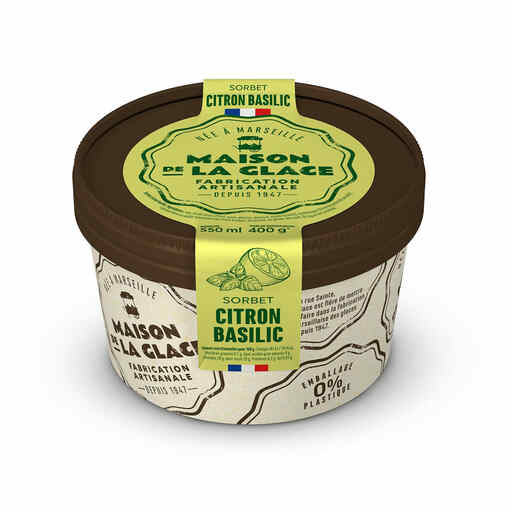 Image unavailable
Maison de la Glace Lemon and Basil Sorbet 380 g
Worth considering if you’re looking for a citrus sorbet to share and want to compare its fat and sugar content with other frozen desserts.
Check that it comes in a tub and read the allergen information before serving.
View on Joybuy
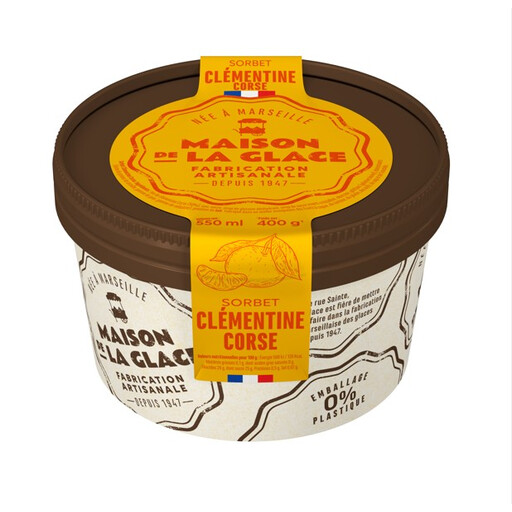 Image unavailable
Maison de la Glace Corsican Clementine Sorbet 380 g
This clementine recipe is worth comparing with other frozen desserts if fat and sugar content are guiding your choice.
Check the container format and read the product’s allergen information.
View on Joybuy
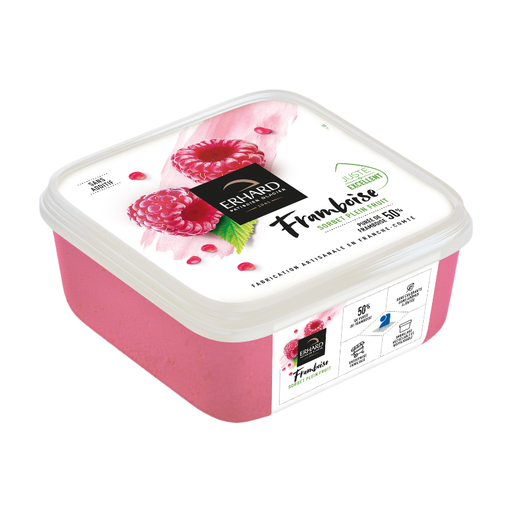 Image unavailable
ERHARD Raspberry Sorbet 488 g
If you’d prefer raspberry for your film-night dessert, compare this sorbet’s nutritional values with those of the other recipes on the same basis.
Check the packaging and look for any allergen trace warnings.
View on Joybuy
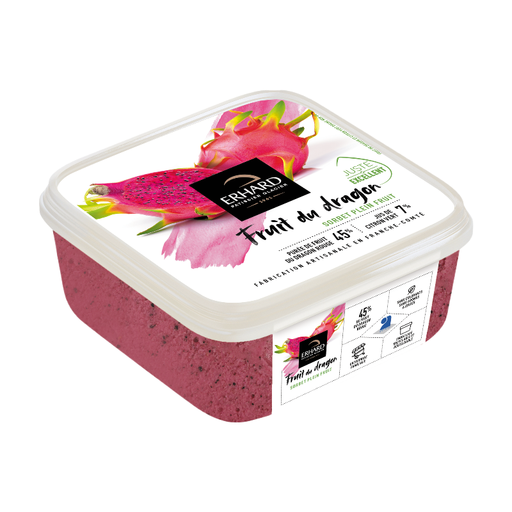 Image unavailable
ERHARD Dragon Fruit and Lime Sorbet 488 g
This fruity recipe is worth considering if you’d like to compare another flavour with the ice cream tubs you’re thinking of sharing.
Check the type of container, sugar content and allergen information before buying.
View on Joybuy
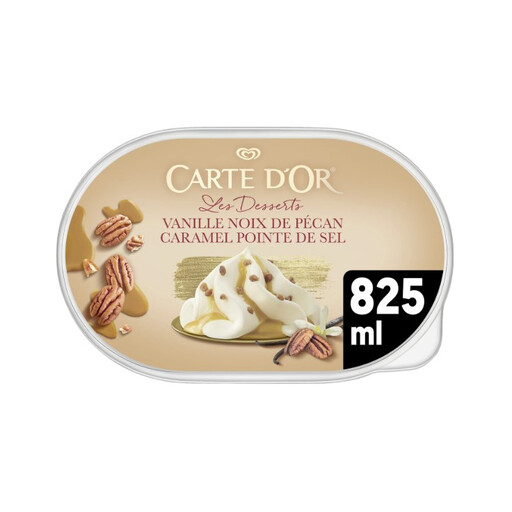 Image unavailable
CARTE D’OR Vanilla & Pecan Frozen Dessert 470 g
If you’d prefer a vanilla and pecan recipe to a sorbet, compare its fat and sugar content before choosing.
Check the net quantity on the product: the title states 470 g, while the description gives 825 ml. Check the allergens too.
View on Joybuy
Frequently asked questions
How do you compare the fat content of two ice cream tubs?
Compare the fat content for the same quantity, usually 100 g, then check saturated fatty acids, sugars and energy. The DGCCRF explains that nutritional information per 100 g or 100 ml makes comparisons easier. Don’t compare figures given in different units directly.
Is lower-fat ice cream always lower in sugar?
No. E.Leclerc’s listing for the ESKISS Vanilla Red Fruits tub gives 4.1 g of fat and 30 g of sugars per 100 g. Check these two figures separately for every recipe.
Can any relatively lower-fat ice cream be called ‘reduced fat’?
No. Comparing two labels isn’t enough to make this claim about a product. Manger Bouger notes that nutrition claims, including ‘reduced fat’, are regulated. Use the wording that actually appears on the product rather than drawing conclusions from a single figure.
What should you check if one of your guests has an allergy?
Read the ingredients and any ‘may contain’ warnings on each pack, even if you know the flavour well. The DGCCRF explains that allergens must be highlighted in the ingredients list on prepacked foods.
How should you store ice cream before your film night?
Follow the instructions for the product you’ve bought and avoid letting it defrost on the way home. Auchan’s listing for its vanilla ice cream says to store it at −18 °C and not to refreeze it after defrosting.


