People keeping an eye on their fat intake
Your main priority is the fat content per 100 g. You’re happy to switch recipe or brand to compare pizzas on a like-for-like basis, without mistaking this figure for an overall nutritional assessment.


To choose a frozen pizza with a lower stated fat content, compare the recipes per 100 g, then consider how much you’ll eat. Carrefour’s product pages for five recipes list between 6.6 and 15 g of fat per 100 g. This range alone isn’t enough to describe a pizza as ‘light’ or assess its overall nutritional value. For a weeknight dinner, also check that the cooking instructions suit your appliance and review the allergens for the recipe you choose.
Your main priority is the fat content per 100 g. You’re happy to switch recipe or brand to compare pizzas on a like-for-like basis, without mistaking this figure for an overall nutritional assessment.
You’re looking for a dinner that fits the time you have and the oven you’re using. Carrefour’s product page for Pizza Royale Extra gives a cooking time of 9 to 10 minutes in a conventional oven. Follow the instructions for any other recipe.
Check the allergens and any possible traces on the packaging for the exact recipe you’re buying. A range name won’t tell you the ingredients in every pizza in that range.
If your main aim is to enjoy a quick dinner with less fat, start with the nutritional information per 100 g, then check that the cooking instructions and label suit your needs.
| What to check | What to look for | Who it matters to |
|---|---|---|
| Fat | Compare the fat content per 100 g across recipes, then check the pizza’s weight and how much you plan to eat. | If my main aim is to reduce fat, I compare the recipes before choosing a topping; around 46% of consumers would put this first. |
| Cooking | Check the cooking method and time on the packaging for the appliance you’ll be using. | When dinner needs to be ready quickly, I mainly need instructions that suit my appliance; speed would be a priority for around 36% of consumers. |
| Allergens and storage | Read the allergen information and any possible traces for the exact recipe, along with its storage instructions. | If an ingredient is a concern or I need to store the pizza before the meal, the label comes before the topping; around 18% of consumers would prioritise these checks. |
Carrefour’s product pages list 9.3 g of fat per 100 g for Margherita Bio, compared with 6.6 g and 6.8 g for two Royale recipes. Neither the recipe name nor the size is a substitute for comparing the figures per 100 g.
Then check the product’s weight to get a better idea of how much you’ll actually eat.
According to Santé publique France, Nutri-Score is a simplified guide to nutritional quality that complements the nutrition declaration. On its own, it doesn’t tell you the fat content you’re looking for in this comparison.
Also check the fat, saturated fat and salt figures in the nutrition information.
Allergens vary by recipe. The French Ministry of Agriculture also advises against refreezing food that has been defrosted.
Check the allergens on the packaging you buy, follow its storage instructions and don’t refreeze the pizza after defrosting it.
The Sensation, Extra and Bio ranges let you compare several pizzas using the nutritional information published by Carrefour.
The Ristorante range includes, among others, the tuna and four-cheese recipes listed on the product pages consulted.
The Air Fryer Salami and Fraich’Up Bolognaise products are listed on the Carrefour product pages consulted.
These pizzas offer a range of recipes and formats for a weeknight dinner. Compare their nutritional information and check the cooking instructions for your chosen variant before you buy.
 Image unavailable
A vegetable-topped recipe to explore if you prefer this kind of topping for dinner.
Check the fat content per 100 g, allergens and cooking instructions on the packaging.
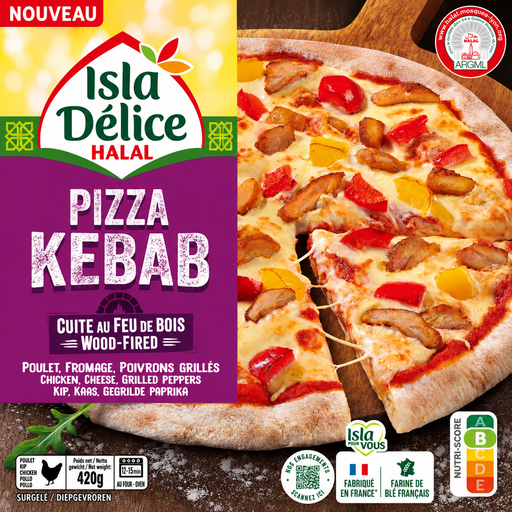 Image unavailable
A kebab and pepper pizza to consider if these toppings suit your meal.
Compare the fat content per 100 g, and check the allergens and cooking method shown on the packaging.
 Image unavailable
The mini-pizza format is worth considering if you’d prefer to explore a Margherita rather than a full-sized pizza in another format.
The format doesn’t indicate the fat content: compare the figures per 100 g and check the cooking instructions on the packaging.
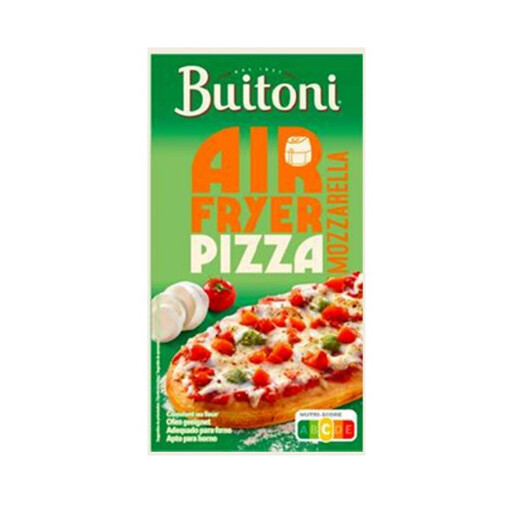 Image unavailable
A pesto and mozzarella recipe to explore if you’re planning to use an air fryer.
Check the settings and cooking time on the packaging, along with the nutritional information and allergen details.
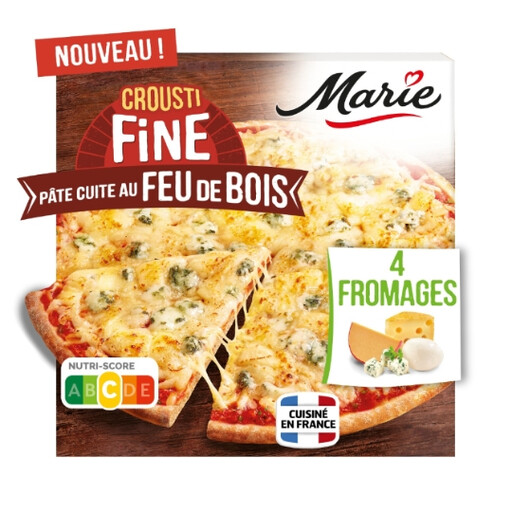 Image unavailable
A thin-crust four-cheese pizza to consider if this topping matters more to you than choosing a different recipe.
To compare its fat content, check the figure per 100 g. Also review the allergens and cooking instructions.
Check the fat content per 100 g on the label for each recipe, then consider how much you’ll eat. The Carrefour product pages consulted list between 6.6 and 15 g per 100 g, depending on the pizza. The name, format or ‘organic’ label won’t tell you this figure.
No. Nutri-Score is an overall nutritional guide, not an indication of fat content. According to Santé publique France, it complements the nutrition declaration, so check that information to compare fat, saturated fat and salt.
Follow the cooking time and method given for the pizza you buy. Carrefour’s product page for Pizza Royale Extra gives a cooking time of 9 to 10 minutes in a conventional oven, but this timing doesn’t apply to other recipes or appliances.
Read the ingredients list and allergen information on the packaging for the variant you’ve chosen. The product pages consulted mention wheat or milk in some recipes, as well as other possible allergens or traces. Don’t assume that the ingredients in one pizza apply to the whole range.
Don’t refreeze a defrosted pizza. The French Ministry of Agriculture gives this advice for defrosted products and recommends keeping your freezer at between −18 °C and −24 °C. Also follow the storage instructions on the packaging.