People comparing fat content
When choosing between two pizzas for lunch, you’d rather compare the grams of fat per 100 g than rely on the recipe name or Nutri-Score alone.


To choose a frozen pizza for lunch when working from home, start by comparing the fat content per 100 g, then consider how much you plan to eat. The specific recipes reviewed here differ on this measure, but a lower figure per 100 g doesn’t tell you everything about the whole pizza. Check the saturated fat, salt, ingredients and cooking instructions too.
When choosing between two pizzas for lunch, you’d rather compare the grams of fat per 100 g than rely on the recipe name or Nutri-Score alone.
Net weight matters just as much as the figure per 100 g if you’re having the whole pizza for lunch. Dr. Oetker France’s product pages let you check both of these details for the Ristorante recipes mentioned here.
Before choosing your lunch, you’ll want to check whether the packaging for the exact recipe lists wheat, milk or any possible traces.
Start by comparing the figures per 100 g, then check how much you’ll actually eat. The ingredients and cooking instructions can help you choose between pizzas that meet your priorities.
| Criterion | What to check | Who is it for? |
|---|---|---|
| Fat | Compare the fat and saturated fat content per 100 g for the exact recipes. | I want to compare pizzas by their nutritional values, without assuming that a vegetable topping is necessarily lower in fat. Around 39% of consumers in this group make this their top priority. |
| Portion eaten | Check the net weight and see whether the stated portion is the whole pizza. | If I eat the whole pizza at lunchtime, its size affects how much fat I consume. Portion size is the top priority for around 23% of consumers in this group. |
| Ingredients and allergens | Read the ingredients list, highlighted allergens and any ‘may contain’ statements for the exact product. | I need to check the ingredients before choosing, even if the recipe looks simple or contains vegetables. This is the top priority for around 23% of consumers in this group. |
| Preparation | Check which appliance you’ll need, whether to preheat it and the cooking instructions on the packaging. | Between meetings, I need to know whether I can make the pizza with the equipment and time I have. Around 15% of consumers in this group prioritise this. |
According to Dr. Oetker France’s product page, the 385 g Ristorante Vegetale contains 7.9 g of fat per 100 g, but 31 g in the whole pizza.
Compare the recipes per 100 g first, then factor in how much you plan to eat. If you’re keeping some of the pizza for later, follow the product’s storage instructions.
Nutri-Score alone doesn’t tell you how many grams of fat or saturated fat a pizza contains, which is what you need for this comparison.
To compare two pizzas on this specific point, read their nutritional information per 100 g.
The Ristorante Vegetale described by Dr. Oetker France contains wheat and dairy ingredients, among other things. Its product page also warns that it may contain traces of soya and mustard. So ‘Vegetale’ doesn’t mean ‘dairy-free’ or ‘gluten-free’.
Check the ingredients list and any traces warnings on the packaging of the pizza you buy.
The instructions for the Ristorante Margherita and Mozzarella recipes reviewed on Dr. Oetker France’s website specify a preheated oven, with cooking times that vary by recipe.
Follow the temperature, shelf position and cooking time shown on your packaging. Don’t assume that a pizza designed for the oven is suitable for the microwave.
The Ristorante range includes Vegetale, Margherita and Mozzarella recipes, among others, as described on Dr. Oetker France’s product pages.
Carrefour France lists a 310 g Carrefour Bio Margherita, with its ingredients and nutritional information.
Auchan France’s frozen pizza range includes own-brand recipes and products from other brands.
Auchan France lists a 430 g Buitoni So Tasty 4 Cheese among its frozen pizzas.
Lidl France features a category for frozen pizzas and snacks.
These pizzas come in different recipes and formats for lunch when working from home. Compare the nutritional information for the exact product with the portion you plan to eat, then check its ingredients and cooking instructions.
 Image unavailable
Worth a look if you’re comparing fat content per 100 g: Dr. Oetker France’s product page for the 385 g Ristorante Vegetale lists 7.9 g per 100 g and 31 g for the whole pizza.
Check the ingredients and cooking instructions on the packaging of the product you buy.
 Image unavailable
This 270 g pack of mini Margherita pizzas is worth considering if you’d like to choose how many to serve for lunch.
Check how many mini pizzas you’ll eat, along with the nutritional values and cooking instructions on the packaging.
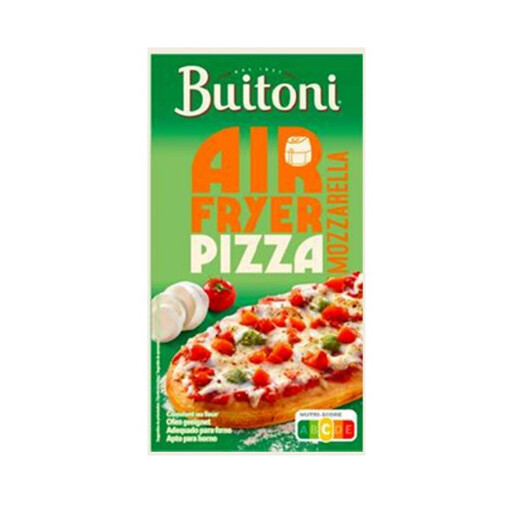 Image unavailable
This 195 g format may appeal if you’re planning to cook a pizza in an air fryer.
Check the cooking settings on the packaging and compare the fat content per 100 g before you choose.
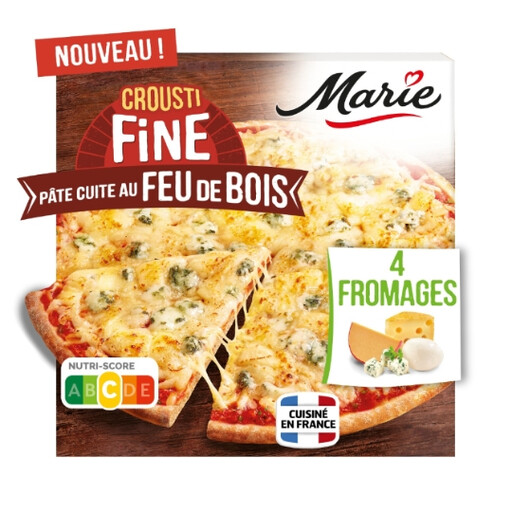 Image unavailable
If you’re considering a thin-crust four-cheese pizza, this 390 g format is worth checking against the portion you plan to have for lunch.
Compare the fat and saturated fat content per 100 g, then check the cooking instructions on the packaging.
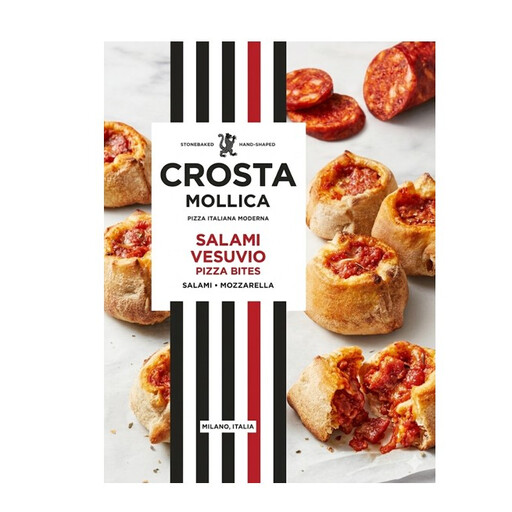 Image unavailable
This 270 g pack of mini salami pizzas lets you plan how many to serve for lunch.
Read the nutritional information, particularly the salt content, on the packaging before comparing this recipe with others. Check the cooking instructions too.
Check the ‘fat’ line per 100 g on both products. France’s Directorate-General for Competition Policy, Consumer Affairs and Fraud Control explains that this format makes it easier to compare prepacked foods. Then check the saturated fat content and how much you plan to eat.
No. According to Dr. Oetker France, the 385 g Ristorante Vegetale contains 7.9 g of fat per 100 g, but 31 g in the whole pizza, as well as 3.7 g of salt. Consider the portion you plan to eat rather than looking at the figure per 100 g alone.
No. Nutri-Score doesn’t replace the actual fat content figure. If that’s what you’re comparing, check the fat and saturated fat content per 100 g in the nutritional information too.
Check the information for the exact recipe. The Ristorante pizzas reviewed on Dr. Oetker France’s website contain wheat and dairy ingredients, among other things, and some product pages mention possible traces of soya or mustard. Read the highlighted allergens and traces warnings on the pack you buy.
For the Ristorante Mini Three Cheese Pizza listed by Auchan France, the instructions say not to refreeze after defrosting. Check and follow the storage instructions for the pizza you’ve bought.