Residents who need to manage their fat intake
If this restriction is included in an individual dietary plan, compare the fat content per 100 g and per planned serving, while also checking salt, protein and allergens.


For a meal in a care home, lower-fat frozen pizza should only be considered if limiting fat is part of the resident’s dietary plan; it won’t automatically be suitable for everyone. You should also check the serving size, protein, salt, allergens and texture after cooking, and consider the pizza as part of the whole meal. If a resident is malnourished or at risk of malnutrition, the choice should be discussed with the care or dietetics team.
If this restriction is included in an individual dietary plan, compare the fat content per 100 g and per planned serving, while also checking salt, protein and allergens.
The French National Authority for Health highlights the importance of appropriate care for malnutrition in older people. For these residents, routinely looking for the lowest-fat pizza could distract from ensuring they get the nutrients they need.
Choose pizza in the context of the menu being served, the planned portion and any adaptations needed for individual residents, rather than treating it as a meal on its own.
First check the resident’s individual requirements, then consider the nutrients needed and the nutritional values of the portion that will actually be served.
| Criterion | What to check | Who this applies to |
|---|---|---|
| Prescription, texture and allergens | Check the exact product against the dietary plan, the texture required after cooking, and its ingredients and allergen list. | If chewing or swallowing difficulties, or an allergy, mean an adjustment is needed, I need to know whether the pizza can be served to the resident in question. Around 42% of consumers would put this compatibility at the top of their concerns. |
| Maintaining nutrient intake | Check the energy and protein per 100 g and per planned serving, in line with the nutritional plan. | If there’s a risk of malnutrition, I don’t want to reduce fat without considering the nutrients in the meal. Around 33% of consumers would make this their priority. |
| Fat and salt | Compare the fat, saturated fat and salt per 100 g, then check the values for the amount being served. | When limiting fat is part of the plan, I look for a suitable recipe without overlooking the salt in the serving. Around 25% of consumers would prioritise this comparison. |
A lower fat content, on its own, doesn’t meet the needs of someone who is malnourished or at risk of malnutrition.
Check the individual dietary plan and ask the care or dietetics team for advice if a nutritional risk has been identified.
Picard’s nutritional information lists 4.8 g of fat and 1.7 g of salt per 100 g for its Pizza Regina Italia, compared with 13 g of fat and 0.91 g of salt for its Margherita: the lower-fat option of the two is also the saltier one.
Compare the same values per 100 g, then check them against the planned serving size.
The pizza alone doesn’t tell you whether lunch or dinner meets the resident’s needs.
Review the full menu and the pizza portion with the catering team.
Neither being frozen nor the fat content tells you what texture the pizza will have after cooking or which ingredients need to be avoided.
Read the label for the exact product and confirm any texture adaptations needed before serving.
Carrefour offers frozen pizzas under its own brand, including a Carrefour Bio Margherita.
Auchan provides nutritional information for some frozen pizzas in its range.
The E.Leclerc catalogue features Marque Repère pizzas, including products under the Turini brand.
These frozen pizzas can be considered when putting together a meal in a care home. The pack size doesn’t determine the portion to serve, and each choice should be checked against the dietary plan, allergens and texture requirements of the individual resident.
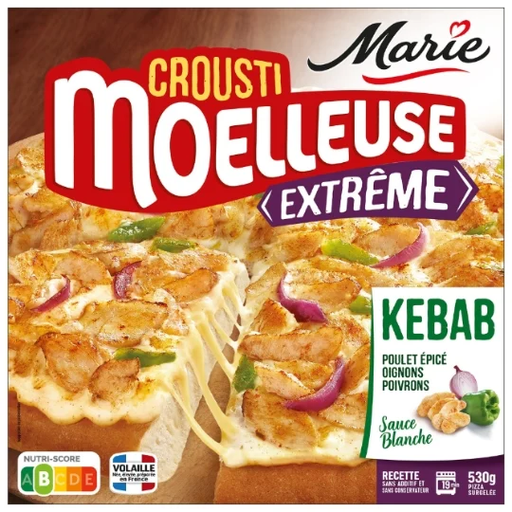 Image unavailable
Consider it as part of a meal when the portion and recipe fit the resident’s dietary plan.
530 g pack; decide how much to serve and check the ingredients, allergens and texture after cooking.
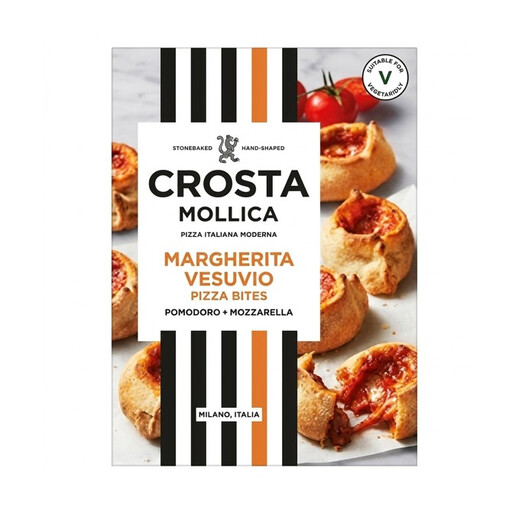 Image unavailable
The mini format could be considered when planning individual servings, but it doesn’t determine the right amount for any particular resident.
270 g total weight; check the planned portion, allergens and texture after cooking.
No. Its fat content alone isn’t enough to tell you whether it fits the resident’s dietary plan. The portion, allergens, texture and other nutrients in the meal also matter, particularly if the resident is malnourished or at risk of malnutrition.
Pizza should be chosen as part of the whole meal, not as a decision about a single product in isolation. The catering team can then review its portion and the other items on the menu in light of residents’ needs.
Compare their fat and saturated fat per 100 g, then check the salt, protein and amount actually served. A lower fat content doesn’t necessarily mean a lower salt content.
No. If it appears on the packaging, Nutri-Score can help you assess the nutritional information, but it doesn’t tell you on its own about an individual prescription, allergens, texture or planned portion.