Anyone comparing ready meals for the first time
If fat content is a priority for you, compare the figures per 100 g for similar meals. Manger Bouger notes that nutrition information includes details such as fat, saturated fat and salt.


When choosing a frozen meal with fat content in mind, compare the figures per 100 g for meals intended for the same occasion. Don’t overlook saturated fat, salt or portion size. For your first shop, choose a format you can use and store, then check the cooking instructions before you buy.
If fat content is a priority for you, compare the figures per 100 g for similar meals. Manger Bouger notes that nutrition information includes details such as fat, saturated fat and salt.
An individual portion can make a convenient meal without needing to share. Still, check its weight, cooking instructions and nutrition information: the format alone doesn’t tell you what’s in it.
Before choosing several large meals, think about how many portions you’ll actually use and how much space you have in your freezer. Choosing a recipe that suits the number of meals you have planned will help you avoid a format that’s difficult to use.
Start by comparing the ingredients and nutrition information of meals intended for the same occasion. Then check whether the portion size, cooking method and storage requirements suit your first shop.
| Criterion | What to check | Who is it for? |
|---|---|---|
| Fat and ingredients | For similar meals, compare fat, saturated fat and salt per 100 g. Check the ingredients too, along with the Nutri-Score if one is displayed. | I want to compare two recipes without relying on the word “light” alone; around 36% of consumers would prioritise comparing their ingredients and nutritional composition. |
| Portion and cooking method | Check the weight, number of portions and cooking instructions against the equipment you have. | If I’m cooking for one with limited equipment, I need a meal I can prepare and eat in a suitable format; around 29% of consumers would put this convenience first. |
| Size of your first shop | Work out how many portions you’ll actually use and how to store the product after opening, following the pack instructions. | I’d rather buy an amount I can use than leave portions uneaten; for around 21% of consumers, choosing the right format would be the main concern. |
| Availability and transport | Check that the product is available when you shop, and plan how to keep it out of the freezer for as little time as possible. | I need my choice to be available when I shop and to get it into my freezer quickly; around 14% of consumers would prioritise these practical considerations. |
A lower fat content doesn’t tell you, on its own, how much saturated fat or salt a meal contains.
When comparing similar recipes, check these figures together per 100 g and take into account the portion you’ll eat.
A sharing dish is only practical if the quantity suits the meals you have planned and you can follow its storage instructions.
Check the weight and number of portions you can use before adding it to your first shop.
A format that’s too large can also leave you with portions you won’t use.
A meal won’t be a simple option if preparing it requires equipment you don’t have.
Check the cooking method and storage instructions on the pack before you buy.
According to the DGCCRF, a rise in temperature speeds up microbial growth, so it’s important to plan how you’ll transport frozen food.
Pick up frozen food towards the end of your shop, use an insulated bag if possible and put it in the freezer as soon as you get home.
These retailers offer different types of frozen food. Always compare the label of the specific recipe you’re interested in.
Carrefour offers frozen ready meals, as well as vegetables and vegetable mixes for the pan.
E.Leclerc offers frozen meals from ranges including Eco+ and Marque Repère.
Auchan separates individual and family-sized ready meals in its frozen food aisle.
Lidl offers frozen ready meals, with a range that may vary.
ALDI includes ready meals in its range of frozen food.
Picard offers frozen ready meals in individual and sharing formats, as well as a range called “Plus d’équilibre”.
This frozen vegetable dish can be used as a base for a meal, with other ingredients added to complete it. To see whether it suits your preference for lower-fat options, compare its label with that of a similar recipe, and check the portions and cooking instructions.
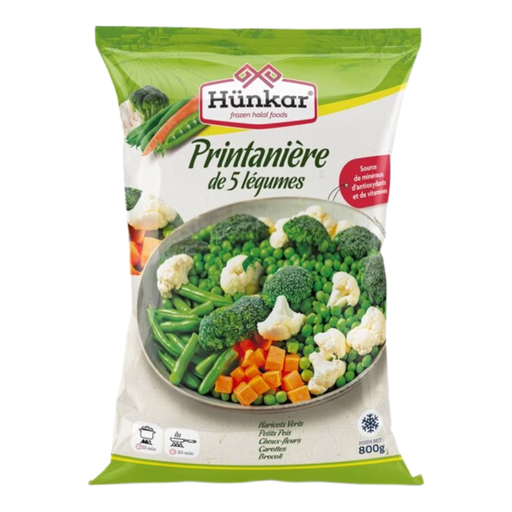 Image unavailable
A vegetable-based option to build a meal around. At 800 g, it’s worth planning how many portions you need. Check the pack for nutrition information per 100 g and cooking instructions.
Compare their fat content per 100 g if they’re intended for the same type of meal. Also check saturated fat, salt, ingredients and portion size. If a Nutri-Score is displayed, it can offer an additional point of reference.
No. It doesn’t mean you can skip the nutrition information. For your first shop, check the portion size too and compare the meal with another option intended for the same occasion.
An individual tray can make it easier to manage a meal for one. A sharing dish can work well if you’ll use the portions and can follow its storage instructions. Whichever you choose, check the cooking instructions and the ingredients of the specific product.
Keep the time between buying them and putting them in the freezer to a minimum, and use an insulated bag if possible. The DGCCRF notes that a rise in temperature speeds up microbial growth.
Yes, as long as you check that the product is available in your store or for your chosen collection option when you shop. Ranges can vary, so check the label of the product you’re actually going to buy.