People who find certain textures difficult
You’re looking for a dessert without pieces that are hard to chew. Santé.fr distinguishes between precautions around food textures and the assessment needed when someone has a swallowing difficulty.


To choose a lower-fat frozen dessert, compare the fat content per 100 g, then check the sugars and ingredients too: words such as ‘light’ or the ‘sorbet’ category aren’t enough on their own. If chewing is difficult, check for hard, sticky or crumbly pieces. If you have a swallowing difficulty or are at risk of food going down the wrong way, a healthcare professional should assess the appropriate texture; you can’t tell from how a dessert looks.
You’re looking for a dessert without pieces that are hard to chew. Santé.fr distinguishes between precautions around food textures and the assessment needed when someone has a swallowing difficulty.
You want to compare nutritional values per 100 g, while checking sugars, energy and ingredients separately.
You’re looking for a tub or portions that are easy to serve, without assuming the format guarantees a smooth recipe or a particular composition.
For a dessert that’s easy to eat and lower in fat, start by checking its actual texture, then compare the nutritional values per 100 g and the serving format.
Worth considering: if you’re looking for a recipe with a low fat content on the label and a texture that looks even.
Bear in mind: check the sugar content and any added pieces separately; sorbet alone isn’t suitable for someone with a swallowing difficulty.
Worth considering: if you prefer a dessert served with a spoon and find a recipe with a texture that suits you.
Bear in mind: check the fat content per 100 g and look for biscuits, pieces or coatings; the category doesn’t guarantee either the ingredients or the texture.
| What to check | Look for | Who it matters to |
|---|---|---|
| Texture | Check for pieces, shards, biscuits and coatings. If you have a swallowing difficulty or have been prescribed a particular texture, ask for an appropriate assessment rather than judging by appearance. | If I find certain pieces hard to chew, I want to avoid surprises in every spoonful; around 42% of consumers would prioritise texture. |
| Fat | Compare the fat content per 100 g, then check the sugars and energy using the same measure. | If I’m looking to cut down on fat, I want to compare two desserts without confusing this with their sugar content; around 33% of consumers would put fat first. |
| Format | Check the number of portions, the net quantity and how the dessert is served. | If I want to serve dessert without cutting it up, a tub to scoop or individual portions make serving easier; around 25% of consumers would prioritise this practical need. |
These two figures describe different things. E.Leclerc’s product listing for ESKISS lime sorbet gives 0.0 g of fat and 22.0 g of sugars per 100 g.
Compare the fat and sugar content of each product per 100 g.
Biscuits, shards, nuts or pieces can make chewing more difficult, even in a dessert that looks soft. Santé.fr highlights the difficulties that hard, sticky, crumbly or scattered foods can cause.
Check the full product name, ingredients and texture if these pieces could be a problem for you.
A smooth appearance doesn’t tell you whether a dessert is suitable for someone who has difficulty swallowing or is at risk of food going down the wrong way.
According to Santé.fr, a speech and language therapist or phoniatrician can assess the appropriate texture before you choose foods.
This rating doesn’t tell you about added pieces or the texture when eaten with a spoon, and it doesn’t replace the nutritional values that matter to your choice.
Check the nutritional table and ingredients list for the specific dessert you’re considering too.
Sorbet product listings let you check the nutritional values for each product.
The range lets you check sorbets and tubs of frozen cream, including products under the ESKISS brand.
The online range lists sorbets separately from tubs of frozen cream.
The range includes different types of ice cream, sorbet and frozen desserts, in individual or sharing formats.
The frozen dessert range includes tubs, cones, ice lollies and mochi.
These tubs and portioned sorbets offer two ways to serve a frozen dessert. If chewing is difficult, check the texture and any added pieces in the specific product; neither format guarantees that it meets a prescribed texture.
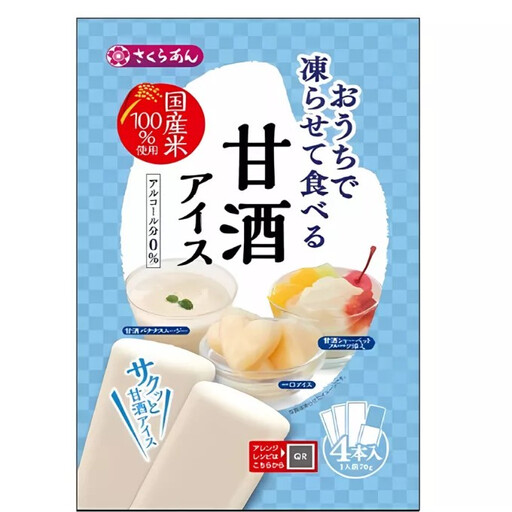 Image unavailable
A sorbet option for comparing portioned frozen desserts. Check the nutritional values and look for any added pieces if texture is important to you.
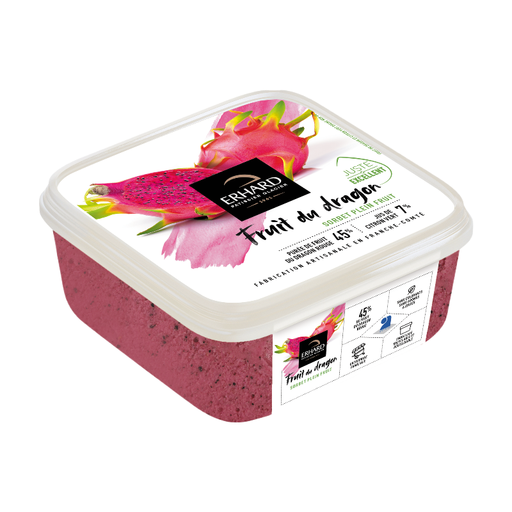 Image unavailable
A sorbet to consider if you prefer to serve dessert from a tub. Before choosing it when chewing is difficult, check its sugar and fat content per 100 g, as well as any added pieces.
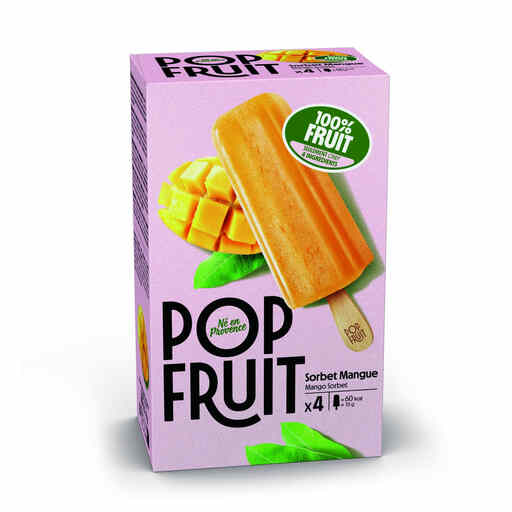 Image unavailable
The pack of four sticks is a good option if you’re looking for individual portions. If you need to avoid certain textures or allergens, check for added pieces and read the packaging information before choosing.
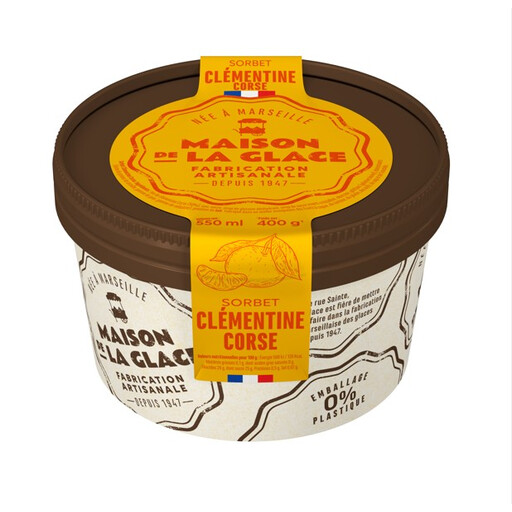 Image unavailable
A sorbet to consider if you want to serve it by the spoonful. Check the texture, any added pieces and the net quantity on the packaging: the format information for this product varies.
No: compare the two values separately per 100 g. For example, E.Leclerc’s listing for ESKISS lime sorbet gives 0.0 g of fat but 22.0 g of sugars per 100 g.
Hard, sticky, crumbly or scattered pieces need particular attention. Santé.fr’s guidance on food textures recommends checking these characteristics; look especially for biscuits, shards, shells and pieces in the dessert you choose.
Not necessarily: its appearance can’t confirm whether it has the required texture. Santé.fr says that a speech and language therapist or phoniatrician can assess the appropriate texture, particularly if someone has difficulty swallowing or is at risk of food going down the wrong way.
Check the dessert’s name, ingredients and nutritional values, then compare them with your texture requirements. The DGCCRF states that nutritional information is given per 100 g or 100 ml: use the same measure to compare fat and sugars.