Meal delivery organisers with a specific fat-content requirement
You need to be able to check the stated fat content, format and storage instructions for the dessert you choose, rather than relying on its name.


If the dessert needs to be frozen and its fat content is a deciding factor, choose a product whose nutritional information lets you check this and whose storage instructions are suitable for meal delivery. Individual portions make serving easier, but don’t in themselves mean the dessert is lower in fat. Keeping it frozen is a separate requirement.
You need to be able to check the stated fat content, format and storage instructions for the dessert you choose, rather than relying on its name.
An individually portioned dessert, or one that’s easy to divide, can make serving simpler. However, portion size is no substitute for checking the nutritional information.
If the dessert doesn’t have to be frozen, you could also consider a chilled dessert with a stated fat content, provided you can arrange refrigerated storage.
For meal delivery, first check the ingredients and nutritional information for the exact product, then its serving format and how it will be kept frozen until delivery.
| Criteria | What to check | Who this matters to |
|---|---|---|
| Fat content | Check the amount per 100 g or 100 ml. If the product makes a claim, make sure it relates specifically to fat. Compare figures expressed in the same units. | I need to be able to justify this choice without relying on the dessert’s name; around 42% of consumers would make this check a priority. |
| Portions | Check the weight per piece or the number of servings, then look at the product’s nutritional information. | When I’m preparing desserts to hand out, I want to know how many portions to serve; around 33% of consumers would put this need first. |
| Storage | Identify the dessert category and follow its storage temperature instructions. For transport, the DGCCRF specifies a maximum temperature of −18 °C for ice cream and sorbets, and −12 °C for other frozen food. | I need to keep the dessert frozen during the journey and put it away promptly; around 25% of consumers would make this their priority. |
Individual portions make serving easier, but they don’t tell you about the ingredients or nutritional content. For example, Picard’s product information for its individual vanilla mochi lists 7.7 g of fat per 100 g.
Check the product’s “fat” line before comparing it with another product on the same basis.
A chilled dessert may meet your fat-content requirement without meeting a requirement to deliver a frozen dessert. It needs to be kept refrigerated, which is different from transporting a frozen product.
Only consider this option if frozen is not a requirement and you can arrange refrigerated transport and storage.
The required temperature depends on the product category and its storage instructions. The DGCCRF warns that a rise in temperature can increase food-related risks.
Check the instructions for the product you choose and plan how to transport and store it as soon as it arrives.
These retailers offer different types of desserts to consider. However, finding a product in their frozen food range doesn’t tell you how much fat it contains.
A place to explore ice cream, sorbets and other frozen desserts.
A retailer to explore for frozen pastries and specialities in a range of formats.
A frozen food specialist offering pastries, frozen desserts and individual portions.
This selection features multipacks of ice lollies to consider if individual portions are useful for your meal delivery service. Before choosing a product to meet a specific nutritional requirement, check its fat content and storage instructions on the packaging.
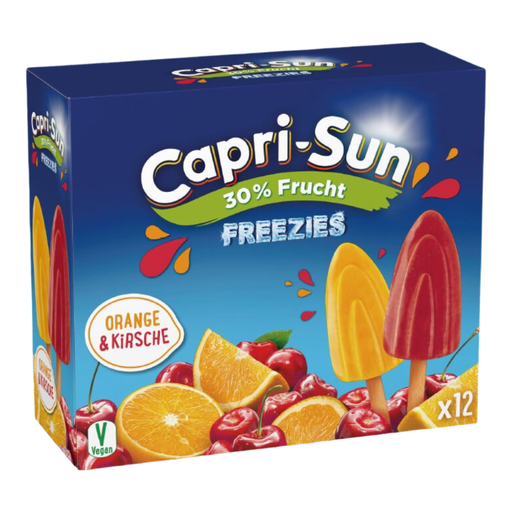 Image unavailable
This pack of 12 lollies could be a good choice if individual portions make it easier to serve a frozen dessert. Check the nutritional information and storage instructions on the packaging to make sure they’re suitable for your meal delivery service.
No. Check which nutrient the claim refers to and look at the fat content per 100 g or 100 ml for the product. According to EUR-Lex, nutrition claims used in the European Union must be included in the list of permitted claims and meet the conditions for their use.
The temperature depends on the dessert category and the product’s own instructions. For transport, the DGCCRF specifies a maximum temperature of −18 °C for ice cream and sorbets, compared with −12 °C for other frozen food. Check the information on the packaging too.
No. An individual format tells you about the portion, not its fat content. For example, Picard lists 7.7 g of fat per 100 g for its individual vanilla mochi. Compare the nutritional information for the products you’re interested in.
Yes, but only if the dessert doesn’t have to be frozen for your meal delivery service. Check the fat content of the chilled dessert you choose and arrange the refrigerated transport and storage specified for that product, rather than following the instructions for a frozen dessert.