What should you check before buying?
Start by comparing fat and sugar content on the same basis. Then consider how much you’ll actually serve your child, followed by the information you’ll need to store the dessert safely.
| What to check |
Look for |
Who it matters to |
| Fat |
Compare the “fat” value per 100 g or 100 ml for products listed using the same unit. |
I want to reduce the fat in dessert without relying on the product name alone. Around 40% of consumers make this their top priority. |
| Sugars |
Read the “of which sugars” line on the same basis as the fat content. |
A lower-fat sorbet may not meet my needs if its sugar content is still high. This is the top priority for around 30% of consumers. |
| Portion and allergens |
Check the weight of each item or the amount to serve, along with the ingredients list and allergen information. |
I need to be able to adjust the portion to suit the child and spot any ingredients to avoid before serving. Around 20% of consumers prioritise these checks. |
| Storage and serving |
Check the storage instructions and the date shown on the packaging. |
I’m looking for a dessert I can transport, store and serve in line with the packaging instructions. This is a priority for around 10% of consumers. |
Frozen desserts and sorbets available on Joybuy
This selection includes sorbets, ice pops and a mochi-style frozen dessert. To choose a lower-fat dessert for dinner, compare the nutritional information using the same unit and check the portion size and allergens before serving.
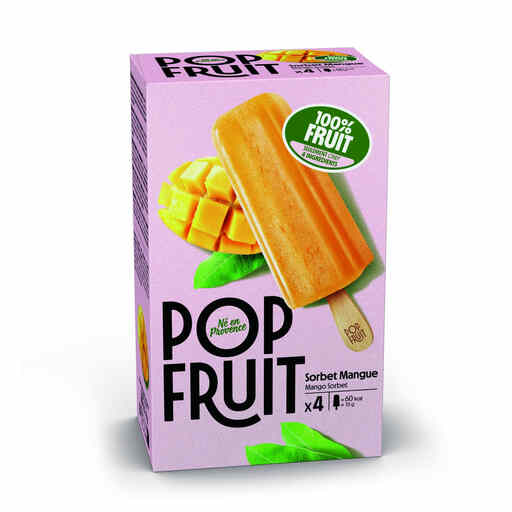 Image unavailable
POP FRUIT Sorbet Sticks 100% Mango, x4, 280 g
These sorbet sticks may suit you if you’d rather serve an individual item than scoop from a tub. The pack contains four sticks, with a total weight of 280 g. Check the nutritional values and allergen information before deciding how much to serve.
The information provided for this product states that it is not suitable for children under 36 months.
View on Joybuy
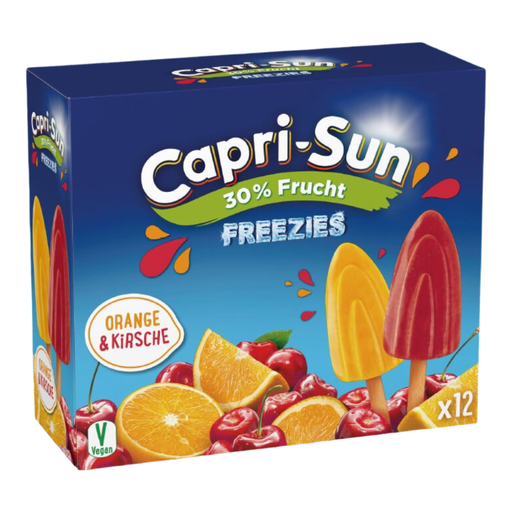 Image unavailable
CAPRI-SUN Orange & Cherry Ice Pops, x12, 444 g
These ice pops come in individual portions, making them easy to serve for dessert. The pack contains 12 pieces, with a total weight of 444 g. Check the packaging for preparation and storage instructions, sugar content and allergen information.
View on Joybuy
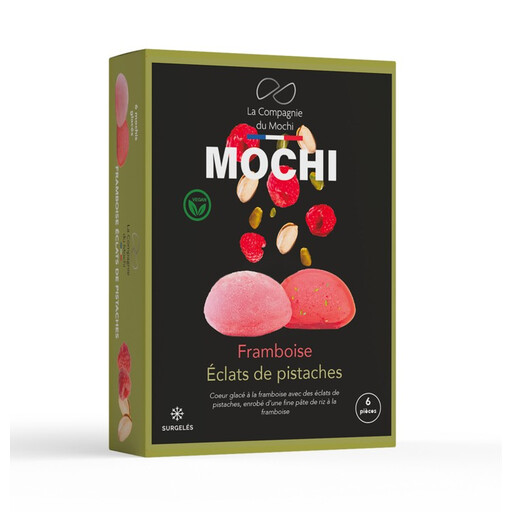 Image unavailable
La Compagnie Du Mochi Mochi Ice Raspberry Pistachio, x6, 198 g
This mochi-style frozen dessert comes in individual pieces, but the format alone doesn’t tell you what portion is right for your child. The box contains six pieces, with a total weight of 198 g. Check the fat, sugar and allergen information for this flavour.
View on Joybuy
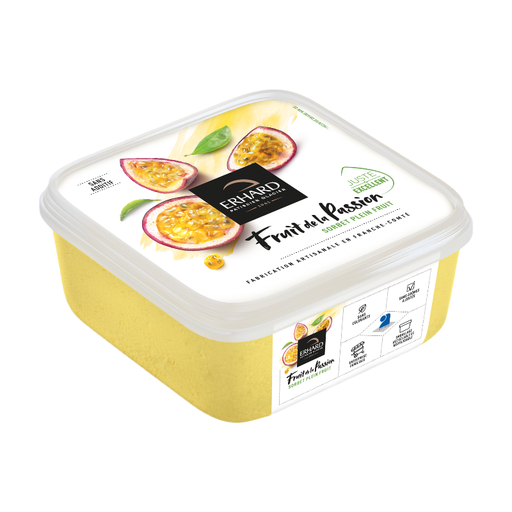 Image unavailable
ERHARD Full Fruit Passion Fruit Sorbet, 488 g
This 488 g sorbet is a good option if you want to choose how much to scoop out. Check the fat and sugar content on the label, then decide how much to serve. Check the allergen information too.
View on Joybuy
Frequently asked questions
Is sorbet always lower in fat and sugar than ice cream?
No. The name of the dessert doesn’t tell you either value. Auchan’s mixed-fruit sorbet sticks contain less than 0.5 g of fat, but 23 g of sugars per 100 g. Compare the labels of the specific products and consider how much you’ll serve.
How do I compare two frozen desserts with different portion sizes?
First, compare the nutritional values using the same unit, per 100 g or per 100 ml, then consider the amount you’ll actually serve. The DGCCRF says that presenting values per 100 g or 100 ml makes comparisons easier, but it doesn’t replace checking the portion size.
What should I check if a child needs to avoid certain allergens?
Read the ingredients list, highlighted allergens and any precautionary allergen statements on the product you’re buying. Ingredients can vary between similar desserts. If an allergy has been diagnosed, follow the advice of your healthcare professional.
How should I transport and store frozen dessert after shopping?
Pick up frozen products at the end of your shop, keep the journey home as short as possible and follow the storage instructions on the packaging. Anses points out that keeping food at a low temperature slows the growth of micro-organisms. Check the date shown on the product too.


