Parents keeping an eye on nutritional information
If fat content is your top priority, compare the amount per 100 g for the exact products you’re considering. Salt, portion size and cooking method should also inform your choice.


To choose frozen chips with a lower stated fat content in mind, compare the figures per 100 g of frozen product, then check the recommended cooking method and pack size. E.Leclerc lists 2.4 g of fat per 100 g for its classic POM'LISSE 9x9 chips, compared with 3.5 g on Auchan’s listing for McCain Just au Four Classique. The first option comes in a large pack, while the second is specifically intended for oven cooking.
If fat content is your top priority, compare the amount per 100 g for the exact products you’re considering. Salt, portion size and cooking method should also inform your choice.
Choosing a product specifically intended for oven cooking lets you match it to your kitchen equipment. Check the pack for the quantity to cook and the instructions for your type of oven.
A large pack could be a good choice if you have enough freezer space and the quantity suits how often you use it.
When cooking for young children, start with your main priority, then check the exact product: a lower fat figure, oven cooking and a practical pack size don’t necessarily go hand in hand.
| What to consider | What to check | Who is it for? |
|---|---|---|
| Fat content | Compare the fat per 100 g of frozen product across similar products; check the salt content too. | If my first priority is to reduce the stated fat content, I look at the figures for each pack before considering its cut or size. Around 50% of consumers are said to put this first. |
| Oven cooking | Check that the product is intended for oven cooking, then read the instructions for your appliance and the quantity you’re preparing. | When planning a meal without using a deep-fat fryer, I choose a pack with instructions suited to my oven. This convenience is said to be the top priority for around 30% of consumers. |
| Pack size and storage | Check the net weight, available freezer space and storage instructions. | If I prepare these chips regularly, I want a pack I can store and use at my own pace. Pack size is said to be the top priority for around 20% of consumers. |
Not all McCain Just au Four products have the same fat content: McCain France’s product information lists 4 g per 100 g for Steakhouse and 4.5 g for Allumettes, while Auchan lists 3.5 g for Classique.
Compare the ‘fat’ figure per 100 g before choosing a cut or cooking method.
A lower figure than another product allows you to make a numerical comparison, but it isn’t enough to make a nutrition claim. Claims made about food are governed by European Regulation (EC) No 1924/2006.
Describe the difference you’ve found between the products you’re comparing, and check the claims actually shown on the packaging.
E.Leclerc lists a 2.5 kg pack of POM'LISSE chips, while Carrefour also offers a 600 g size. The right pack depends on how much freezer space you have and how quickly you’ll use it.
Make room in your freezer before buying. For transporting frozen food, the DGCCRF recommends keeping it out of the freezer for as little time as possible and using an insulated bag if you can.
Auchan says that the ingredients in its classic oven chips may vary depending on the Drive service and the date of purchase.
Check the ingredients, nutritional information, weight and cooking instructions on the pack for the exact product you’ve bought.
The ranges below offer useful points of comparison. The figures and instructions apply to the specific products mentioned, not every product from each brand.
The Just au Four range includes Classique, Steakhouse and Allumettes cuts.
E.Leclerc lists classic 9x9 chips in a 2.5 kg pack.
The oven-chip range includes 600 g and 1.5 kg packs.
Auchan lists classic oven chips in a 1 kg pack.
ALDI France lists an MR FRITES® product intended for oven cooking.
This selection includes different cuts, as well as products described as suitable for the oven or air fryer. If fat content is your priority, compare the label on the exact pack rather than assuming its nutritional profile from the cooking method alone.
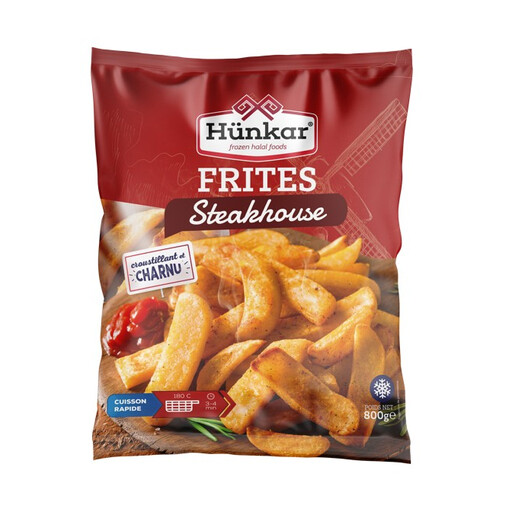 Image unavailable
This product is a good match if you’re looking for Steakhouse-cut chips in an 800 g pack. Check the fat per 100 g and the cooking instructions on the packaging before choosing it.
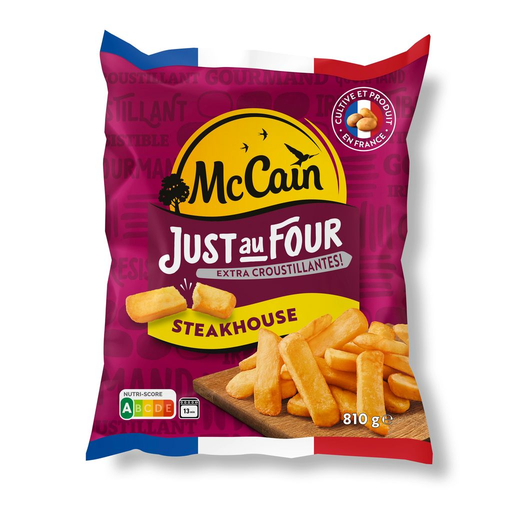 Image unavailable
This 810 g pack is a good choice if you prefer Steakhouse-cut chips and a product described as suitable for oven cooking. Check the packaging for the cooking instructions and nutritional information for this variety.
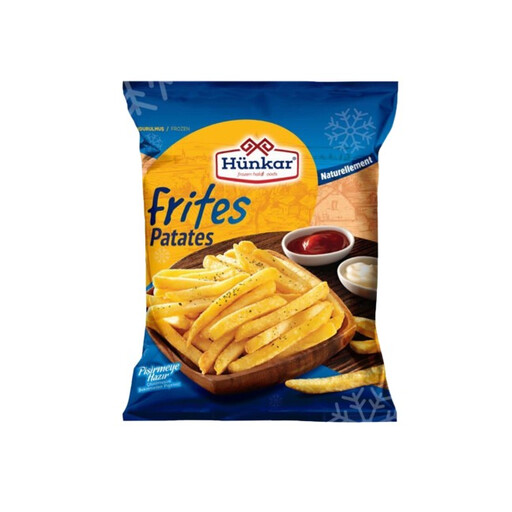 Image unavailable
This 1,000 g pack of 7/7 Allumettes-cut chips could suit you if that’s the size you’re after. Compare the fat content on the packaging and follow its cooking instructions; don’t assume that the cut determines the nutritional content.
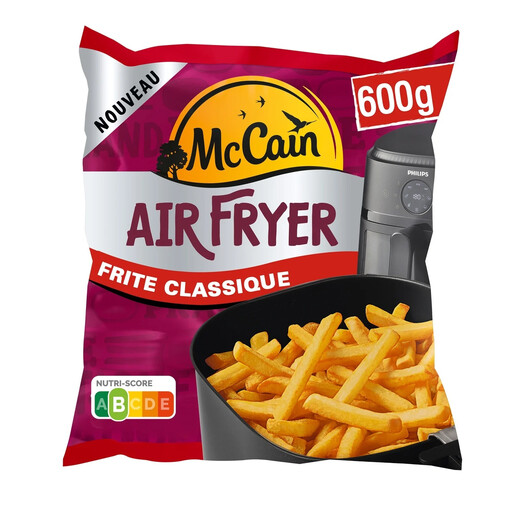 Image unavailable
This 600 g product is described as suitable for an air fryer. The cooking method alone doesn’t tell you its fat content, so check the nutritional information and instructions on the pack.
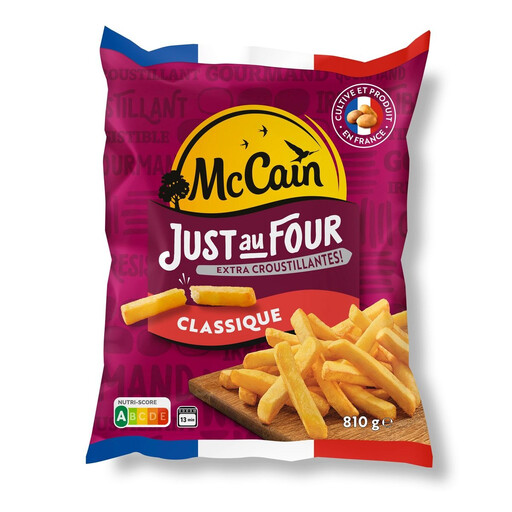 Image unavailable
This 810 g pack is for anyone looking for a classic product described as suitable for oven cooking. Check the cooking instructions and fat per 100 g on the packaging before comparing it with other oven chips.
Compare the fat per 100 g for products measured on the same basis. E.Leclerc’s listing for classic POM'LISSE 9x9 chips gives 2.4 g per 100 g, while Auchan’s listing for McCain Just au Four Classique gives 3.5 g. Then check the cooking method and the pack you’re actually buying.
Yes, as long as the pack says the product should be cooked in the oven. For McCain Just au Four Classique, Auchan’s listing gives a cooking time of 13 minutes in a fan oven or 20 minutes in a conventional oven for 300 g spread in a single layer. Follow the instructions on the pack you buy.
Keep transport time to a minimum and put the chips in the freezer as soon as possible, following the storage instructions on the packaging. The DGCCRF recommends using an insulated bag where possible and checking the storage temperature shown on the product.
No. A numerical difference between two products isn’t enough to describe one of them this way. You can compare their stated values on the same basis, but nutrition claims made about food are governed by European Regulation (EC) No 1924/2006.