When choosing sardines for a holiday rental, start by comparing the ‘of which sugars’ figure per 100 g. A low figure does not, by itself, mean that the product is ‘reduced in sugars’. Then compare the recipes based on how you plan to serve them, whether they contain bones, their salt content and whether you can refrigerate any leftovers after opening.
Who are these sardines suitable for?
Holidaymakers keeping an eye on declared sugars
If sugar content influences your choice, compare the ‘of which sugars’ figure per 100 g on the tins you’re considering. Product listings from Auchan, Connétable and Saupiquet show recipes declaring 0 g or less than 0.5 g, but that does not amount to a claim that they are reduced in sugars.
Holidaymakers who want an easy meal
In a temporary kitchen, a product explicitly labelled ‘boneless and skinless’ may suit you if you want to keep preparation to a minimum. Check that this description applies to the tin you choose, and read the storage instructions for after opening.
Holidaymakers who like to vary their meals
Herb or chilli recipes are an easy way to change the flavour without having to buy the same ingredients separately. However, compare the ingredients, sugars and salt in each recipe rather than assuming they’re equivalent to sardines in spring water.
What should you look for?
First, choose a sugar content that meets your needs. Then check the details that will make a practical difference to your meals while you’re away: bones, seasoning, tin size and how to store any leftovers.
| What to consider |
What to check |
Who it matters to |
| Declared sugars |
Compare the ‘of which sugars’ figure per 100 g for the specific recipes you’re considering. |
If I’m mainly looking for a very low sugar content, I want to be able to check it on the label rather than rely on the recipe name. Around 42% of consumers are said to put declared sugars first. |
| Ease of serving |
Look for ‘boneless’ or ‘skinless’ on the label, and check the drained weight if you’re comparing pack sizes. |
When serving a quick meal in a temporary kitchen, I prefer something that needs little preparation. Around 33% of consumers are said to prioritise ease of serving. |
| Recipe and leftovers |
Check the ingredients and salt per 100 g, and read the storage instructions for after opening. |
I’d like to vary the seasoning without having to store an opened tin in unsuitable conditions. Around 25% of consumers are said to put recipe variety and managing leftovers first. |
What should you avoid?
-
Confusing ‘low in sugars’ with ‘reduced in sugars’
A declared value of 0 g or less than 0.5 g of sugars per 100 g does not show that the product has less sugar than a similar one. The DGCCRF notes that the claim ‘reduced in sugars’ is subject to specific rules and requires a reduction of at least 30%.
When choosing a tin, use the ‘of which sugars’ figure per 100 g, without assuming the recipe has been reduced in sugars unless this is confirmed.
-
Checking the sugars without comparing the salt
Product listings from Auchan, Connétable and Saupiquet show that recipes declaring 0 g or less than 0.5 g of sugars per 100 g can have different salt contents.
Compare both nutritional values on the same per-100 g basis for the specific products you’re interested in.
-
Opening a tin that’s too large for your stay
Follow the packaging instructions for storing an opened tin. The products reviewed here need to be refrigerated after opening.
If you expect to keep some for later, make sure you have access to a fridge and choose a size that suits the number of people you’re serving.
Without a way to refrigerate leftovers properly, any uneaten sardines may have to be thrown away.
-
Assuming ‘in spring water’ means ‘boneless’
Auchan’s sardines in spring water and Connétable’s boneless, skinless sardines in spring water do not have the same preparation details.
If bones matter to you, look for an explicit statement on the product you buy. If you want a recipe without oil, check the ingredients list.
Which brands should you compare?
Saupiquet
The brand offers whole sardines and fillets, in spring water or with added seasoning.
- Saupiquet’s product listings show 0 g of sugars and 0.74 g of salt per 100 g for its whole sardines with chilli.
- The lemon and basil fillets contain less than 0.5 g of sugars, but 1.3 g of salt per 100 g, so compare the recipes separately.
Connétable
Its boneless, skinless sardines in spring water may be a good choice if ease of serving matters during your stay.
- Auchan’s listing for this 98 g Connétable product shows 0 g of sugars per 100 g.
- It also shows 1 g of salt per 100 g. Don’t assume these figures apply to other Connétable recipes.
Carrefour
Carrefour Classic’ offers sardines in spring water, with a product listing that lets you check the ingredients.
- The Carrefour Classic’ listing for sardines in spring water names sardines, water and salt as ingredients, and gives a drained weight of 95 g.
- To compare its sugar or salt content with another tin, check the nutritional values for the exact product.
Auchan
Auchan’s sardines in spring water offer a useful comparison for a recipe made with water and salt.
- The product listing shows less than 0.5 g of sugars and 0.66 g of salt per 100 g.
- ‘Less than 0.5 g’ is not the same as a declared value of 0 g. Check the other details on the tin you choose, too.
Sardines available on Joybuy
These two sardine recipes in oil could work well for simple meals in a holiday rental. If sugar content is your main priority, check the nutritional values for your chosen product before buying.
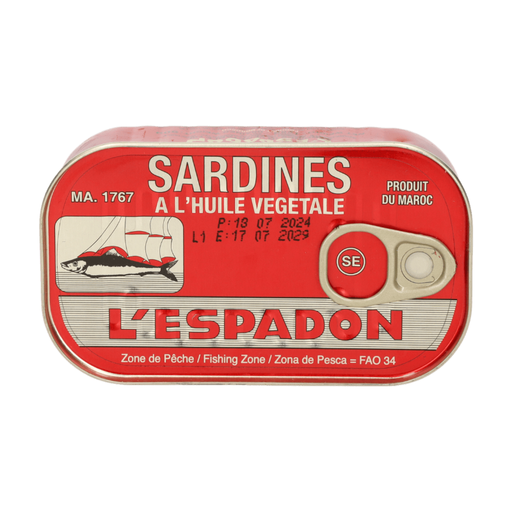 Image unavailable
L’Espadon sardines in oil 125 g
If you’re after a meal that needs little preparation, compare this recipe in oil with options in spring water to find the seasoning you prefer.
125 g tin. Check the nutritional values and ingredients for this product before choosing it, then follow the storage instructions after opening.
View on Joybuy
 Image unavailable
Connétable sardines in extra virgin olive oil 140 g
This recipe is worth comparing if you want sardines already prepared in extra virgin olive oil for a meal during your stay.
140 g tin. Check the sugar and salt values for this product, as well as any information about bones. Don’t confuse it with Connétable’s boneless, skinless sardines in spring water.
View on Joybuy
Frequently asked questions
Are sardines declaring 0 g of sugars ‘reduced in sugars’?
Not on that basis alone: 0 g describes the declared value for that product, while ‘reduced in sugars’ requires a comparison with a similar product. The DGCCRF states that this comparative claim requires a reduction of at least 30%.
Do sardines in spring water always declare 0 g of sugars?
Don’t assume so: check the ‘of which sugars’ figure per 100 g for each product. Among the product listings mentioned here, Connétable’s sardines in spring water declare 0 g, while Auchan’s declare less than 0.5 g.
What should you do with an opened tin of sardines in a holiday rental?
Refrigerate any leftovers and follow the storage time stated on the tin you bought. If your accommodation doesn’t let you store an opened tin safely, choose a size that everyone can finish at the same meal.
Which allergens should you check in a seasoned recipe?
Check the fish allergen information and the full ingredients list for the specific product. Added ingredients and allergen information can vary from one recipe to another, including compared with sardines in spring water.


