
Livraison le jour même ou le lendemain

Qualité garantie

Débloquez vos offres de bienvenue: Livraison GRATUITE | Jusqu'à -80 % | 30 jours d'essai gratuits à JoyPlus
Téléchargez l'application
Balancing intense flavour with a low salt intake is a common conundrum for many cooks. Soy sauce, a cornerstone of Asian cuisine and beyond, is often under scrutiny for its high sodium content. However, it's entirely possible to enjoy its signature umami without sending your sodium levels soaring. Follow our guide to uncover the hidden gems: a selection of reduced-sodium soy sauces, chosen for their quality and aromatic profile.
Before you head to the checkout, a few simple criteria will help you identify a quality product that meets your expectations.
Terms like "less salt" or "low-sodium" can be misleading from one brand to another. Your best bet is to go straight to the nutritional facts panel to check the amount of salt per 100 ml. A true low-sodium soy sauce will typically fall well below the 14-16 g found in classic versions. Take the time to compare labels to make an informed choice.
A premium soy sauce owes its complexity to a natural fermentation process that can last for several months. This slow maturation develops a rich, deep umami, creating what is known as an umami soy sauce. A longer fermentation time often compensates for the reduction in salt with greater aromatic intensity. Also, check the ingredient list: soy, wheat, water, and salt. The shorter, the better.
Not all soy sauces are suited for the same purpose. Lighter varieties work wonders in a vinaigrette or as a table condiment. Others, more robust, are perfect for marinades and braised dishes. There are even specific formulas, like soy sauce for seafood, designed to enhance the delicate flavours of seafood without ever overpowering them.
Here are a few options that cater to different needs, whether you're an everyday cook or a connoisseur of more refined flavours.
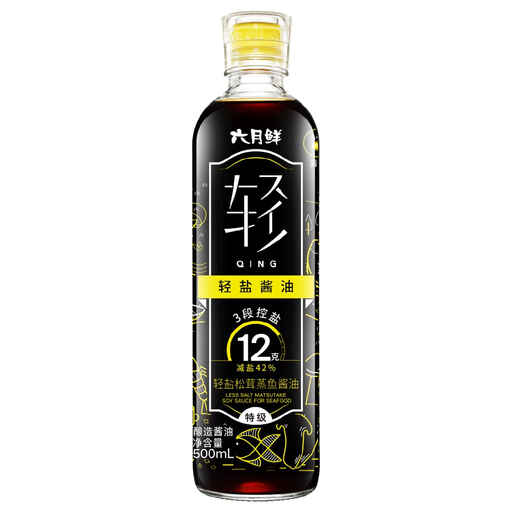
Specially designed for fish and seafood, this sauce is infused with matsutake mushroom (≥10mg/100ml), a highly sought-after ingredient known for its powerful aroma that delivers a significant dose of natural umami. The addition of real lemon juice helps neutralise fishy odours while adding a welcome touch of freshness. The brand claims 42% less salt than its standard Xiaokang soy sauce, resulting in a content of 12.0 g per 100 ml.
For fish and seafood lovers looking to prepare steamed, poached, or lightly marinated dishes with a refined, lower-sodium soy sauce.
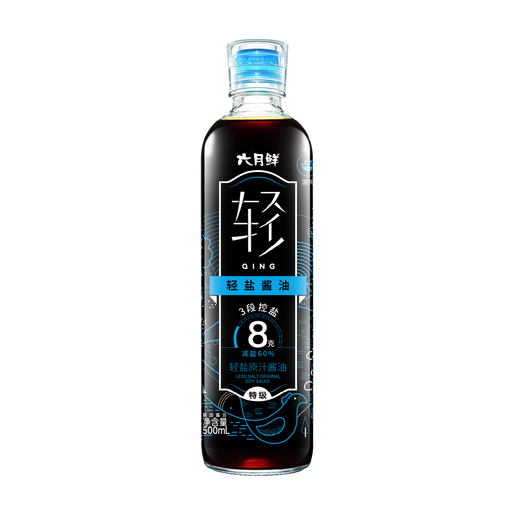
This is the perfect candidate for everyday use. With a claimed 60% salt reduction compared to the brand's benchmark, it boasts a record-low 8.0 g of salt per 100 ml. This is one of the lowest options on the market, yet it doesn't sacrifice quality, thanks to a six-month natural fermentation and a composition based on 18% defatted soybeans.
For those seeking a low-sodium soy sauce for daily use—whether for seasoning, cooking, or dipping—without compromising on quality.
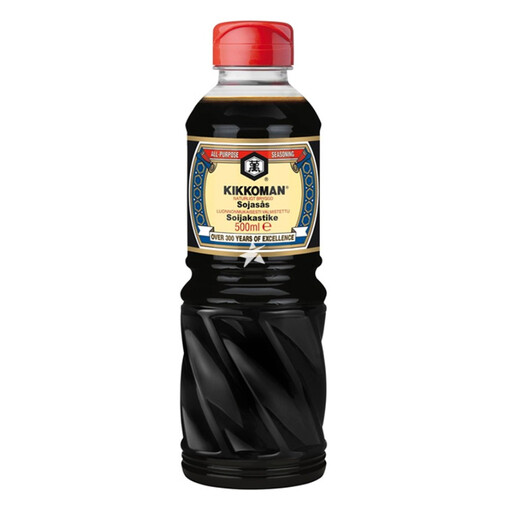
Kikkoman soy sauce is the gold standard, naturally brewed according to an ancient recipe. Although it isn't specifically "less salt" (with 14.8 g of salt per 100 ml), it serves as an excellent benchmark for judging others. Its strength lies in its clean ingredient list: four ingredients (soy, wheat, water, salt), and that's it. No artificial colours or preservatives.
For cooks who prioritise the authentic, globally recognised flavour of Kikkoman soy sauce and use it as a flavour standard in their preparations.
Is our selection not quite enough? The world of soy sauce is a universe of flavours, textures, and, of course, salt levels.
If you want to explore other gems, more traditional sauces, or regional specialities, feel free to browse our complete catalogue.
? Explore Our Full Range of Classic Soy Sauces
The main difference lies in the sodium content, measured in grams of salt per 100 ml. A classic sauce contains about 14 to 18 g of salt, whereas a low-sodium version can go down to 8-12 g. To compensate, quality manufacturers rely on a longer fermentation process or the addition of ingredients (like mushrooms) to boost the umami.
Absolutely! Even though a soy sauce for seafood is designed to enhance seafood—often with citrus notes or a delicate umami—nothing stops you from using it to season chicken, steamed vegetables, or a vinaigrette. It will bring a different complexity than a classic soy sauce.
For a smart, healthy choice, keep an eye on three criteria: the salt content per 100 ml, the ingredient list (the shorter and more natural, the better), and the production process (natural fermentation is a hallmark of quality). A premium soy sauce with reduced salt content is often the ideal balance between health and pleasure.