
Livraison le jour même ou le lendemain

Qualité garantie

Débloquez vos offres de bienvenue: Livraison GRATUITE | Jusqu'à -80 % | 30 jours d'essai gratuits à JoyPlus
Téléchargez l'application
Choosing a low sideboard? It seems easy enough. But the reality of the assembled piece in your living room can often fall short of the glossy online photo. You want a storage solution that's both stylish and practical, without falling for the common traps of online furniture shopping. Let's break down the key things to watch out for to make the right choice and avoid any unpleasant surprises.
Before we even talk about style, let's review the hidden flaws that can turn an impulse buy into a real headache.
To make a purchase that lasts, you need to look beyond the design and focus on a few key technical points. These are the true guarantors of your future storage unit's quality and practicality.
The material defines your sideboard's durability and maintenance needs.
A good sideboard should adapt to your needs, not the other way around. The presence of height-adjustable shelves is a non-negotiable feature. This flexibility is what allows you to store everything from stacks of plates to bottles or a food processor. Also, think about balance: solid doors to hide what needs to be hidden, and open or glass-fronted niches to display your finest objects. That's the secret to a truly versatile piece of furniture.
Safety is not an option. An anti-tip kit included with the furniture is a real sign of a reputable manufacturer: be sure to use it to secure the unit to the wall. As for assembly, clear instructions and well-labelled parts will save you hours of frustration and ensure a proper build, which is crucial for final stability.
To put theory into practice, here are a few models that tick all the right boxes for different needs.
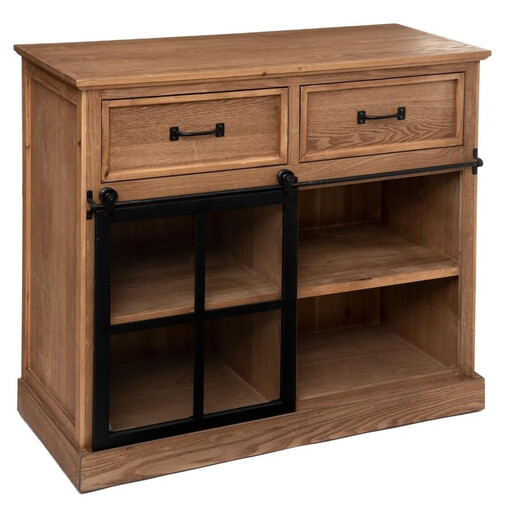
Why we chose it: With its shallow depth (30 cm), this small sideboard is the perfect solution for entryways, hallways, and studios where every square inch counts. Its versatile Scandinavian sideboard look is a bonus.
Its compact dimensions are clearly stated, eliminating the risk of ending up with a piece that's too bulky. The included anti-tip kit allows you to secure it to the wall.
It cleverly combines closed storage (drawers) with a display case, a rare and valuable versatility for such a compact format.
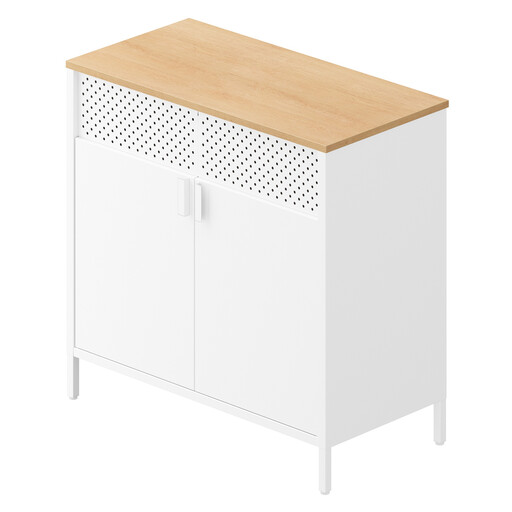
Why we chose it: Perfect for those seeking a 2-door sideboard with a bold industrial look. Its steel construction makes it ultra-versatile: it will fit right in as a storage chest in the living room, a TV stand, or even in an office.
Its 100% steel construction guarantees rock-solid stability—goodbye to wobbly furniture! The interior shelf is adjustable, offering welcome modularity.
The perforated panel (pegboard) on the doors isn't just for looks: it ensures good ventilation and lets you hang accessories for fully customised storage. Another plus: its surface wipes clean with a sponge.
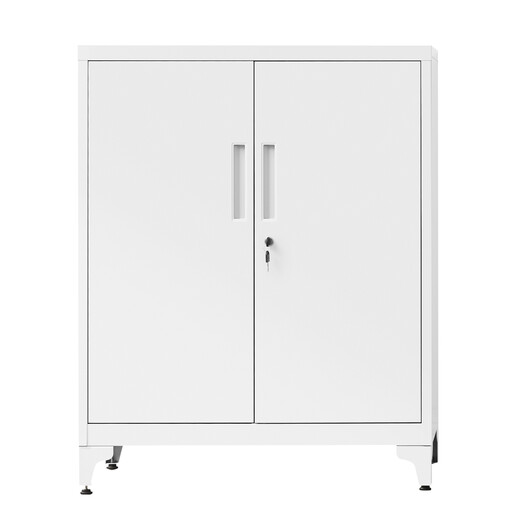
Why we chose it: Ideal for storing important documents, valuable equipment, or simply keeping hazardous products out of children's reach. Its steel structure and key lock make it a veritable home fortress.
This model ticks all the safety boxes: robust steel structure, a reliable lock, and an included anti-tip kit. You can't go wrong.
Its real bonus is the key lock, which provides a peace of mind that traditional sideboards don't offer. The two interior shelves are adjustable for a custom layout.
We have curated a full range of products that meet our standards for quality and safety.
The safest solution: anchor it to the wall. Most quality furniture today comes with an anti-tip kit (brackets or straps). Installation only takes a few minutes and completely secures your furniture—an essential step if you have children or pets.
In an entryway or hallway, aim for a depth of 30 to 35?cm. This is the ideal compromise for storing shoes, bags, or mail without obstructing the walkway. Pro tip: before buying, mark out the furniture's footprint on the floor with masking tape. It's the best way to visualise its actual size.
It's a valid concern! Fortunately, modern designs are well-thought-out. They incorporate magnetic closures or rubber stoppers to cushion the contact and prevent slamming noises. A well-made industrial sideboard will therefore be surprisingly quiet in use.