People keeping an eye on the salt in their whole meal
You want to prepare a hot meal while keeping an eye on the salt in the cooking water, sauce, cheese and other toppings too — not just in the pasta.


To keep the salt in a pasta dish under control, compare the ‘salt’ value per 100 g for products of the same type, then factor in the cooking water, sauce and toppings. Plain dried pasta lets you choose the seasoning separately. Fresh filled pasta may be quicker to prepare, but check the salt content of each specific product.
You want to prepare a hot meal while keeping an eye on the salt in the cooking water, sauce, cheese and other toppings too — not just in the pasta.
You’re weighing up dried pasta with accompaniments against fresh filled pasta that cooks quickly. As the filling is already included, checking the ‘salt’ value is particularly useful.
You want to compare the fibre content of different products without assuming that the word ‘wholewheat’ tells you how much salt they contain.
For a winter pasta meal, first choose the type of pasta that best suits your main need. Then check the nutritional information for the specific product and plan how you’ll season it.
| Priority | What to check | Who it’s for |
|---|---|---|
| Salt in the whole dish | Compare the ‘salt’ value per 100 g for pasta of the same type, then consider your portion and any added ingredients. | I want to put together a hot meal without losing sight of the salt in the sauce and toppings. Around 42% of consumers put keeping track of the total salt content first. |
| Quick preparation | For fresh filled pasta, check the ‘salt’ value and portion size as well as the cooking time. | When dinner needs to be ready quickly, I prefer a short preparation time, even if the filling leaves me less room to adjust the seasoning. Speed is the priority for around 25% of consumers. |
| Fibre and familiar flavour | Check the ingredients, fibre and, separately, the ‘salt’ value for each wholewheat product. | I’d like to try wholewheat pasta in a recipe I already know, without choosing it based on the word ‘wholewheat’ alone. For around 33% of consumers, fibre and a familiar flavour come first. |
This overall nutritional rating doesn’t tell you how much salt a specific product contains on its own.
Read the ‘salt’ value per 100 g and compare products of the same type, then check the portion you plan to serve.
Salt added during preparation adds to the salt in the pasta and accompaniments.
Adjust the amount of salt in the cooking water, use herbs or spices to suit your recipe, then taste before adding more salt.
Fillings and added seasonings affect a product’s composition. Lustucru Sélection lists 0.906 g of salt per 100 g for its Ravioles Fromage Frais and 1.1 g for its Girasoli Ricotta Épinards; these figures don’t represent all filled pasta.
Start by comparing like with like, then work out how much salt is in the portion you’ll serve.
Choosing wholewheat pasta and checking its salt content are two separate considerations.
Compare the fibre and salt information on each product’s label, and remember to check the ingredients in the sauce too.
Barilla offers a range of products, including classic, wholewheat and Protein+ pasta.
Panzani offers macaroni for bakes as well as its ‘Complètement Bon’ range.
Lustucru Sélection’s fresh filled pasta is suited to when you need a quick meal.
Carrefour’s pasta aisle includes a range of shapes, with both dried and fresh options.
E.Leclerc has a pasta range that includes Marque Repère products.
Auchan’s pasta range includes classic and wholewheat shapes.
This dried pasta is designed for meals made at home, giving you the freedom to choose the sauce and seasoning — whether you’re making a simple dish, soup or pasta bake. Remember to check the salt content of any ingredients you add.
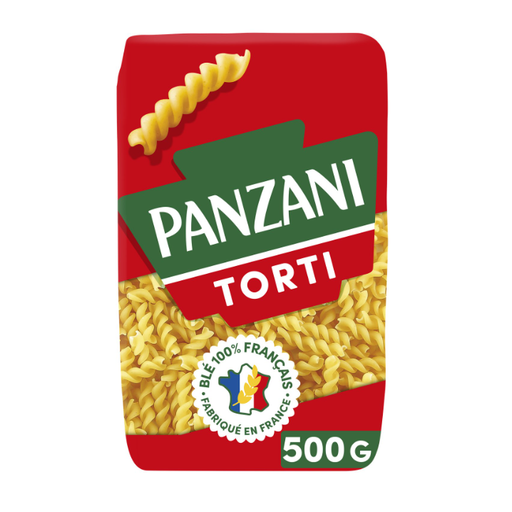 Image unavailable
For a pasta dish you can season at home. The 500 g pack lets you measure out what you need for your recipe; the sauce and toppings also affect the salt in the finished dish.
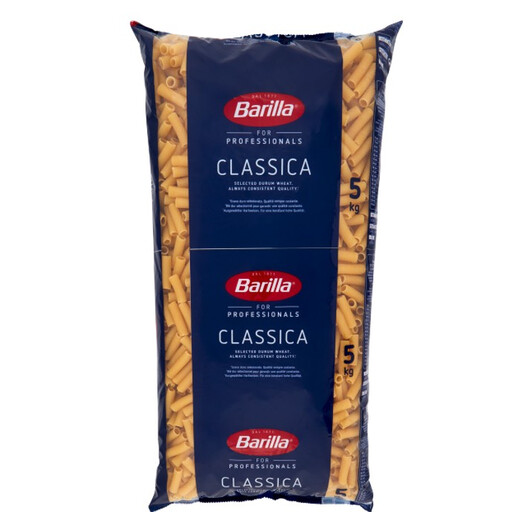 Image unavailable
For making several meals with dried pasta. The 5 kg pack will need storage space, and you can season each dish to suit.
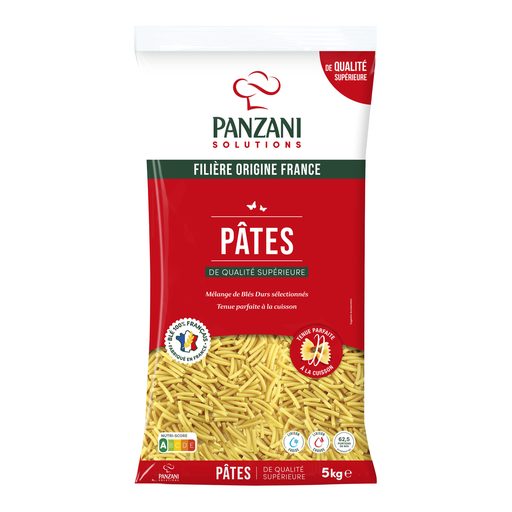 Image unavailable
For making a homemade pasta bake or soup, among other dishes. This 5 kg pack needs storage space; for a pasta bake, remember to factor in the salt in the sauce and cheese too.
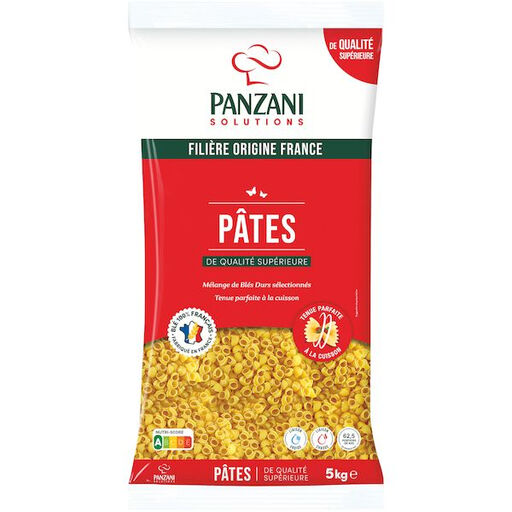 Image unavailable
For homemade soup or a pasta bake. Before choosing the 5 kg pack, check that you have enough storage space and that it suits the way you plan to use it.
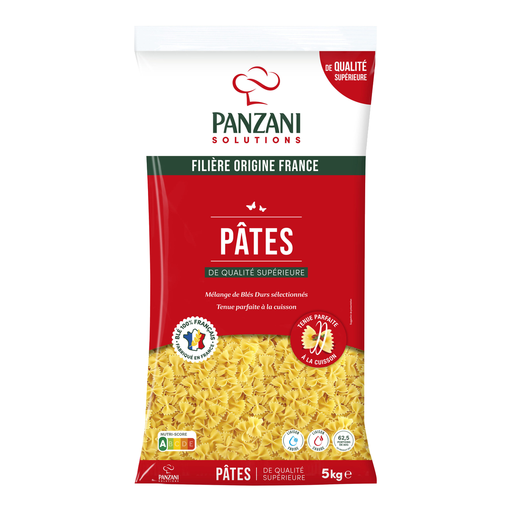 Image unavailable
For a hot meal with dried farfalle and accompaniments of your choice. Check the pack size before working out how many portions you’ll need for your recipe.
No. The nutritional information for pasta alone doesn’t cover the whole meal. Check the cooking water, sauce, cheese, stock and other toppings too. Manger Bouger recommends, among other things, not adding too much salt to the water and using herbs and spices.
No — you need to compare specific products. Lustucru Sélection lists 0.906 g and 1.1 g of salt per 100 g for two of its filled pasta products, while Carrefour’s product listing for Pasta Berruto dried wholewheat pasta gives 0.01 g per 100 g. These examples aren’t enough to rank every product in these categories.
You can adjust the salt in the cooking water and use herbs, spices or other seasonings, then taste the dish before adding more salt. For a pasta bake or a dish with sauce, check the salt in the cheese, stock and any prepared ingredients you add as well.