People keeping an eye on added salt
If you’re monitoring the salt in sauces and condiments, look for a clear statement on the product and check its “salt” line. Anses lists sauces and condiments among the dietary sources of sodium.


If you want to choose a pasta sauce while keeping added salt in check, start by looking for the words “no added salt”, then compare the “salt” line in the nutrition information with the ingredients list. A ready-made sauce saves you the effort of seasoning it yourself, while a tomato passata or purée gives you more control over the recipe. For a cooked topping, also check the consistency you need: you can’t assume the same result if the sauce is mixed into bread dough.
If you’re monitoring the salt in sauces and condiments, look for a clear statement on the product and check its “salt” line. Anses lists sauces and condiments among the dietary sources of sodium.
Whether you’re making a pasta sauce or a cooked topping, tomato passata or purée lets you choose the herbs and spices and adjust the consistency to suit your recipe.
A ready-made sauce can be poured over pasta and heated according to the manufacturer’s instructions. The trade-off is that its ingredients and seasoning have already been decided for you.
First, decide between a ready-made sauce and a tomato base you can season yourself. Then check the salt information and whether the consistency suits your recipe.
| What to consider | What to check | Who is it for? |
|---|---|---|
| Added salt | The statement on the exact product and the “salt” value per 100 g in the nutrition information. | I want to choose a sauce without assuming that “no added salt” means it contains no salt. Around 42% of consumers would make this check a priority. |
| Consistency when cooked | The type of product — passata, chopped tomatoes, purée or ready-made sauce — and any ingredients that could affect the texture. | For a cooked topping, I want to be able to adjust the amount of tomato to match the consistency my recipe calls for; this would be a priority for around 33% of consumers. |
| Quick preparation | The heating instructions and ingredients list for a ready-made sauce. | When I’m making pasta in a hurry, I prefer a sauce that’s already seasoned, even if that means I can customise it less. This would be the top priority for around 25% of consumers. |
This statement doesn’t replace the “salt” value in the nutrition information. Anses reminds us that sauces and condiments contribute to sodium intake.
Compare the “salt” value per 100 g and the ingredients lists of the products you’re actually considering.
A pre-seasoned sauce and tomato passata don’t give you the same control over the seasoning or consistency of a cooked topping.
If your recipe calls for a specific amount or texture, choose the type of base it specifies and adjust the seasoning before cooking. Don’t assume a pasta sauce can be mixed straight into bread dough.
Nutri-Score doesn’t tell you the amount of salt in a product or give you the full details of its ingredients.
Also check the nutrition information and allergens listed on the exact packaging.
The storage instructions for an opened jar or carton may differ from those for an unopened product.
Follow the manufacturer’s instructions for storage temperature and how long to keep the product after opening; the Ministry of the Economy also reminds consumers to follow the guidance on the packaging.
A pack that’s too large for your needs may leave you with product you can’t use before the recommended time is up.
Panzani offers tomato bases such as Tomacouli Nature, as well as pre-seasoned pasta sauces.
Barilla’s Basilico sauce is a tomato sauce seasoned for pasta.
This retailer offers different types of tomato products, rather than just one style of sauce.
The retailer stocks tomato bases from different brands, including a Mutti purée labelled “no added salt”.
These two tomato purées make handy bases for a homemade sauce. If added salt is your main concern, check the statement and nutrition information for the exact product; their inclusion here doesn’t guarantee the result of a bread recipe.
 Image unavailable
A tomato purée to consider if you’d like to make and season your own pasta sauce. Check the salt information and the consistency your recipe calls for if you’re planning to make a cooked topping.
Size: 500 g.
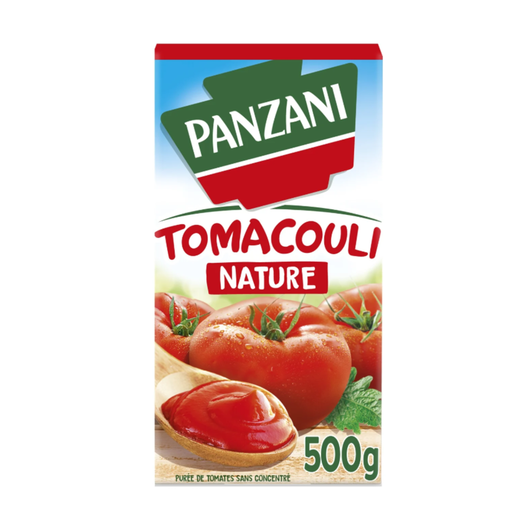 Image unavailable
A base to build on if you prefer to make your own tomato sauce. If you’re specifically looking for a product with no added salt, check the ingredients and the statement on the packaging before choosing this one.
Size: 500 g.
No. To find out the stated amount, check the “salt” line in the nutrition information on the exact product. The ingredients list can also help you tell a tomato base apart from a ready-made sauce.
Tomato passata, chopped tomatoes or purée are suitable if you want to choose the seasoning and adjust the consistency yourself. If you’re looking to avoid added salt, check that the product you choose carries this statement; Carrefour lists Jardin BiO étic passata as a base for sauces and pasta.
Don’t replace an ingredient in the dough with pasta sauce unless you’re following a recipe that calls for it. For a cooked topping, such as one for a topped loaf, check the amount and consistency of tomato the recipe requires instead: a ready-made sauce and a base you season yourself aren’t necessarily interchangeable.
Follow the storage temperature and use-by period after opening shown on the product packaging. The Ministry of the Economy reminds consumers to follow the manufacturer’s recommendations, including any stated number of days to use the product after opening.