People working from home who want to limit their salt intake
You want to keep an eye on the salt in your pasta, as well as what you add during cooking and in the sauce.


To keep the salt in a pasta lunch down, compare the ‘salt’ value per 100 g on the packaging, then factor in the cooking water, sauce and toppings. If you’re short on time, check the cooking time too. If you’re looking for fibre or protein, check those values separately rather than assuming they indicate the salt content.
You want to keep an eye on the salt in your pasta, as well as what you add during cooking and in the sauce.
You’re looking for something that fits the time you have, without assuming that quicker cooking means less salt.
You compare these values to put your lunch together, while checking the salt, ingredients and allergens separately.
When choosing pasta for a work-from-home lunch, first consider the salt in the meal as a whole, then the preparation time and the nutritional values that matter to you.
| Criteria | What to check | Who it matters to |
|---|---|---|
| Salt in the meal | Compare the salt per 100 g on the packaging, then consider the salt added to the water, sauce and toppings. | If I want to keep the salt in my lunch under control, the value for the pasta alone isn’t enough to guide how I season it. This is the main priority for around 42% of consumers. |
| Preparation time | Check the cooking time for the product you’ve chosen and how long the sauce takes to prepare. | Between meetings, I prefer a recipe I can make during my break. Speed comes before other criteria for around 33% of consumers. |
| Fibre or protein | Check the fibre, protein and salt values, including their units, as well as the ingredients list. | If I’m planning my lunch around fibre or protein, I need to choose a product that provides what I’m looking for without assuming anything about its salt content. This is the top priority for around 25% of consumers. |
The value shown for the pasta doesn’t include the salt you add to the water, or the salt in the sauce and toppings.
Check every part of the dish and taste it before adding more salt. Manger Bouger advises against adding too much salt to the cooking water.
These labels refer to different characteristics. None of them replaces the ‘salt’ value for the specific product.
Compare the salt, fibre or protein, cooking time and ingredients that matter to your choice separately.
In its cooking advice for Linguine Integrale, Barilla suggests 7 g of salt per 100 g of pasta. This added salt isn’t included in the nutritional information for dried pasta.
If you want to limit the salt in your lunch, choose how much salt to add to the water yourself rather than automatically following this recommendation.
A salt level that suits you doesn’t tell you whether the pasta contains wheat or eggs, or carries a ‘may contain traces’ warning.
Read the ingredients list and allergen information on the packaging, especially when trying a different recipe.
The range includes classic and wholemeal dried pasta. Linguine Integrale is a specific example you can use to compare salt, fibre and cooking time.
The brand offers classic, quick-cook and protein-enriched pasta, each suited to different priorities.
The 600 g Tagliatelles are an example of fresh pasta that can be a good choice when you need a quick lunch-break cook.
These two Barilla pasta formats let you choose between a 500 g pack and a 5 kg pack. For your lunch, check the salt per 100 g and cooking time for the product you choose, then plan your seasoning separately.
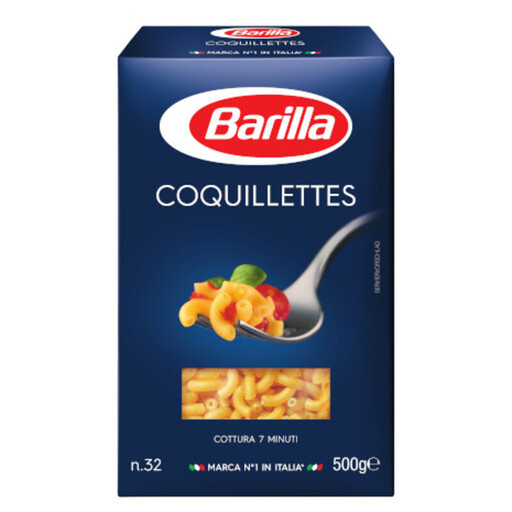 Image unavailable
This pack of small pasta shells is a good option if you’re looking for a 500 g size to prepare for lunch. If you’re short on time, check the cooking time on the packaging; measure the salt for the water and sauce separately.
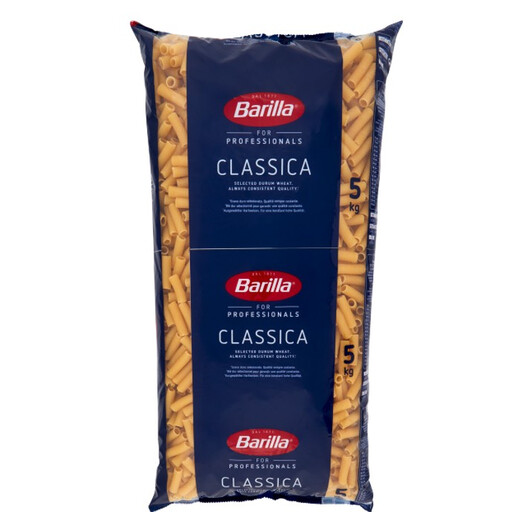 Image unavailable
This 5 kg pack could be a good choice if you plan to use the pasta for several lunches and have space to store it. Check the cooking time for your breaks, and remember to factor in the sauce and any salt added to the water.
Compare the ‘salt’ value per 100 g across similar products, then consider how you’ll season the meal. Manger Bouger notes that the nutritional information on prepacked foods includes the salt content per 100 g or 100 ml.
If you want to limit the salt in your lunch, don’t automatically add the amount suggested in a recipe. Manger Bouger advises against adding too much salt to the cooking water; any salt you add isn’t included in the value shown for dried pasta.
No: ‘wholemeal’ and salt content are two separate characteristics to check. Barilla lists 8 g of fibre and 0.013 g of salt per 100 g for its Linguine Integrale, but these values don’t describe all wholemeal pasta.
Check the ingredients and allergen information for the product you’ve chosen. For example, Lustucru’s 600 g Tagliatelles contain wheat and eggs, and may contain traces of soya and mustard.