By our product experts, 2026-07-19
Do you own a sports car, a lowered saloon, or any vehicle with low ground clearance? Then you're familiar with the headache that comes with a flat tyre or simple maintenance: it's impossible to slide the factory-supplied jack under the chassis. In this case, a low-profile jack is no longer a gadget but an essential tool, whether for an emergency repair on the side of the road or for your DIY sessions in the garage.
But with the overwhelming number of models available, how do you find your way? This guide is here to break down the essential criteria and present our selection of the best low-profile jacks, tailored for every need. Our goal: to help you make the right choice without getting lost in often obscure technical jargon.
How to Choose the Right Jack for Your Vehicle
Before you head to the checkout, let's review a few key points. They are your guarantee of safety and compatibility with your vehicle.
1. Jack Type: Scissor or Hydraulic Floor Jack?
The jack's mechanism directly influences its use, size, and of course, its price.
- The Scissor Jack: This is the most compact and lightweight model. Operated by a crank handle, it's perfect for emergency situations, like an unexpected tyre change. Its small size allows it to be stored anywhere in your boot. Its main drawback: it requires a bit more elbow grease to lift the vehicle.
- The Hydraulic Floor Jack: Heavier and bulkier, the hydraulic jack (often called a floor jack) uses a pump system to lift the vehicle with little to no effort. It's the ideal companion for the home mechanic for regular use. Its wheels make it easy to position precisely under the car, and low-profile models are specifically designed for vehicles with low ground clearance like a sports car or a lowered car.
2. Lifting Capacity and Height
Two figures are crucial:
- Lifting Capacity (in tonnes): This must be at least 75% of your vehicle's total weight. Even though the jack only lifts a portion of the car, this safety margin is essential. To put it simply: a 1.5-tonne jack will suit most city cars and compacts, while a 2.5-tonne model will be necessary for larger saloons, SUVs, or MPVs.
- Minimum and Maximum Height: The minimum height (or "saddle height") is the deciding factor for a low-profile jack. Measure the distance between the ground and your chassis's jacking point to ensure the jack will fit underneath. The maximum height, on the other hand, determines the possible lift, an important point for more ambitious operations than a simple wheel change.
Recommended Low-Profile Jacks
We've sifted through the market to bring you models that meet specific needs, from emergency roadside assistance to dedicated enthusiast maintenance in the garage.
For Roadside Repairs and Easy Storage: TCE 1-Tonne Scissor Jack
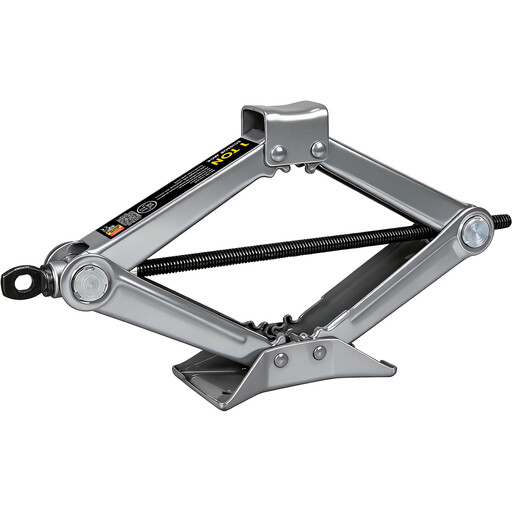
TCE 1 Tonne Scissor Jack 88-380mm Ultra Low Profile Foldable Lifting Tool for Emergency Tyre Change Chassis Inspection Fits Saloons SUVs Low Ground Clearance Vehicles BIG RED TORIN
- What sets it apart: Its standout feature? Its foldable design and a minimum height of just 88 mm. It's the perfect ally for owners of low cars with limited storage space. It slides easily into the spare wheel compartment, ready for use at any moment.
- Advantages:
- Lifting Capacity: 1 tonne (1,000 kg)
- Lifting Range: 88 mm to 380 mm
- Ultra-low profile: Ideal for lowered vehicles.
- Compact and foldable: Stores easily in a boot.
- Easy to use: The crank handle is optimised to reduce effort.
- Who is it for? For the forward-thinking driver who wants a reliable and compact solution for a flat tyre, whether for their saloon, small SUV, or any other vehicle with reduced ground clearance.
For the Garage and Heavy Loads: TCE 2.5-Tonne Hydraulic Floor Jack
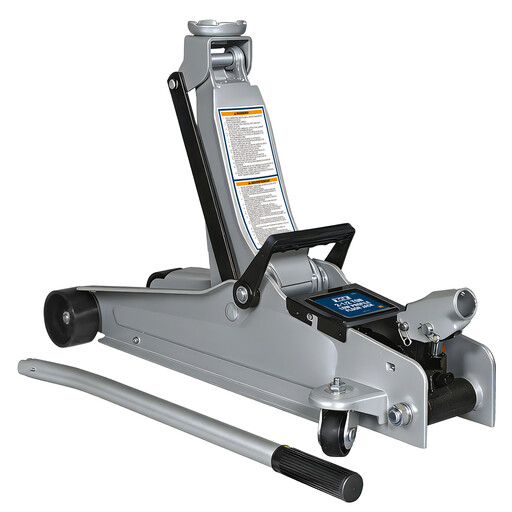
TCE 2.5 Tonne Horizontal Hydraulic Jack Ultra Low 85-380mm Heavy-Duty Steel Construction EN 1494 CE Certified for Emergency Tyre Change Fits Supercars Performance Cars Saloons SUVs MPVs BIG RED TORIN
- What sets it apart: Its robustness and versatility. With a 2.5-tonne capacity and a saddle height of just 85 mm, this floor jack can lift everything from a supercar to a family SUV. Its heavy-duty steel construction and EN 1494 + CE certification guarantee its durability and your safety.
- Advantages:
- Lifting Capacity: 2.5 tonnes (2,500 kg)
- Lifting Range: 85 mm to 380 mm
- Record-low profile: Fits under almost any passenger vehicle.
- Robust construction: Steel frame designed for heavy use.
- Certified safety: Complies with European standards EN 1494 and CE.
- Who is it for? For the DIY mechanic or enthusiast who regularly maintains their vehicles (saloon, SUV, MPV) and is looking for a powerful, reliable, and safe tool for their workshop.
For Performance and Portability: TCE 1.5-Tonne Aluminium Hydraulic Jack
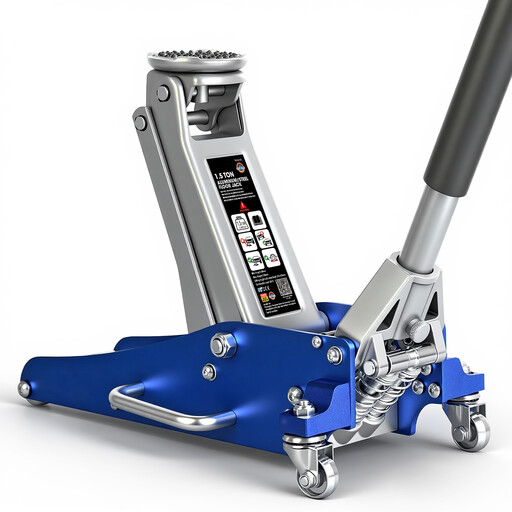
TCE 1.5 Tonne Aluminium Alloy Hydraulic Jack Ultra Lightweight 90-358mm Dual Pump Rapid Lift Ultra Low Profile EN 1494 CE Certified for Home Garage Track Day Emergency Tyre Change Fits Sports and Performance Cars BIG RED TORIN
- What sets it apart: Its feather-light weight and speed. Constructed from aluminium alloy, it weighs only about 14.3 kg, making it incredibly easy to transport. Its dual-pump system allows for a lightning-fast lift, a decisive advantage for track-side wheel changes or intensive use.
- Advantages:
- Lifting Capacity: 1.5 tonnes (1,500 kg)
- Lifting Range: 90 mm to 358 mm
- Ultra-lightweight: Weighs approximately 14.3 kg thanks to its aluminium construction.
- Rapid lift: Its dual-pump system significantly reduces the number of pumps needed.
- Ideal for enthusiasts: Perfect for track days or for being moved easily around the garage.
- Who is it for? For owners of sports cars or performance vehicles, track day regulars, and anyone looking for a hydraulic jack that is high-performing, lightweight, and easy to transport.
Looking for Other Options?
Our selection focuses on jacks suitable for low-clearance vehicles. To discover a wider range of lifting tools, with different capacities or additional equipment, feel free to browse our complete catalogue.
Discover our full range of automotive tools
Frequently Asked Questions (FAQ)
Question: How do I know what lifting capacity to choose for my jack?
Answer: The rule of thumb: choose a jack with a lifting capacity of at least 75% of your vehicle's total weight. For example, for a 1.8-tonne car, a 1.5-tonne (1500 kg) jack is an excellent choice (1.8 t x 0.75 = 1.35 t). This margin is essential for your safety, as the jack never supports the entire weight.
Question: Where should I place the jack under my car?
Answer: This is THE critical step for your safety. Every vehicle has specific reinforced jacking points on its chassis, which are indicated in the owner's manual. The absolute rule: never place the jack under the engine, gearbox, or on flat parts of the bodywork. You risk severely damaging your vehicle and causing an accident.
Question: Does a hydraulic jack require maintenance?
Answer: Absolutely, although it's simple. Regularly check the hydraulic fluid level and top it up if necessary with a compatible fluid. Also, remember to keep the moving parts (wheels, joints) clean and lightly lubricated. Finally, always store it in the lowered position (ram fully retracted) to protect the piston from rust and debris.


