
Livraison le jour même ou le lendemain

Qualité garantie

Débloquez vos offres de bienvenue: Livraison GRATUITE | Jusqu'à -80 % | 30 jours d'essai gratuits à JoyPlus
Téléchargez l'application
Whether you own a sports car, a lowered vehicle, or simply want to perform your own maintenance in your garage, the challenge is often the same: lifting the car. A standard jack quickly proves to be too tall to slide under a low chassis, turning a simple operation like a tire change into a real headache.
This guide is here to help you see things more clearly and choose the low-profile car jack that perfectly suits your needs. We will review the essential technical criteria and present a selection of reliable models for working in complete safety, whether in your garage or for a roadside emergency.
Before you decide, several key features should be examined to ensure compatibility with your vehicle and, most importantly, your safety.
The load capacity, expressed in tons (T), is the very first criterion. It must be greater than half of your vehicle's total weight, since a jack never lifts the entire car.
Always check your vehicle's curb weight (indicated on your vehicle registration document) before making your choice.
For a lowered vehicle, the minimum height of the jack is obviously crucial. A model described as "low profile" or "ultra-low" has an entry height of less than 100?mm, allowing it to slide effortlessly under the lowest side skirts. Also, remember to check the maximum lifting height: it must be high enough for the wheel to clear the ground so you can replace it.
Two types of mechanisms dominate the market:
Ensure the product is CE certified and complies with the EN 1494 standard. This certification guarantees that the jack has been tested according to strict European safety standards.
Here are a few models that have caught our attention for their reliability, compliance with standards, and suitability for various uses.
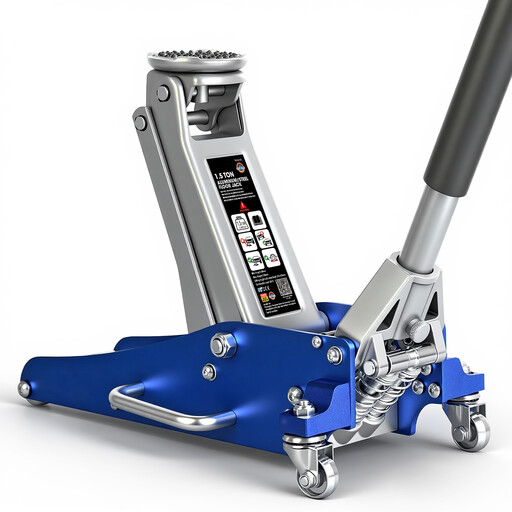
Why it stands out: This hydraulic jack combines performance and portability. Its aluminum alloy structure makes it particularly lightweight (around 14.3?kg), ideal for taking to the track or simply keeping in your trunk. The dual-pump system ensures a quick and effortless lift.
Advantages:
Who is it for? Ideal for sports car owners and mechanical enthusiasts who attend track days and need equipment that is both high-performing and easy to transport.
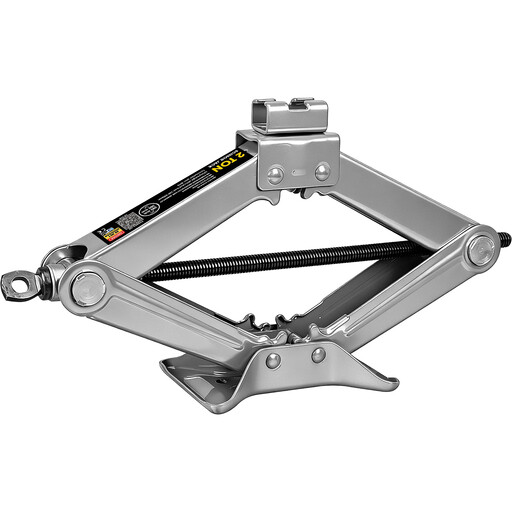
Why it stands out: This scissor jack is the ultimate emergency solution. When folded, its minimum height of just 88?mm allows it to be easily stored in the spare tire compartment. Its ergonomic crank handle makes lifting simple and accessible to everyone.
Advantages:
For whom? Perfect for any driver looking for a reliable and compact emergency jack that can fit under a low vehicle for an unexpected tire change.
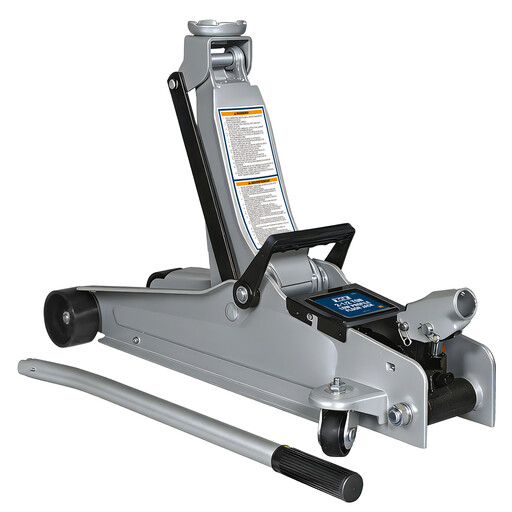
Why it stands out: This is the ultimate workshop tool for the garage. With its 2.5-ton capacity and robust steel structure, it effortlessly lifts a wide range of vehicles, from supercars to SUVs. Its extremely low entry height of 85?mm makes it one of the most versatile models on the market.
Advantages:
For whom? Aimed at DIY mechanics and owners of multiple vehicle types (including SUVs and minivans) who are looking for a powerful, durable floor jack capable of adapting to the lowest ground clearances.
Good equipment doesn't stop at the jack. To improve your driving experience, especially on the audio side, nothing beats modern connectivity. If your car stereo is outdated, a simple solution exists to bring it up to date.
Discover our selection of AUX adapters to modernize your audio system and enjoy your music without constraints. Discover our range of AUX Adapters
A scissor jack operates using a mechanical screw that is turned with a crank handle. It is lightweight, compact, and budget-friendly, making it an excellent choice for emergencies. A hydraulic jack, on the other hand, uses fluid pressure to lift the load via a pump. It requires less effort, allows for a quicker lift, and is more stable and robust, making it ideal for regular use in a garage.
For the European market, check for the CE mark on the product and its packaging. Ideally, it should also mention compliance with the EN 1494 standard, the European reference for mobile or portable jacks. These certifications indicate that the product has undergone rigorous safety and performance tests.
Yes, absolutely. A jack never lifts the entire weight of the vehicle, but only one corner at a time. The general rule is to choose a jack with a capacity greater than half of the car's total curb weight. A 1.5-ton jack can therefore lift a vehicle weighing up to nearly 3 tons. Remember: the key is to use it on a flat, stable surface and, most importantly, to always secure the vehicle with jack stands before working underneath it.