Who are these checks for?

Parents looking for a low-fat option

You want to apply a specific nutritional threshold rather than rely on a plain recipe or a claim about sugars. For drinks, European Regulation (EC) No 1924/2006 sets a limit of 1.5 g of fat per 100 ml for the ‘low fat’ claim.

Parents who prefer a plain recipe

You want to compare ingredients and sugars, even if the drink doesn’t meet the low-fat threshold. The values for the Bjorg and Sojasun drinks mentioned below show why these two points should be considered separately.

Families arranging a meal at school

You need to take account of soya as an allergen, the school’s guidance or a special diet. The French Ministry of National Education explains that an individual care plan (PAI) can set out the adjustments needed at school for a pupil.

Which criteria should you check first?

When choosing a soya drink for a school packed lunch, consider fat content, your preferred recipe and the arrangements for the meal.

Criterion What to check Who this matters to
Low fat Compare the fat per 100 ml with the limit of 1.5 g per 100 ml set for drinks by European Regulation (EC) No 1924/2006. If I’m looking specifically for a drink that meets this criterion, a ‘sugar-free’ claim isn’t enough; around 42% of consumers would put fat content first.
Recipe and sugars Check ‘of which sugars’, the ingredients list and ‘fat’ separately; compare drinks on the same per-100 ml basis. If I’m looking for a plain recipe, I want to check the sugars without assuming they also tell me about the fat content; around 33% of consumers would prioritise this choice of recipe.
Meals at school Check the label for the soya allergen and follow the school’s guidance; distinguish between a family-packed lunch and catering in a collective setting. If my child needs special arrangements for meals at school, I need to clarify how these will work before choosing a drink; this would be the main concern for around 25% of consumers.

Common misconceptions to avoid

  • Assuming ‘sugar-free’ means ‘low fat’

    These claims refer to different characteristics. Sojasun lists 2.6 g of fat per 100 ml for its Soja Nature drink, which is above the 1.5 g per 100 ml limit for the ‘low fat’ claim on drinks.

    If this limit matters to you, start with the ‘fat per 100 ml’ line, then check the sugars and ingredients separately.

  • Treating all meals eaten at school in the same way

    Anses recommends not serving soya-based foods in collective catering to avoid excessive isoflavone consumption. This doesn’t mean that a family-packed lunch containing soya is banned at every school.

    Find out whether the drink will be brought in by the family or served as part of collective catering, then check the school’s guidance.

  • Assuming a plant-based drink avoids allergen concerns

    Soya is itself an allergen. The DGCCRF reminds shoppers that allergens must be highlighted on the labels of prepacked foods.

    Check the label of the product you choose. If a pupil needs dietary adjustments at school, speak to the school about the arrangements for their situation.

Brands to use as points of comparison

Bjorg

Bjorg offers a plain, unsweetened organic soya drink in a 1 L carton, made with water and 8% organic soya beans, according to its product information.

  • Bjorg lists less than 0.5 g of sugars and 3.9 g of protein per 100 g, providing a basis for comparing this recipe.
  • The brand also lists 2.6 g of fat per 100 g. This figure is given by weight, so don’t compare it directly with a threshold given per 100 ml.

Sojasun

Sojasun’s Soja Nature drink gives nutritional values per 100 ml.

  • For this product, Sojasun lists 0.1 g of sugars and 4.7 g of protein per 100 ml.
  • Its 2.6 g of fat per 100 ml is above the 1.5 g per 100 ml limit for the ‘low fat’ claim on drinks.

Carrefour Bio / Carrefour

Carrefour France stocks soya drinks from various brands, including Carrefour Bio, Bjorg, Alpro and Sojasun.

  • Plain and flavoured options can be considered separately, depending on the recipe you’re looking for.
  • A ‘no added sugar’ filter doesn’t, by itself, tell you the fat content of the product you choose.

Alpro

Carrefour France stocks, among other options, a plain Alpro soya drink as well as flavoured varieties.

  • Distinguishing between plain and flavoured recipes helps you identify which labels to compare.
  • To check whether a specific product meets the low-fat criterion, look up its current value per 100 ml.

Provamel

A Carrefour France product listing describes a Provamel organic soya drink with no added sugars.

  • The listing gives 2.1 g of fat per 100 ml, a figure you can directly compare with others expressed in the same unit.
  • This is above the 1.5 g per 100 ml limit for the ‘low fat’ claim on drinks.

Single-serve soya drinks on Joybuy

These two soya drinks are available in individual portions, a format worth considering for a packed lunch. Before choosing either for its ‘low fat’ claim, compare the value per 100 ml on the product label and check the arrangements for meals at school.
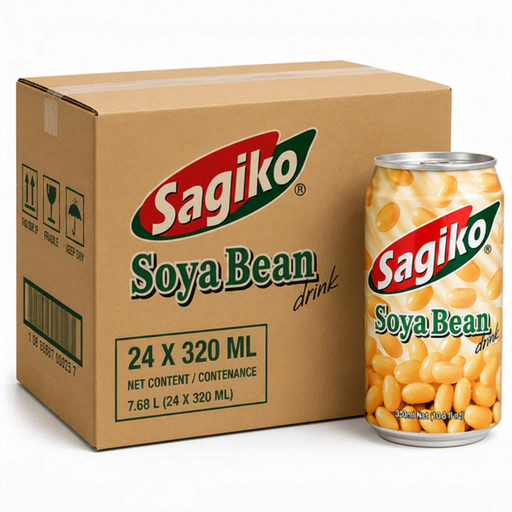
SAGIKO Soybean Drink, pack of 24 × 320 ml

SAGIKO Soybean Drink, 24 × 320 ml

Worth considering if you’re looking for a single-serve soya drink for a packed lunch, subject to the school’s guidance.

Pack of 24 × 320 ml. Check the label for fat and sugars per 100 ml, allergens and storage instructions.

View on Joybuy
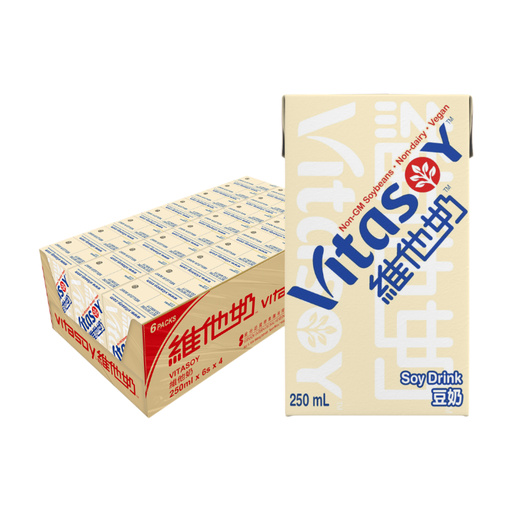
VITASOY REGULAR soya drink, pack of 24 × 250 ml

VITASOY REGULAR, 24 × 250 ml

Worth considering if you’re looking for a single-serve soya drink for a packed lunch, subject to the school’s guidance.

Pack of 24 × 250 ml. If sugars matter to you, compare them separately from the fat content on the label. Also check the allergens and storage instructions after opening.

View on Joybuy

Frequently asked questions

Does ‘no added sugars’ mean ‘low fat’?

No: sugars and fat are two separate pieces of information. For drinks, European Regulation (EC) No 1924/2006 sets a limit of 1.5 g of fat per 100 ml for the ‘low fat’ claim. Sojasun’s Soja Nature drink, for example, contains 2.6 g per 100 ml.

Is a plain soya drink automatically suitable for a school packed lunch?

No: a plain recipe doesn’t address allergen concerns or meal arrangements. Anses recommends not serving soya in collective catering to avoid excessive isoflavone consumption. For a packed lunch brought in by the family, check the school’s guidance rather than treating this recommendation as a general ban.

What should you check if a pupil has an allergy or follows a special diet?

Check the allergens listed on the label and arrange any necessary adjustments with the school. The French Ministry of National Education explains that an individual care plan can set out the adjustments needed at school, including dietary arrangements, for a pupil.

What should you check on the carton before putting it in a packed lunch?

Check the fat and sugars on a like-for-like basis, along with the ingredients list, allergens and storage instructions for the drink. The DGCCRF reminds shoppers that allergens must be highlighted on the labels of prepacked foods. Also follow the manufacturer’s instructions after opening.