Hosts keeping an eye on total fat
For Easter lunch, you want to choose an oat drink with no more than 1.5 g of fat per 100 ml, rather than relying on the word ‘light’ or a claim about saturated fat alone.


For Easter lunch, if you’re looking for a low-fat oat drink, check that it contains no more than 1.5 g of fat per 100 ml. This is the threshold for making this claim about drinks under European Union Regulation (EC) No 1924/2006. Then compare products based on their stated sugar content, intended use and storage instructions.
For Easter lunch, you want to choose an oat drink with no more than 1.5 g of fat per 100 ml, rather than relying on the word ‘light’ or a claim about saturated fat alone.
Whether it’s for a savoury recipe, a dessert or a hot drink, you want to check the stated sugar content, even when the product is labelled ‘no added sugars’.
You’re looking for an oat drink for coffee, tea, cooking or baking, while keeping the fat content of your chosen product in mind.
For Easter lunch, start by checking the fat content per 100 ml. Once you’ve checked this, sugar content, intended use and your meal plans can help you choose between drinks.
| Criteria | What to check | Who is it for? |
|---|---|---|
| Total fat | Check the value per 100 ml: under European Union Regulation (EC) No 1924/2006, a drink must contain no more than 1.5 g of fat to carry the ‘low fat’ claim. | If I want the drinks served with the meal to meet this criterion, a claim about saturated fat isn’t enough to guide my choice; around 36% of consumers prioritise total fat content. |
| Sugars | Compare the ‘of which sugars’ figure per 100 ml, and don’t assume that ‘no added sugars’ means ‘sugar-free’. | For a savoury dish or a drink I want to be low in sugar, the stated amount matters just as much when I’m choosing; around 29% of consumers put sugar at the top of their list. |
| Intended use | Check whether the product is recommended for cooking, baking or hot drinks, depending on your menu, then check its sugar content. | If I want to use the same carton for several dishes at lunch, I first check the recommended uses for that product; intended use is the priority for around 21% of consumers. |
| Storage and buying | Check the instructions for after opening and confirm availability with the shop or service you plan to buy from. | When I’m preparing the meal in advance, I need to be able to buy and store the cartons until they’re served; around 14% of consumers prioritise this kind of planning. |
A claim about saturated fat doesn’t tell you whether the drink meets the 1.5 g total fat per 100 ml threshold set for drinks under European Union Regulation (EC) No 1924/2006.
For this criterion, check the ‘fat’ line: Carrefour Sensation’s product listing states 1.8 g per 100 ml.
E.Leclerc’s listing for Bio Village organic oat drink with no added sugars states 5.0 g of sugars per 100 ml.
When choosing a drink for a recipe or the table, compare the ‘of which sugars’ figures for the products you’re considering.
Carrefour’s listing for an Alpro oat drink gives 1.5 g of fat per 100 g, while a Joybuy listing titled Alpro Oat Drink 1 L states 3 g per 100 ml and has a different composition. Don’t assume the recipe or the unit of measurement is the same.
Check the product name, ingredients and nutritional information on the carton you plan to buy.
Auchan’s listing for its barista oat drink states 1.5 g of fat and 5.3 g of sugars per 100 ml: meeting the fat criterion doesn’t tell you anything about the sugar content.
If you’re planning to use it in coffee or tea, compare its ‘of which sugars’ figure with that of another drink suited to your needs.
Products to consider based on the recipe and the nutritional information for the specific carton.
Compare the different recipes individually based on their sugar content and intended use.
A supermarket own-brand product to compare based on its features, but don’t mistake it for a low-fat drink based on total fat content.
An organic oat drink with no added sugars to consider if fat content is your main priority.
Two versions to distinguish based on fat content and intended use.
These oat drinks suit different ways of serving them at Easter lunch: for several dishes, to compare based on the recipe, or as a chai to serve hot. Check the nutritional information for each product before choosing one that meets your fat-content criterion.
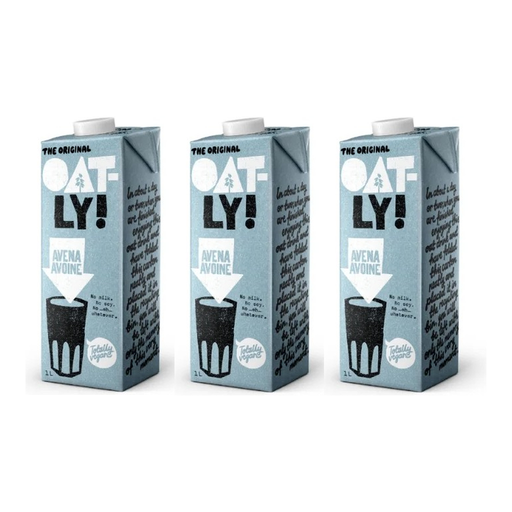 Image unavailable
A pack to consider if you’re planning to serve oat drink with several dishes or at different points during Easter lunch.
Pack size: three 1 L cartons. Compare the nutritional values of this product with those of the other drinks you’re considering.
 Image unavailable
An oat drink to compare if you’d like to serve one at Easter lunch and check its sugar content.
Size: 1 L. Don’t assume the fat content from the ‘0%’ label alone: check the figure given per 100 ml.
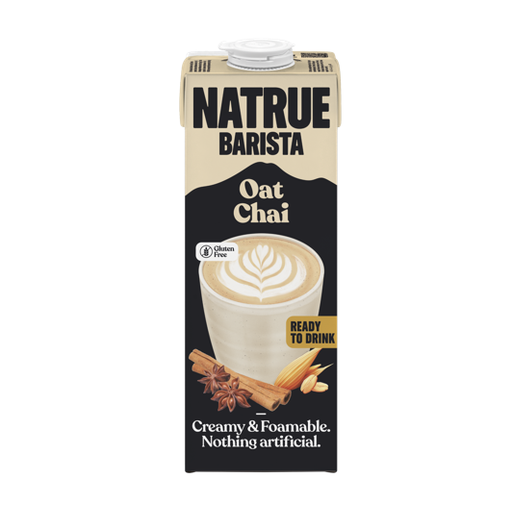 Image unavailable
An option to consider if you’d like to serve an oat chai, especially hot, rather than a plain oat drink.
Size: 1 L. When planning your menu, compare its sugar and fat content per 100 ml with that of the other products.
Look for no more than 1.5 g of fat per 100 ml. European Union Regulation (EC) No 1924/2006 sets this threshold for the ‘low fat’ claim on drinks. Check the ‘fat’ line, not just a claim about saturated fat.
No: E.Leclerc’s listing for Bio Village organic oat drink with no added sugars states 5.0 g of sugars per 100 ml. To compare drinks, check the ‘of which sugars’ line; Auchan’s listing for Oatly No Sugars, on the other hand, states 0 g per 100 ml.
No, because saturated fat and total fat are different values. Carrefour’s listing for Carrefour Sensation oat drink states 1.8 g of total fat per 100 ml, above the 1.5 g per 100 ml threshold for the ‘low fat’ claim on drinks.
Plan when to open each one according to its instructions. Auchan’s listings for its classic and barista oat drinks say that, once opened, they should be kept in the fridge at between 0 °C and +6 °C and used within 5 days; check the labels on other cartons separately.