People who count carbohydrates
If you use a personal carbohydrate target, compare the carbohydrates per 100 ml, then adjust for the amount you actually pour. The ‘of which sugars’ line is not a substitute for the total.


If you’re looking for a low-fat oat drink while shopping with diabetes in mind, start by checking the fat content per 100 ml, then compare the total carbohydrates and sugars in the amount you’ll pour. Regulation (EC) No 1924/2006 sets the maximum for a ‘low fat’ claim on liquids at 1.5 g of fat per 100 ml. ‘No added sugars’ does not mean 0 g of sugars or 0 g of carbohydrates.
If you use a personal carbohydrate target, compare the carbohydrates per 100 ml, then adjust for the amount you actually pour. The ‘of which sugars’ line is not a substitute for the total.
There’s a specific threshold to check: no more than 1.5 g of fat per 100 ml for a ‘low fat’ claim on liquids, under Regulation (EC) No 1924/2006. Check the unit and the product variant before comparing two cartons.
If gluten, fortification or storage after opening matters to you, check the ingredients list and the instructions on the carton you buy. The French Federation of Diabetics also points out that allergens are highlighted in the ingredients list.
When choosing an oat drink in this context, check the fat threshold, then look at ‘carbohydrates’ and ‘of which sugars’ together. Compare these figures with your portion size rather than relying only on claims on the front of the pack.
| What to check | Look for | Who is this for? |
|---|---|---|
| Carbohydrates in your portion | Check the carbohydrates per 100 ml and take into account how much you pour. Diabetes UK highlights the importance of the total amount of carbohydrates consumed for blood glucose levels after a meal. | If I count the carbohydrates in my cereal or coffees, the amount I actually use changes my calculation. Around 36% of consumers put working out the portion first. |
| Sugar claims | Compare ‘no added sugars’ with the ‘of which sugars’ line, then check the total carbohydrates for the same product variant. | A claim on the front of the pack isn’t enough for me if I’m specifically looking for 0 g of declared sugars. This distinction would be the top priority for around 29% of consumers. |
| Fat | For a ‘low fat’ claim on liquids, Regulation (EC) No 1924/2006 sets a maximum of 1.5 g per 100 ml. Don’t confuse a figure per 100 g with one per 100 ml. | I want to check that the product I choose meets the threshold that matters to me. Around 21% of consumers would make this their main criterion. |
| Other label information | Check allergens and, if needed, an explicit ‘gluten-free’ claim, fortification and storage instructions after opening. | If an ingredient requirement or how long a product can be used after opening guides my choice, I need to check the specific carton I’m buying. This would be the top priority for around 14% of consumers. |
These claims don’t mean the same thing: the Auchan Bio and Bio Village product pages each list 5 g of sugars and 7.2 g of carbohydrates per 100 ml, despite the ‘no added sugars’ claim.
Check the claim, the ‘of which sugars’ line and the carbohydrates per 100 ml for the variant you choose.
The maximum of 1.5 g of fat per 100 ml set by Regulation (EC) No 1924/2006 tells you nothing about the carbohydrates in a drink.
Once you’ve checked the fat content, compare the total carbohydrates and the amount you use separately.
Classic, ‘sugar-free’ and Barista versions may have different nutritional profiles. The standard Alpro oat drink listed on Joybuy contains 3 g of fat per 100 ml; this figure does not apply to other Alpro variants.
Note the full product name before comparing its nutrition table with that of another carton.
Product information varies: the Bjorg Avoine Essentiel product states that it contains gluten-free oats, while the standard Alpro oat drink listing says it contains oats with gluten. Instructions after opening also vary by product.
Check the ingredients, allergens and storage instructions on the packaging of the product you buy.
These brands give you specific variants to compare; you can’t assume that the nutritional values are the same across their entire range.
The range includes classic oat drinks and an Oat No Sugars variant.
No Sugars is a distinct variant from Original and Barista Edition drinks.
Carrefour Bio offers an oat drink labelled ‘no added sugars’.
The Bio Village oat drink is labelled ‘no added sugars’.
The Auchan Bio oat drink with no added sugars has its own nutritional and storage information.
Vemondo is a range to explore if you’d like to compare oat drink products in store.
These products include a multipack of oat drink, a NATRUE drink labelled ‘0%’ and a chai-flavoured version. For each one, use the nutritional values for the variant you buy rather than borrowing figures from another drink by the same brand.
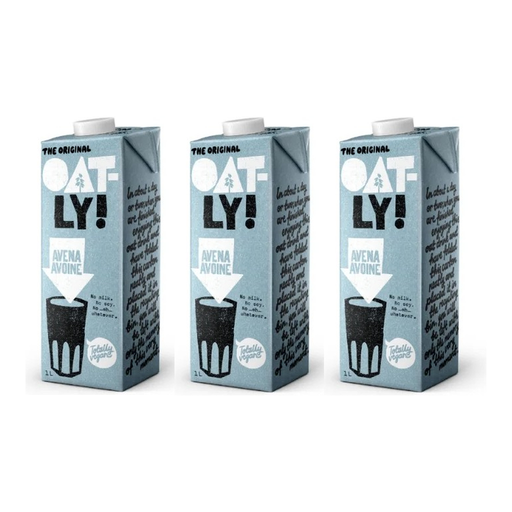 Image unavailable
This pack may suit you if you’re looking for several cartons of the same oat drink. For your portion, check the fat, carbohydrates and ‘of which sugars’ for this version: the figures for Oatly No Sugars do not apply.
 Image unavailable
If the ‘0%’ claim catches your eye, check what it refers to on this carton. To compare this drink with your usual portion, check the fat, carbohydrates and ‘of which sugars’ separately.
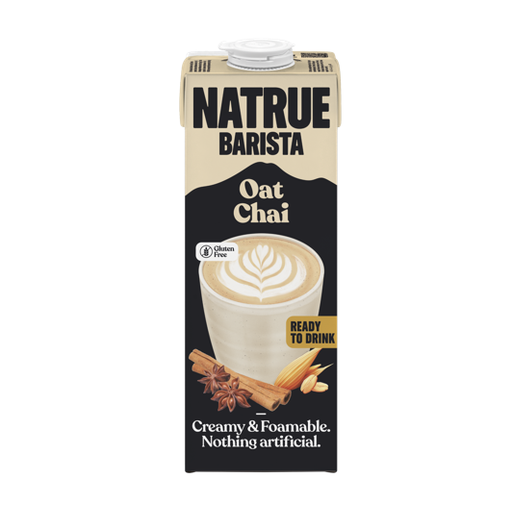 Image unavailable
Compare this chai-flavoured variant as a separate drink from the unflavoured versions. Check its nutrition table per 100 ml and the amount you plan to pour, as well as the instructions on the carton after opening.
For a liquid, this claim means a maximum of 1.5 g of fat per 100 ml under Regulation (EC) No 1924/2006. Check that the figure for the variant you choose is given per 100 ml; this criterion tells you nothing about its carbohydrates.
No. This claim doesn’t rule out sugars that are already present in the drink. The Auchan Bio and Bio Village listings each give 5 g of sugars per 100 ml; check the ‘of which sugars’ line on the product you choose.
Compare both lines, using the total carbohydrates and the amount you pour as a guide to your portion. Diabetes UK highlights the important role of the total amount of carbohydrates consumed in blood glucose levels after a meal. So a 0 g sugar figure is no substitute for checking the carbohydrates.
No. Check the specific product for a ‘gluten-free’ claim and allergen information. The Bjorg Avoine Essentiel listing says it contains gluten-free oats, while the standard Alpro oat drink listing says it contains oats with gluten.
Follow the storage time and temperature shown on the carton you choose. The listings for the Auchan Bio and Bjorg products mentioned here say to refrigerate after opening and consume within 5 days; don’t automatically apply this period to another variant.