Students comparing fat content
You’re looking for a convenient lunch, but want to compare recipes on a like-for-like basis. Check the fat content per 100 g, then consider the weight of the portion you’ll eat. Don’t rely on the topping’s name alone.


To choose a frozen pizza for lunch on campus while opting for a lower fat content, compare the values per 100 g, then consider how much you plan to eat. According to Carrefour’s product information, Carrefour Bio Grilled Vegetable Pizza contains 6.3 g of fat per 100 g, compared with 6.8 g for Carrefour Sensation Ham and Emmental Pizza and 9.3 g for Carrefour Bio Margherita Pizza. This comparison of three recipes doesn’t mean they can be described as “lighter” pizzas. Also check the salt, allergens and storage instructions on the pack you choose.
You’re looking for a convenient lunch, but want to compare recipes on a like-for-like basis. Check the fat content per 100 g, then consider the weight of the portion you’ll eat. Don’t rely on the topping’s name alone.
You’re planning to have pizza as your main course and want to think about the rest of your meal too. Depending on what’s available, you could have it with some vegetables or a piece of fruit. The topping alone doesn’t tell you everything about your lunch.
If you avoid an allergen, gluten, lactose or meat, check the ingredients list and any ‘may contain’ information for the exact product. A statement on another pizza from the same brand isn’t enough.
When comparing pizzas of different sizes, start with the nutritional values per 100 g shown on the label, then consider how much you’ll eat. The DGCCRF says that displaying values per 100 g makes it easier to compare different foods.
| Criterion | What to check | Who is it for? |
|---|---|---|
| Fat | Compare the fat content per 100 g and check the weight of the portion you’ll eat. | I want to compare recipes without treating a lower figure as proof that a product is lighter. Around 33% of consumers would make this their priority. |
| What else is in your lunch? | Look at the topping, then consider having some vegetables or a piece of fruit on the side. | If pizza is my main course, I also want to think about what to have with it. This would be a priority for around 27% of consumers. |
| Pack size and preparation | Check the pack weight, cooking instructions and storage conditions. | For a break on campus, I need a pack size and preparation method that fit around my plans. Around 20% of consumers would prioritise this practical consideration. |
| Ingredients and allergens | Read the ingredients list, allergen information and any ‘may contain’ statements on the exact pack. | If I need to avoid an ingredient, whether the recipe is suitable matters more than its name or range. This would be the top criterion for around 20% of consumers. |
A lower fat content than another pizza only describes the products being compared. It isn’t enough to show that a recipe carries a ‘lighter’ claim.
Compare the values per 100 g and, if the ‘lighter’ claim matters to you, check the packaging of the product you choose.
A figure for a whole pizza also depends on its size, so it isn’t a substitute for comparing products on the same basis.
Start by comparing fat, energy and salt per 100 g, then take into account how much you’ll eat.
Ingredients and allergen information can vary between two pizzas from the same brand.
Check the product name, ingredients and any ‘may contain’ statements on the pack of the product you’re buying.
If you’re planning to eat later, you’ll need to consider how to store the pizza before cooking it.
Follow the pack instructions, make sure you can transport it appropriately and don’t refreeze a pizza once it has thawed.
Product information for several Carrefour pizzas lets you compare specific recipes per 100 g, without assuming the results apply to the whole brand.
Dr. Oetker’s French catalogue features a range of pizza recipes, including specific Ristorante products labelled gluten-free and lactose-free.
Auchan lists Buitoni Piccolinis in three-cheese and ham-and-cheese varieties among its available formats.
These pizzas include mini formats, a vegetable-topped recipe and a 195 g option. To compare fat content, check the values per 100 g on each pack. Their inclusion here doesn’t mean they carry a ‘lighter’ claim.
 Image unavailable
The mini format could suit you if you want to choose how many pizzas to have for lunch.
Pack weight: 270 g. Compare the nutritional values per 100 g and check the allergens on the packaging.
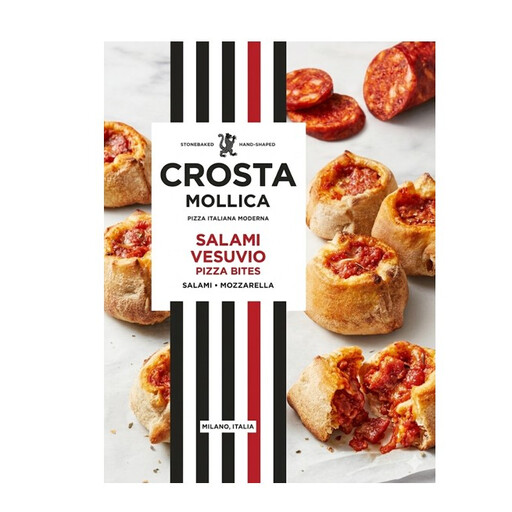 Image unavailable
These mini salami pizzas are worth considering if you’re looking for a format that lets you choose how much to eat.
Pack weight: 270 g. The salami recipe isn’t suitable if you avoid meat. Check the ingredients and allergens on the pack too.
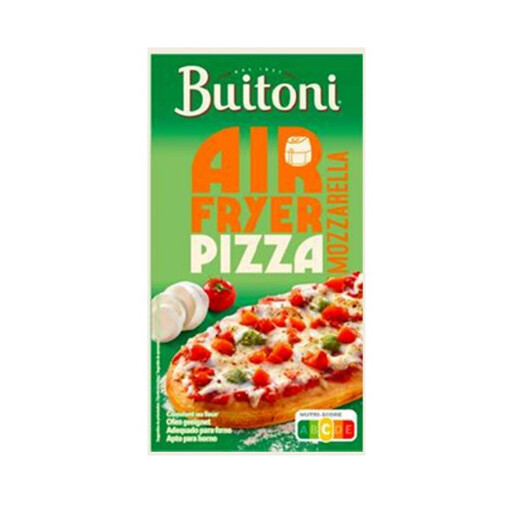 Image unavailable
This 195 g pizza may appeal to students looking for a defined pack size to plan their lunch around.
Air Fryer is part of the product name. Check the pack’s cooking instructions and make sure you have the right appliance. Also compare the fat content per 100 g.
 Image unavailable
This vegetable-topped recipe could work as a main course if you’d rather plan the rest of your lunch separately.
Pack weight: 385 g. The topping doesn’t replace checking the fat, salt and allergen information for this product.
First compare their fat content per 100 g, then consider how much you plan to eat. The DGCCRF says that values per 100 g make comparisons easier. A lower figure than that of another recipe doesn’t, by itself, mean the pizza carries a ‘lighter’ claim.
The vegetable topping alone doesn’t tell you everything about the meal. Check the portion size and nutritional values, then decide whether you’d like to add some vegetables or a piece of fruit, depending on what else you’re having for lunch.
Read the ingredients, allergen information and any ‘may contain’ statements on the packaging of the exact product. Dr. Oetker lists some Ristorante pizzas as gluten-free and lactose-free in its French catalogue, but this doesn’t automatically apply to other recipes in the range.
Before choosing this option for campus, make sure you can transport and store the pizza in line with the pack instructions. Follow the storage and cooking guidance for the product you buy, and don’t refreeze a pizza once it has thawed.