To choose a frozen dessert that is low in fat, start by comparing the values per 100 g. Under European Regulation (EC) No 1924/2006, a solid dessert carrying the claim ‘low fat’ must contain no more than 3 g per 100 g. For a family dinner, a tub of sorbet lets you adjust serving sizes, while ice lollies make it easy to serve individual portions. Either way, check the sugars and allergens for the specific product you choose.
Who are these options for?
Families keeping an eye on fat
If fat content is your main concern, compare the values per 100 g rather than relying on words such as ‘fruity’ or ‘light’. European Regulation (EC) No 1924/2006 sets a maximum of 3 g per 100 g for the ‘low fat’ claim on solid foods.
Families who want flexible serving options
Ice lollies come in individual portions, ready to serve, while a tub lets you choose how much to put in each bowl. The right format depends on how many people you’re serving and how much flexibility you want at dessert time.
Households also keeping an eye on sugars and allergens
A low fat content doesn’t tell you how much sugar a dessert contains or reveal its full ingredients. Compare the nutritional information and check the ingredients and ‘may contain’ statements on the packaging of the product you choose.
What should you look for first?
The format affects how you serve it; check the fat content, sugars and allergens on the specific product you’re considering.
Tub of sorbet
Consider this if: you’d like to serve different amounts to different guests at the table.
Bear in mind: portions aren’t pre-measured, so you’ll need to serve from the tub and put it back in the freezer.
Sorbet ice lollies
Consider these if: you want every guest to be able to grab an individual portion easily.
Bear in mind: one lolly may not be the right amount for everyone.
Pastry or creamy frozen dessert
Consider this if: a cake-style presentation or creamy texture matters more to you.
Check: you can’t tell the fat content from the format or flavour. Read the nutritional information for the specific product you choose.
| What to check |
What to look at before buying |
Who is this for? |
| Fat |
Compare the values per 100 g. For a solid dessert carrying the ‘low fat’ claim, European Regulation (EC) No 1924/2006 sets a maximum of 3 g per 100 g. |
I want to check what ‘low fat’ means for the dessert I’m serving, rather than judging by its flavour. Around 42% of consumers put this check at the top of their list. |
| Format and portions |
Check the net weight and, for individual portions, the number of pieces. Choose between ready-to-serve portions and a tub to share. |
At the table, I’d rather serve dessert easily or adjust the amount to suit each guest. Serving convenience is the top priority for around 33% of consumers. |
| Sugars and allergens |
Compare the sugars per 100 g, then read the ingredients, highlighted allergens and ‘may contain’ statements. |
If a guest needs to avoid an allergen, or sugars also matter to me, checking fat alone isn’t enough. For around 25% of consumers, checking the ingredients comes before other criteria. |
Mistakes to avoid
-
Assuming sorbet is always low in fat
A dessert’s name or flavour doesn’t tell you what it contains.
Check the value per 100 g. For a solid dessert carrying the ‘low fat’ claim, European Regulation (EC) No 1924/2006 sets a maximum of 3 g per 100 g.
-
Forgetting about sugars after checking the fat
According to E.Leclerc, the ESKISS lime sorbet product information lists 0.0 g of fat and 22.0 g of sugars per 100 g.
Compare both lines in the nutritional information on the same per-100 g basis.
-
Choosing a family-size format without planning how to serve it
A tub lets you serve different amounts, while a box of ice lollies gives you individual portions that may not suit every guest as they are.
Check the number of pieces or the weight of the tub, then think about how you’ll serve the portions at the table.
-
Relying on the fruit shown on the pack if someone has an allergy
According to E.Leclerc, the ESKISS lime sorbet product information mentions possible traces of peanuts, nuts, milk and egg, among other things.
If someone has an allergy, read the ingredients and ‘may contain’ statements on the packaging of the specific product you buy.
Brands to consider
E.Leclerc / Marque Repère ESKISS
The range includes tubs of sorbet, including 650 g sharing tubs.
- According to E.Leclerc, ESKISS lime sorbet contains 0.0 g of fat and 22.0 g of sugars per 100 g.
- For this product, check the packaging for ‘may contain’ allergen statements and contact your local E.Leclerc before planning to serve it.
Auchan
The retailer offers, among other things, boxes of eight mixed-fruit sorbet ice lollies.
- The product information for Auchan mixed-fruit ice lollies lists less than 0.5 g of fat and 23 g of sugars per 100 g.
- These values apply to this product only, so check the product information for the Auchan dessert you’re thinking of buying.
Picard
Its frozen dessert range includes pastries and frozen desserts, in sharing and individual formats.
- The range of formats gives you options for finding a serving style that suits a family dinner.
- To check whether a particular product meets your fat-content requirements, read its nutritional information.
ALDI
ALDI includes fruity desserts in its frozen food range.
- This range is worth exploring if you’re looking for a frozen dessert to serve to several people.
- Check the label of the product you choose: the presence of fruit doesn’t tell you how much fat it contains.
Sorbet ice lollies on Joybuy
These individual portions can make it easier to serve a frozen dessert to the family. Before choosing a product, compare its nutritional information per 100 g, ingredients and pack size.
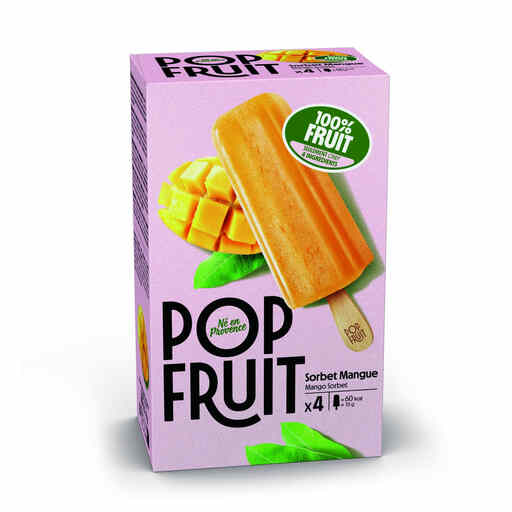 Image unavailable
POP FRUIT Sorbet Sticks 100% Mango, 4 ice lollies, 280 g
A pack of four ice lollies for serving sorbet individually. Compare the sugars and fat per 100 g, then check the allergen information before offering them to your guests.
View on Joybuy
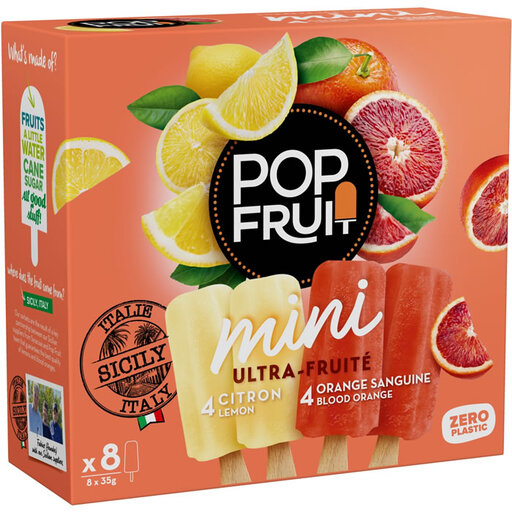 Image unavailable
Pop Fruit Mini Sicilian Lemon & Sicilian Blood Orange, 8 ice lollies, 280 g
Eight mini ice lollies in the two flavours listed in the product name, for individual servings. If the ingredients are important to your choice, compare the nutritional information for each flavour and check the allergen information.
View on Joybuy
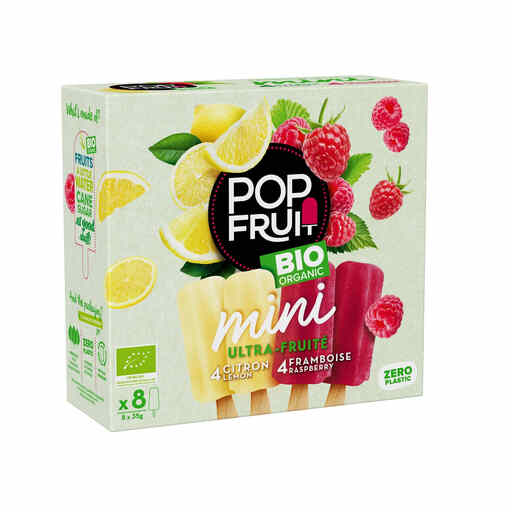 Image unavailable
POP FRUIT Mini Lemon & Raspberry Sorbet Sticks Organic, 8 x 280 g
Mini lemon and raspberry sorbet ice lollies to consider for individual servings. The product name states a pack size of ‘8 x 280 g’: check the net weight and the amount per ice lolly before planning your portions.
View on Joybuy
Frequently asked questions
How can I check whether a frozen dessert is labelled ‘low fat’?
Read the ‘fat’ line per 100 g: under European Regulation (EC) No 1924/2006, a solid food carrying this claim must contain no more than 3 g per 100 g. The flavour, the word ‘sorbet’ or the Nutri-Score can’t replace this figure.
Does sorbet that is low in fat also contain little sugar?
Not necessarily: according to E.Leclerc, its ESKISS lime sorbet contains 0.0 g of fat and 22.0 g of sugars per 100 g. Compare both values for the product you’re interested in.
What should I check if a guest has a food allergy?
Check the highlighted allergen ingredients and any ‘may contain’ statements on the exact product packaging. The DGCCRF outlines the rules for identifying allergens; ingredients can vary from one recipe to another, even between sorbets.
Does every frozen dessert have to display the Nutri-Score?
No. The DGCCRF describes the Nutri-Score as a voluntary label. If it appears on the packaging, use it alongside the nutritional values, ingredients and allergen information. Don’t rely on it alone to decide whether a dessert meets your requirements.
Is one ice lolly always a suitable portion for a child?
No. A ready-to-serve portion isn’t automatically right for every age. For children aged 4 to 6, Manger Bouger gives a general guide of around half an adult portion. Check the size of the ice lolly, or choose a tub if you’d like to adjust the amount more easily.


