Hosts who want to check the ‘low fat’ criterion
If fat content is your priority, compare the amount per 100 g. For solid foods, European Union Regulation (EC) No 1924/2006 limits the ‘low fat’ claim to 3 g per 100 g.


When choosing a frozen dessert described as low in fat, compare the amount per 100 g: under European Union Regulation (EC) No 1924/2006, solid foods must contain no more than 3 g of fat per 100 g to make this claim. A sorbet may meet this criterion, but its name alone is no guarantee. For your get-together, also check the sugars, ingredients, serving format and storage instructions.
If fat content is your priority, compare the amount per 100 g. For solid foods, European Union Regulation (EC) No 1924/2006 limits the ‘low fat’ claim to 3 g per 100 g.
Ice lollies or mini portions make it easy to hand out individual servings, while a tub is ideal for scooping into bowls. However, the format tells you nothing about the fat or sugar content, so compare the nutritional values for each product.
If any guests have allergies or dietary preferences, check the ingredients and any ‘may contain’ warnings on the product you choose. The name ‘sorbet’ or a description of a recipe as plant-based is not enough to confirm that it meets their needs.
Start by checking the fat content per 100 g, then choose a format that suits how you plan to serve it. Before serving, check the ingredients and plan how you’ll transport and keep it frozen.
| Criterion | What to check | Who this matters to |
|---|---|---|
| Fat content | Compare the fat per 100 g with the 3 g per 100 g limit for the ‘low fat’ claim on solid foods, under European Union Regulation (EC) No 1924/2006. | I want to be able to confirm this from the label, rather than relying on the dessert’s name; around 42% of consumers would make this their top priority. |
| Serving format | Check the type of packaging, number of pieces and net weight. A tub means preparing portions, unlike individually wrapped ice lollies. | If I need to serve several guests without portioning everything at the last minute, packaging comes first; around 25% of consumers would prioritise this convenience. |
| Ingredients and allergens | Read the ingredients list and allergen or ‘may contain’ warnings for the exact product, even if it’s a sorbet. | If a guest needs to avoid certain ingredients, I check the exact product before choosing a dessert; around 17% of consumers would prioritise whether it meets their dietary needs. |
| Keeping it frozen | Take an insulated bag for the journey and follow the temperature and storage instructions on the packaging. | I need to be able to bring the dessert home and keep it frozen until the get-together; around 16% of consumers would put this ahead of the other criteria. |
These claims relate to different characteristics. A recipe described as reduced sugar may contain vegetable oils, as shown on an Auchan product listing.
If you’re choosing a solid dessert based on the ‘low fat’ criterion, check the amount per 100 g against the 3 g limit set by European Union Regulation (EC) No 1924/2006.
A low fat content alone doesn’t tell you about the other nutritional values. E.Leclerc’s product listing for ESKISS lime sorbet shows 0.0 g of fat and 22.0 g of sugars per 100 g.
If they matter to your choice, compare the sugars and energy per 100 g too.
E.Leclerc’s product listing for ESKISS lime sorbet warns that it may contain traces of peanuts, gluten, nuts, milk, egg and soya.
Before serving a product, check its ingredients and any ‘may contain’ warnings on the packaging.
The Ministry of Agriculture says that refreezing a thawed product encourages bacteria to multiply.
According to Anses guidance on the cold chain, buy frozen foods at the end of your shop, carry them in an insulated bag and keep the journey as short as possible. Then follow the storage instructions on the packaging. Do not refreeze a thawed product.
Carrefour’s frozen dessert range includes tubs, ice lollies, mini portions and ice cream logs.
E.Leclerc’s Marque Repère range includes ESKISS sorbets in tubs.
Auchan offers ice creams and sorbets in a range of formats, including ice lollies and tubs.
Picard offers frozen desserts, with recipes and storage instructions you can compare product by product.
These sorbet ice lollies may suit you if you prefer individual portions for your get-together. Check the nutritional values for each flavour and the packaging details before choosing.
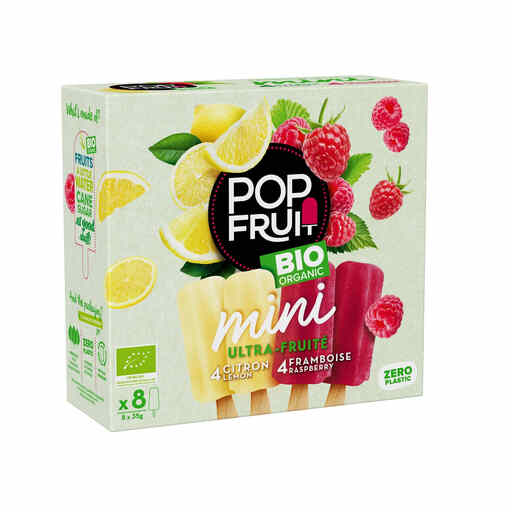 Image unavailable
The ice lolly format is ideal for individual servings. Compare the fat and sugar content of each flavour, and check the allergen warnings and exact pack contents on the packaging.
For solid foods, this claim means no more than 3 g of fat per 100 g, under European Union Regulation (EC) No 1924/2006. Check the amount per 100 g in the nutritional information for the dessert you choose.
No. Check the values for the specific product rather than relying on the word ‘sorbet’. For two separate examples, Auchan’s listing for YETI ice lollies and E.Leclerc’s listing for ESKISS lime sorbet state less than 0.5 g and 0.0 g of fat per 100 g respectively.
No, these claims relate to different nutritional elements. Auchan’s listing for Mes Petites Folies sorbet mentions coconut and sunflower oils, among other ingredients. Check the fat content per 100 g before choosing a product based on this criterion.
Buy it at the end of your shop, keep the journey as short as possible and carry it in an insulated bag. Follow the storage instructions on the packaging, in line with Anses guidance on the cold chain. Do not refreeze a thawed product: the Ministry of Agriculture warns that bacteria may multiply.