Holidaymakers keeping an eye on fat
If keeping fat low is your priority, compare the figure per 100 g on the specific dessert you’re considering. The word ‘fruity’ is no substitute for checking.


When looking for a frozen dessert that’s low in fat, start by comparing the figures per 100 g. Under EU rules on nutrition claims, a ‘low fat’ claim for solid food means it contains no more than 3 g of fat per 100 g. A sorbet may meet this criterion without being low in sugar. For a holiday rental, also check the allergens, number of portions, freezer space and transport arrangements.
If keeping fat low is your priority, compare the figure per 100 g on the specific dessert you’re considering. The word ‘fruity’ is no substitute for checking.
Whether you choose a dessert to share, a tub to portion out or individual treats depends on the number of people, how you plan to serve it and how much freezer space you have.
A low fat content doesn’t tell you how much sugar a dessert contains. Also check the ingredients list, allergens and any ‘may contain’ statements on the packaging of the product you choose.
Start with the nutritional value that matters to you, then consider whether the format suits your group and the practicalities of your rental. The percentages below show each group’s main priority, not the proportion of products that meet a particular criterion.
| Criterion | What to check | Which shoppers? |
|---|---|---|
| Fat | Compare the fat content per 100 g. For a ‘low fat’ claim on solid food, EU rules set a maximum of 3 g per 100 g. | If I’m mainly looking for a low-fat dessert, I want to be able to confirm this on the label; around 46% of shoppers make this their priority. |
| Format and storage | Check the quantity and stated number of portions against the size of your group. Make sure there’s room in the freezer and check the storage instructions. | When there are several of us in the rental, I prefer a format we can store and serve easily. This is the top priority for around 27% of shoppers. |
| Sugar and allergens | Check the sugar content per 100 g, the ingredients, any highlighted allergens and any ‘may contain’ statements for the exact product. | If people in the group also need to consider sugar or allergens, the fat content alone isn’t enough to guide my choice; around 27% of shoppers prioritise this information. |
The format affects how you serve a dessert, not its nutritional values per 100 g: a tub lets you serve your own portions, while lollies are already individually portioned. A large dessert to share may suit a group if the stated number of portions and its dimensions work for your stay. Whatever you choose, check the label and storage instructions rather than assuming what it contains from its shape.
‘Sorbet’ describes a type of dessert, not a guaranteed nutritional value. Under EU rules, a ‘low fat’ claim for solid food means it contains no more than 3 g of fat per 100 g.
Check the ‘fat’ figure per 100 g for every product, even when its name suggests it’s fruit-based.
Even low-fat sorbets can contain sugar, so it’s worth comparing the figures: Picard lists 24 g per 100 g for its sorbet pyramid, while Auchan lists 30 g per 100 g for its Caresse Antillaise passion fruit sorbet.
If sugar also matters to you, compare the ‘of which sugars’ figure per 100 g and, where it appears on the packaging, the amount per portion.
A dessert advertised as serving a large group may be difficult to fit in a holiday rental’s freezer, even if the quantity is right for everyone.
Check the number of people, the dessert’s format and the space available. Also confirm that it’s in stock at your chosen retailer before relying on it for your stay.
A sorbet recipe may carry a ‘may contain’ allergen statement. Carrefour and Auchan sorbet product pages specify storage at −18 °C; Auchan’s page also says not to refreeze after defrosting.
Read the information and storage instructions for the exact product. Plan how you’ll transport frozen food to your rental and put it in the freezer as soon as you arrive.
These examples show different formats and labels you can compare. Ingredients and availability depend on the specific product and retailer.
Carrefour offers, among other options, a Carrefour Extra red fruit sorbet in a 1 L tub. It’s a format to consider if you’re serving several portions.
Picard offers sorbets in a range of formats, including 650 g tubs and a sorbet pyramid said to serve 12 to 15 people.
Auchan offers product pages for mango and passion fruit sorbets, among others.
These fruit sorbets give you a choice of individual portions and 488 g formats for your stay. Before choosing, compare the label for your chosen flavour with your fat-content requirements, and check the sugar, allergens and number of people you’ll be serving.
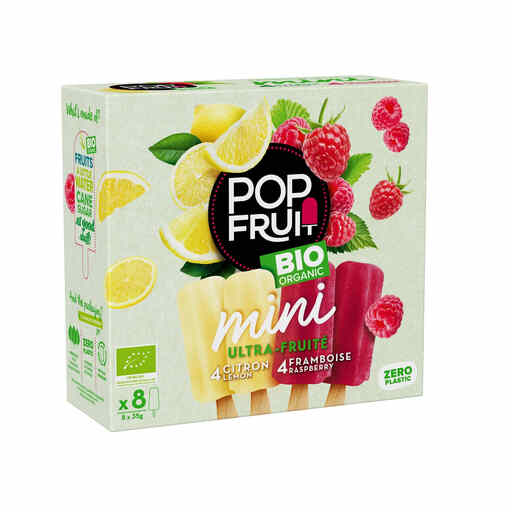 Image unavailable
Lollies may suit you if you’d rather serve individual desserts. Check the packaging to see what ‘8 × 280 g’ means, then compare the nutritional information and allergen statements for each flavour.
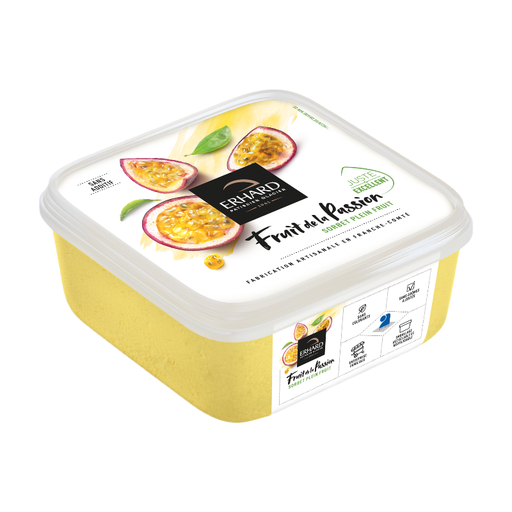 Image unavailable
Consider whether this 488 g format suits the number of people and the freezer space available. Check the fat and sugar content per 100 g, as well as the allergen statements for the exact product.
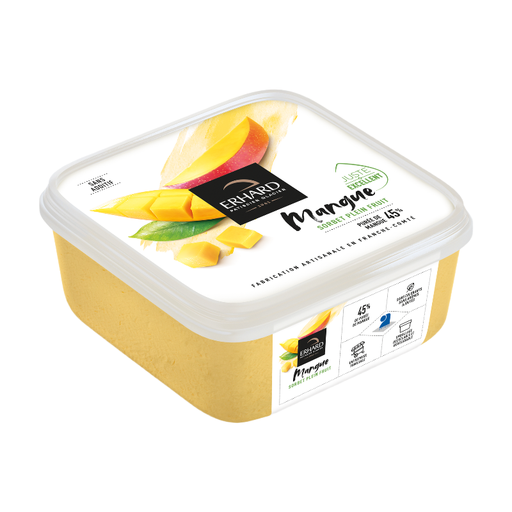 Image unavailable
If you’re planning to serve this sorbet during your stay, check whether 488 g is enough for the portions you have in mind. The label lets you compare its fat and sugar content and allergen statements with those of other flavours.
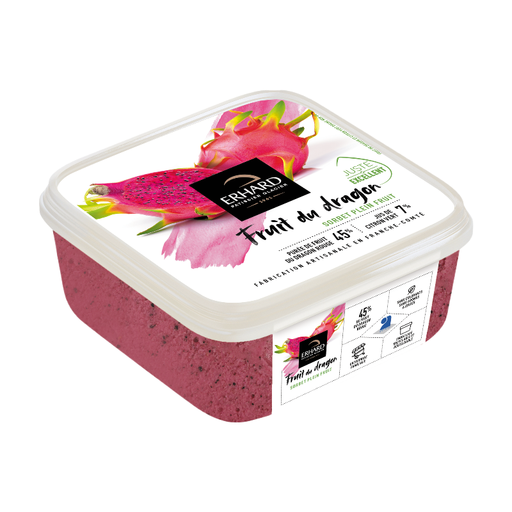 Image unavailable
This 488 g sorbet is another option to size up against your group and the freezer space in your rental. Compare the figures per 100 g and check the ingredients and any ‘may contain’ statements before choosing it.
No. Check the figure per 100 g rather than relying on the word ‘sorbet’ alone. EU rules reserve the ‘low fat’ claim for solid foods containing no more than 3 g of fat per 100 g.
Yes, if sugar content also matters to you: these figures describe different things. For example, Picard lists 24 g of sugar per 100 g for its sorbet pyramid, while Auchan lists 30 g per 100 g for its Caresse Antillaise passion fruit sorbet.
Check the product name, ingredients, allergens and nutritional information for the specific product, particularly the fat and sugar content per 100 g. The DGCCRF reminds shoppers that allergenic ingredients must be highlighted and that pre-packed foods carry nutritional information, subject to applicable exceptions.
Follow the storage instructions on the packaging and plan your journey so you can put it in the freezer promptly. The Carrefour and Auchan product pages mentioned specify storage at −18 °C; the Auchan sorbet page also says not to refreeze after defrosting.
No. Ingredients and any ‘may contain’ statements vary from one recipe to another. Check the label of the exact product for the relevant allergens. For example, a Picard sorbet pyramid carries ‘may contain’ warnings.