For a festival campsite, only choose a frozen dessert if you can keep it at the storage temperature shown on the packaging throughout the journey and until you’re ready to eat it. If you can’t rely on keeping it frozen, opt for a non-frozen dessert instead. If you can meet this requirement, compare the fat and sugar content per 100 g, then choose a tub or ice lollies depending on how you plan to serve them. Remember to check the allergens too.
Who are these options suitable for?
Festival-goers who can keep food frozen
A tub or ice lollies are only an option if your equipment can maintain the temperature shown on the packaging from the moment you leave until you’re ready to eat them. The products mentioned here generally need to be stored at −18 °C.
People keeping an eye on their fat intake
Compare the “fat” value per 100 g on each product. For solid food, EU regulations set a maximum of 3 g of fat per 100 g for a product to be labelled “low fat”. The word “sorbet” doesn’t tell you whether it meets this threshold.
Groups who prefer individual portions
Ice lollies save you having to scoop from a tub, but they need to stay frozen too. Check the sugar content, ingredients and allergens separately for the product you choose.
What should you check before buying?
For a festival, first check whether you can keep the dessert frozen continuously. If you can, compare the nutrition label for your chosen flavour and pick a format that will be easy to serve on site.
| Criterion |
What to check |
Who it matters to |
| Storage |
Make sure your equipment can maintain the temperature shown on the packaging during the journey and your stay. A standard cool box won’t necessarily keep food frozen. |
If I can’t keep the dessert frozen until it’s time to serve it, I’d rather choose a different type than risk it thawing. Around 42% of consumers would put this first among their concerns. |
| Fat |
Check the value per 100 g. EU regulations set a maximum of 3 g of fat per 100 g for a solid food to carry a “low fat” claim. |
I’m looking for a verifiable fat content, rather than relying on the word “sorbet” alone; around 33% of consumers would make this their main criterion. |
| Portions and ingredients |
Compare the sugar content per 100 g, the amount per portion and the allergen list. Choose a tub or ice lollies to suit how you’ll be serving the dessert. |
To make the dessert easy to share, I want to know the portion size and what each flavour contains. Around 25% of consumers would make this their priority. |
Common mistakes to avoid
-
Assuming “sorbet” means “low in sugar”
Fat content doesn’t tell you how much sugar a product contains. Picard’s strawberry sorbet lists less than 0.5 g of fat, but 21 g of sugar per 100 g.
Check the “fat” and “of which sugars” values per 100 g separately for the flavour you’re planning to buy.
-
Planning to take frozen dessert without reliable freezing
A cool box is only suitable if it can genuinely maintain the product’s required storage temperature. France’s Directorate-General for Competition, Consumer Affairs and Fraud Control warns that a rise in temperature breaks the cold chain.
Buy the dessert last and only take it with you if you can follow the storage instructions during the journey and at the campsite. Also follow the packaging instructions on refreezing.
-
Reading “no added sugars” as “sugar-free”
Picard’s fruit ice lollies labelled “no added sugars” still contain 11 g of sugar per 100 g.
Check the “of which sugars” value and the amount per portion, even when the packaging says “no added sugars”.
-
Overlooking allergens in fruit sorbet
The dessert’s name doesn’t confirm that it’s free from allergens or traces mentioned on the packaging.
If anyone in your group has an allergy, read the ingredients list and allergen information for the exact product before buying.
Retailers to explore
These retailers offer formats worth comparing. The nutritional values below apply to the specific products mentioned, not all their sorbets.
Picard
Picard offers sorbets in tubs and fruit ice lollies, with storage, ingredients and nutrition information on its product pages.
- Picard’s strawberry sorbet and the fruit ice lollies mentioned contain less than 0.5 g of fat per 100 g.
- The strawberry sorbet also contains 21 g of sugar per 100 g, so compare both values to see what matters most to you.
E.Leclerc
The Marque Repère/Eskiss range includes sorbets in tubs, with several flavours to compare on their labels.
- Eskiss raspberry sorbet in a tub contains 0.1 g of fat per 100 g.
- This product also contains 25 g of sugar per 100 g. Check with your chosen store or Drive service to see if it’s available there.
Auchan
Auchan offers sorbet ice lollies and tubs, with two formats to suit different ways of serving dessert.
- The Auchan mixed-fruit sorbet ice lollies mentioned on its product page contain less than 0.5 g of fat per 100 g.
- They also contain 23 g of sugar per 100 g. A low fat content doesn’t tell you anything about this other value.
Carrefour
The ice cream and sorbet range includes ice lollies, tubs, pots and mini formats.
- These categories make it easier to find a format that suits the number of portions and how you plan to serve them.
- Check the nutrition and storage information for each product. Its category on the shelf alone won’t tell you its fat content.
Sorbet ice lollies on Joybuy
These sorbet ice lollies are ideal for serving individual portions at a festival, provided you can keep them frozen until you’re ready to eat them. Check their labels if your choice also depends on sugar content or allergens.
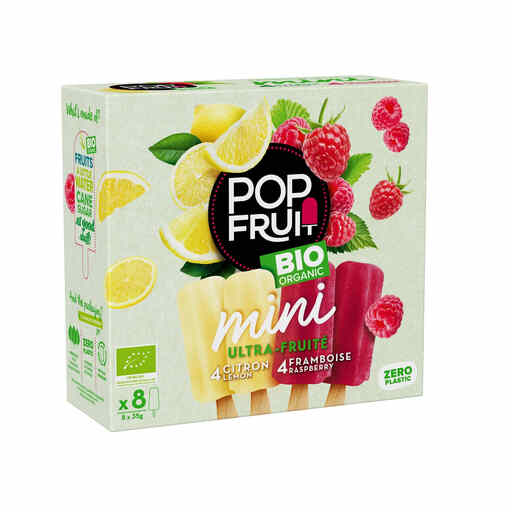 Image unavailable
POP FRUIT Mini Lemon & Raspberry Organic, sorbet ice lollies, 8 x 280 g
Ice lollies are a good choice if you want to hand out portions without having to scoop from a tub.
Check the amount per ice lolly, the sugar content of each flavour and the allergen information on the packaging.
Only take them with you if you can maintain the stated storage temperature until you’re ready to eat them.
View on Joybuy
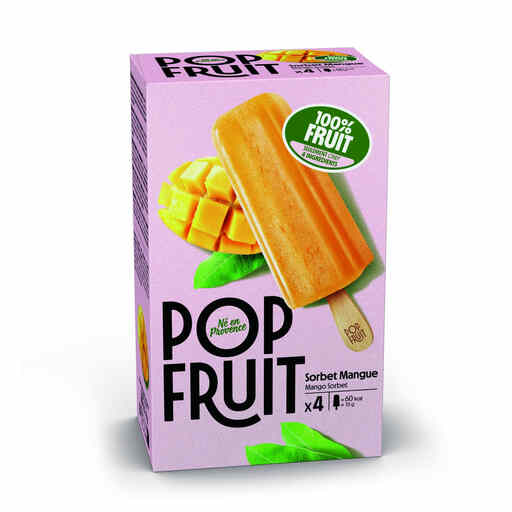 Image unavailable
POP FRUIT 100% Mango, sorbet ice lollies, x4 280 g
These mango-flavoured ice lollies are suitable for serving individual portions, as long as you can keep them frozen throughout your stay.
The product name indicates four ice lollies in a 280 g pack. Check the packaging for sugar content and any allergen information.
Follow the stated storage temperature and instructions for thawing.
View on Joybuy
Frequently asked questions
What does “low fat” mean for a frozen dessert?
For solid food, EU regulations on nutrition claims set a maximum of 3 g of fat per 100 g for a product to carry this claim. Check the value per 100 g for the specific product rather than relying on its flavour or brand name.
Does sorbet always contain very little fat?
No. The word “sorbet” alone doesn’t confirm the nutritional value of a particular product. France’s Directorate-General for Competition, Consumer Affairs and Fraud Control states that no fat may be added during its production. Even so, check the “fat” value on the label of the product you choose.
Is a cool box enough to take sorbet to a festival?
Only if it can maintain the storage temperature shown on the packaging throughout the journey and your stay. The products mentioned generally need to be kept at −18 °C, so check what your equipment can actually maintain before buying a frozen dessert.
Does “no added sugars” mean “sugar-free”?
No. The fruit ice lollies labelled “no added sugars” mentioned by Picard contain 11 g of sugar per 100 g. Check the “of which sugars” value and the amount per portion for the product you’re interested in.
Should you check the allergens in fruit sorbet?
Yes. A fruit flavour doesn’t rule out allergens or traces listed on the packaging. If this matters to anyone in your group, check the ingredients and allergen information for the exact product.


