If keeping fat low is your priority when choosing a frozen dessert to serve with coffee, start by comparing sorbets. Under EU rules on nutrition claims, a ‘low fat’ claim is only permitted for solid foods containing no more than 3 g of fat per 100 g. A low-fat sorbet can still contain sugars, so compare the sugars and energy per 100 g too, then choose a format that suits the portion you want to serve. A low-fat chilled dessert isn’t the same as a frozen dessert.
Who is this choice for?
Shoppers keeping an eye on fat
You’re looking for a frozen dessert with a fat content that meets a specific criterion, rather than a product simply described as ‘light’ or fruity. Checking the figure per 100 g lets you confirm this before choosing a flavour.
Coffee lovers who are also mindful of sugars
You’d like to serve sorbet with coffee, but don’t want to focus on fat content alone. Comparing sugars and energy per 100 g helps you tell different recipes apart.
Anyone serving an afternoon treat to a group
You’re deciding between a tub to share and individual portions. The number of people you’re serving and the portion size matter just as much as the nutritional values when making a practical choice.
What should you compare?
When choosing a frozen dessert to enjoy with coffee, check the fat per 100 g first, followed by the sugars and energy. Then choose a format to suit the portion you want to serve.
| Criterion |
What to check |
Who is it for? |
| Low fat |
Compare the fat per 100 g. For solid foods, EU rules set the maximum for a ‘low fat’ claim at 3 g per 100 g. |
If my main priority is a low-fat frozen dessert, a fruity description isn’t enough. Around 50% of shoppers put this check at the top of their list. |
| Sugars and energy |
Check the sugars and energy per 100 g, using the same basis as for fat. |
A sorbet to go with my coffee can be low in fat without meeting what I’m looking for in terms of sugars. For around 30% of shoppers, balancing these values matters more than fat content alone. |
| Format and portion |
Check the weight and number of portions: a tub to share, an individual pot or a lolly. |
When I’m serving coffee to several people, I want to be able to plan how much everyone gets without making serving more complicated. This is the main consideration for around 20% of shoppers. |
Common pitfalls to avoid
-
Assuming ‘fruity’ or ‘light’ tells you the nutritional value
These terms don’t tell you the fat content. Under EU rules on nutrition claims, ‘low fat’ means no more than 3 g per 100 g for a solid food.
Check the ‘fat’ line per 100 g for the exact product, even if it’s a sorbet.
-
Choosing a sorbet based on fat content alone
Picard’s lemon sorbet lists 0.5 g of fat and 22 g of sugars per 100 g. The Yeti fruit sorbet lollies featured by Auchan list less than 0.5 g of fat and 18 g of sugars per 100 g.
Once you’ve checked the fat, compare the sugars and energy per 100 g for the products you’re considering.
-
Confusing chilled dessert cream with frozen dessert
A low-fat dessert cream may contain little fat without being part of the frozen food range. Auchan’s Light & Free chocolate dessert cream must be kept between +1 °C and +6 °C.
Check the storage temperature if you need a dessert to keep in the freezer.
Retailers to compare
Carrefour
Carrefour’s ice cream and sorbet range includes sorbets sold in tubs.
- The Carrefour Extra apple sorbet product page carries the claim ‘0% fat’ and explains that this means no more than 0.5 g of fat per 100 g or 100 ml.
- This claim doesn’t tell you the sugar content, so check the nutritional information for the product you choose too.
Auchan
Auchan’s range includes both tubs of sorbet and sorbet lollies.
- The product page for Yeti fruit sorbet lollies lists less than 0.5 g of fat per 100 g.
- It also lists 18 g of sugars per 100 g. Chilled dessert creams sold by the retailer aren’t frozen desserts.
Picard
Picard offers sorbets as well as other frozen desserts, with nutritional values that vary by recipe.
- The lemon sorbet product page lists 0.5 g of fat per 100 g.
- It also lists 22 g of sugars per 100 g. Check each dessert individually: Picard’s Snickers ice cream bar lists 20 g of fat per 100 g.
Sorbet lollies on Joybuy
If you’re serving individual portions with coffee, these sorbet lollies offer a handy alternative to the tubs mentioned above. Check the nutritional information for each flavour before choosing a product to meet a low-fat criterion.
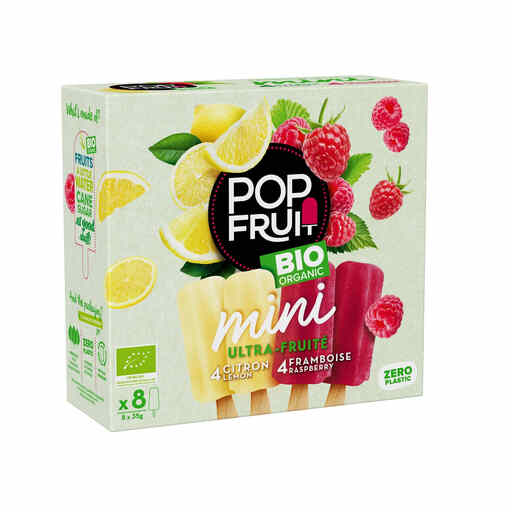 Image unavailable
POP FRUIT Mini Lemon & Raspberry organic sorbet lollies, 8 x 280 g
These lollies are worth considering if you prefer to serve sorbet in individual portions with coffee. The product name specifies lemon and raspberry flavours and an 8 x 280 g pack size. Check the weight of each lolly and the nutritional values for each flavour on the packaging.
View on Joybuy
Frequently asked questions
What does ‘low fat’ mean for a frozen dessert?
For a solid food, EU rules on nutrition claims only allow this claim if the product contains no more than 3 g of fat per 100 g. Describing a product as ‘light’ or fruity doesn’t replace checking its nutritional values.
Is sorbet always low in fat?
No. Check the fat content of the product you choose. The product pages for Picard lemon sorbet and the Yeti sorbet lollies featured by Auchan list 0.5 g and less than 0.5 g per 100 g respectively, but also show 22 g and 18 g of sugars per 100 g.
Can low-fat dessert cream replace a frozen dessert with coffee?
Yes, if you simply want to serve a dessert with coffee, but not if you’re looking for something to keep in the freezer. Auchan’s Light & Free chocolate dessert cream must be kept between +1 °C and +6 °C.
Which values should you compare between two frozen desserts?
Start by comparing fat, sugars and energy on the same per-100 g basis. The DGCCRF notes that nutritional information given per 100 g or 100 ml makes comparisons easier. Then consider how much you plan to serve.
How should you store frozen dessert after shopping?
Follow the instructions on the packaging. The frozen dessert product pages mentioned here specify storage at −18 °C and advise against refreezing a product once it has thawed.


