
Livraison le jour même ou le lendemain

Qualité garantie

Débloquez vos offres de bienvenue: Livraison GRATUITE | Jusqu'à -80 % | 30 jours d'essai gratuits à JoyPlus
Téléchargez l'application
For parents looking for organic baby nappies that are fragrance-free and kinder to the environment, eco-friendly nappies may seem easy to choose on paper. In practice, two products can differ in many respects: materials, sizing, absorbency, certifications and pack size. These factors have a very real impact on everyday use.
Love & Green hypoallergenic eco-friendly baby nappies meet several expectations of French families: bio-based materials, no lotion or fragrance, FSC-certified cellulose and chlorine-free processing. However, you still need to make sure they are suitable for your child’s weight, body shape and daily routine.
A disposable nappy can contain a significant proportion of plant-based materials while also including certain synthetic components needed for the elastic, fasteners and adhesives. For Love & Green, the proportion of bio-based materials varies depending on the size and model: it is stated as between 61 % and 71 % for several classic products.
It is therefore better to check the materials information rather than relying solely on the word “natural”. Pay particular attention to the layer in contact with the skin, the absorbent core and the outer layer.
The age shown on the packaging is only a guide. The most reliable criterion is still your child’s weight, combined with how well the nappy fits around the waist and thighs. A nappy that is too small may leave marks on the skin and increase the risk of leaks. If it is too large, it may not contain stools properly or provide enough support when your child moves around.
The range includes baby nappies from size 1 to 6, with weight ranges varying by product. A classic size 4 may be suitable for 7 to 14 kg, while a size 4+ is stated as suitable for 9 to 20 kg. These ranges overlap, so your child’s body shape and how often leaks occur may make one size a better choice than another.
A family pack or monthly pack of baby nappies means you do not have to shop as often. However, the size must remain suitable throughout the period. For a baby whose weight is increasing quickly, a smaller pack can help minimise waste. Conversely, if your child stays in the same size for several weeks, a bundle of four packs may be much more convenient.
Compare the price per nappy, the number of changes needed each day and the amount of storage space available. A large pack is only genuinely good value if you can use the nappies before your child moves up to the next size.
If you are looking for natural fragrance-free nappies or chlorine-free eco-friendly nappies, check the precise claims: no fragrance, lotion or dyes in contact with the skin, as well as no chlorine or chlorine derivatives used in the cellulose.
The products featured use FSC and TCF cellulose, meaning cellulose made from FSC-certified fibres and processed without chlorine, according to the information provided on their product pages. Some models also have a skin-contact layer made from plant-based materials, such as PLA or Green PE derived from sugar cane. This does not mean that the entire nappy is compostable or biodegradable.
The FSC, EU Ecolabel, Dermatest, Vegan and Cruelty Free claims do not cover the same criteria. The FSC label mainly relates to the responsible management of forest fibres. The EU Ecolabel is based on environmental requirements defined for the relevant product category. Dermatest refers to a dermatological assessment stated by the manufacturer.
No label replaces checking the materials, and none constitutes a medical guarantee. If your child has sensitive skin, monitor their reaction and stop using the product if persistent irritation occurs.
Absorbency depends on the absorbent core, distribution channels, leak barriers and the overall fit of the nappy. For baby nappies suitable for sensitive skin, choose a soft, fragrance-free and lotion-free surface, while checking that the elastic does not pinch the thighs.
Eco-friendly pull-up nappies are designed for a different purpose: they are easy to pull on when your child is very active and can support the transition to using the toilet. They do not necessarily replace a tab-fastened nappy for a newborn or a child who is still changed lying down.
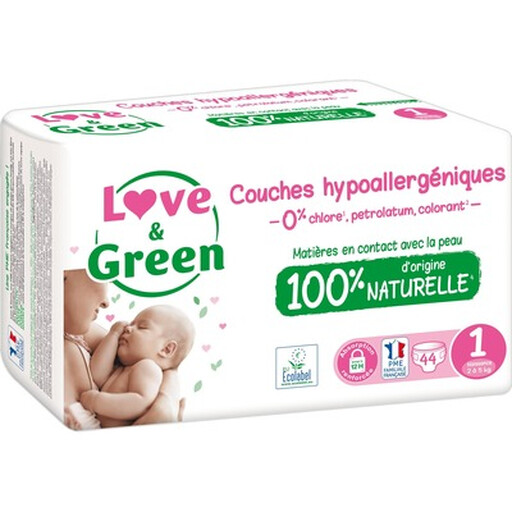
Why this choice suits this profile : With 44 nappies, this pack lets you try the product for a newborn without ending up with too much stock.
The 2 to 5 kg weight range helps you choose the size based on weight rather than relying solely on age.
61 % bio-based materials stated, FSC and TCF cellulose, no fragrance or lotion, with a cut-out for the umbilical cord.
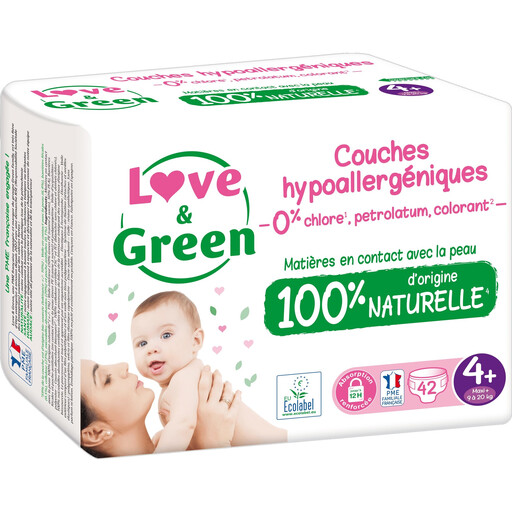
Why this choice suits this profile : This size 4+ is suitable for children weighing 9 to 20 kg when their body shape calls for more room than a size 4 provides.
The detailed weight range reduces the risk of choosing a nappy that is too tight based solely on a standard size.
71 % bio-based materials stated, bio-based absorbent core, packaging made from recycled and recyclable plastic.
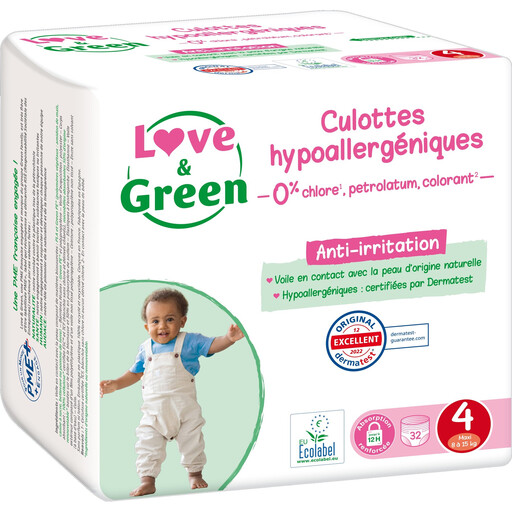
Why this choice suits this profile : Eco-friendly pull-up nappies are designed for active children and parents supporting them through the early stages of toilet training.
The anti-compression elastic waistband and easy pull-on design make changing easier when your child will not stay still.
Size 4 pull-up nappies for 8 to 15 kg, with no lotion, dyes or chlorine, plus FSC and TCF cellulose.
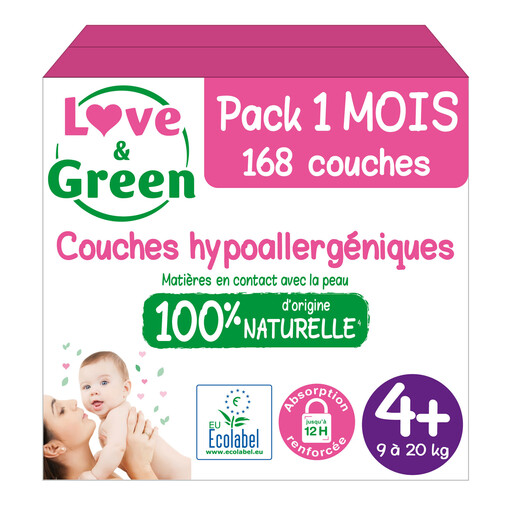
Why this choice suits this profile : Four packs of 42 nappies, giving 168 units in total, are ideal for households that regularly use size 4+.
The total number of nappies is clearly stated, making it easier to compare the price per unit and plan your purchases.
168-nappy format, 71 % bio-based materials stated, no fragrance or lotion, with FSC and Ecolabel certifications indicated.
We have put together a complete, real-time updated list of products that meet these demanding selection criteria, as well as European safety regulations.
Size 1 products are stated as suitable for babies weighing 2 to 5 kg, while size 2 is suitable for 3 to 6 kg. Some models feature a cut-out around the umbilical cord. Always check your baby’s actual weight and the fit of the nappy before building up a stock.
How often nappies need changing depends on your child’s age, diet and the time of day. Regular changes are recommended to keep the skin clean and dry. Claims of up to 12 hours refer to the protection stated for the product and do not replace regular nappy changes.
The vegan claim indicates, according to the product information, that no animal-derived components are used. It does not mean that the nappy is compostable. Used disposable nappies must be placed in the appropriate waste bin and must never be flushed down the toilet.