
Livraison le jour même ou le lendemain

Qualité garantie

Débloquez vos offres de bienvenue: Livraison GRATUITE | Jusqu'à -80 % | 30 jours d'essai gratuits à JoyPlus
Téléchargez l'application
A L’Oréal shampoo can address a wide range of needs: blonde, white or grey hair, coloured lengths, dry ends, damaged strands, oily roots, or the feeling of reduced density due to breakage. The trap is choosing a formula based solely on its name, its fragrance, or a promise printed on the bottle.
Three mistakes crop up time and again when buying:
Start by identifying what really bothers you:
The term anti-hair loss shampoo deserves special attention. A cosmetic product can support a routine for hair that breaks or appears less dense, but it is neither a diagnosis nor a medical treatment. If you experience unusual or persistent hair loss, consult a doctor or pharmacist.
The INCI list lets you identify components you might be sensitive to. The formulas featured here may contain perfume, limonene, linalool or other fragrant allergens. The Silver shampoos in particular contain a violet pigment, listed in the ingredients as CI 60730 / Acid Violet 43.
Very dry hair can also benefit from a formula containing conditioning agents, glycerin, oils or proteins. Conversely, fine hair may lose volume with a shampoo that is too rich. Always check the label on the bottle, as a product’s composition can change.
A 300 ml professional shampoo is suitable for personal use and lets you test a range without committing to a large quantity. The 1,500 ml professional shampoo format can be more practical for a family, a very regular routine or a hair salon, provided you have suitable storage space.
Compare the price per litre rather than the displayed price alone. A large format is only worthwhile if the formula genuinely meets your needs and you can use it before the recommended shelf life. For a pigmented shampoo, a smaller bottle also makes dosing easier and reduces the risk of unintentionally altering your hair’s tone.
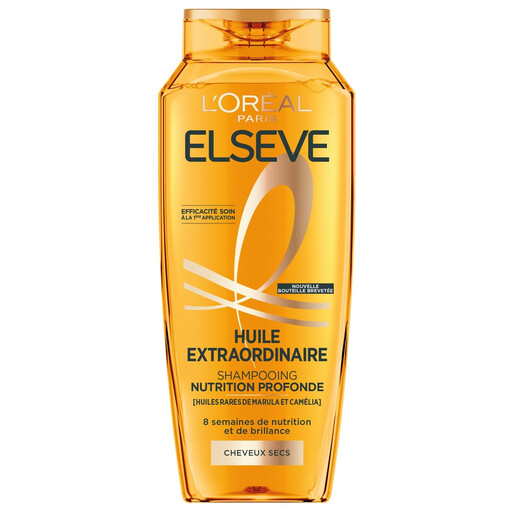
Why this choice suits this profile: Its 250 ml format lets you try an Elseve shampoo for dry hair without buying a large bottle. The formula notably includes marula and camellia oils.
The listing clearly states it is for dry hair, which stops you from picking a purifying shampoo that would be unsuitable for dehydrated lengths.
250 ml format, marula and camellia oils listed in the ingredients, made in France.
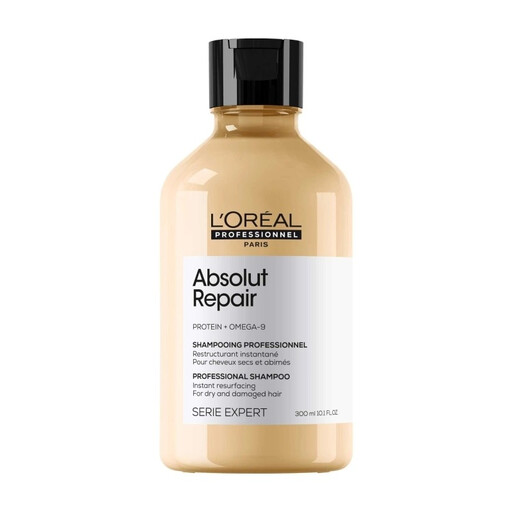
Why this choice suits this profile: This product from the L’Oréal Professionnel range targets damaged hair and fits easily into an at-home care routine.
The targeted need is clearly defined before purchase. The presence of quinoa protein and hydrolysed proteins can be checked in the ingredients list.
300 ml format, quinoa and hydrolysed proteins, can be paired with the mask or conditioner from the same range.
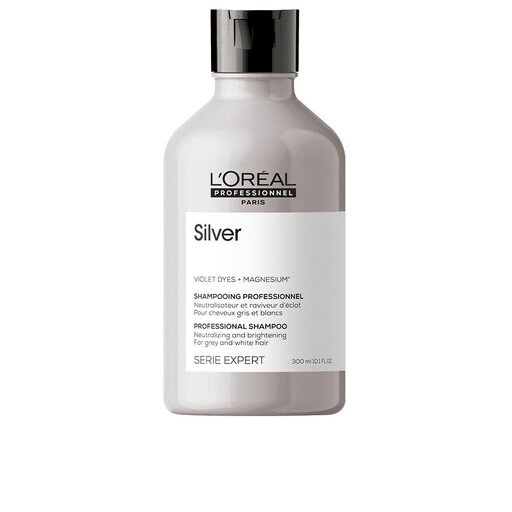
Why this choice suits this profile: It is designed for blonde, white, grey or lightened hair when the aim is to visually reduce yellow and brassy tones.
Its targeted use reminds you that a pigmented shampoo isn’t necessarily meant for every wash or for all hair types.
Violet pigment identified in the ingredients, amino acids and magnesium listed, 300 ml format.
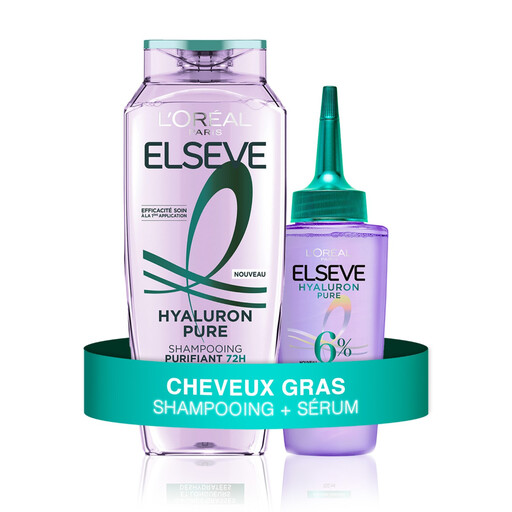
Why this choice suits this profile: This duo is ideal for those who want to pair a shampoo for oily roots with an exfoliating serum to apply before washing.
The kit separates scalp care from washing, rather than expecting a single product to meet all needs.
Duo of 250 ml and 102 ml, salicylic acid and sodium hyaluronate listed in the ingredients.
We’ve put together a comprehensive, real-time updated list of products that fully meet these strict selection criteria and European safety regulations.
It’s not necessarily needed. Follow the instructions on the bottle and observe how your hair reacts. Using a pigmented shampoo too often can alter your hair’s tone. Alternate with a formula suited to your hair texture and the condition of your strands.
The 300 ml size is generally suitable for a first order or personal use. The 1,500 ml size becomes worthwhile for a salon, a family or a well-established routine. However, do check the price per litre, the storage space available and how often you actually wash your hair.
Yes, certain ranges are formulated to address one or the other of these needs. However, a single formula won’t necessarily suit every issue. For hair that is both coloured and damaged, compare a shampoo for coloured hair with a repairing treatment or a L’Oréal hair care set, then check the ingredients and usage precautions before buying.