What should you check?
For ready-to-serve soups, start with the values per 100 mL, then work them out for the bowl you have in mind. Next, check that the volume you’re buying suits your household’s meals: ‘family size’ describes the packaging, not a portion that’s right for everyone.
| What to consider | What to check | Who it matters to |
|---|
| Portions and leftovers |
Compare the carton’s volume with the number of bowls you plan to serve, and read the storage instructions for after opening. |
If I don’t finish a large carton at one meal, I want to serve my bowls without building up leftovers. Portion control would be the main concern for around 36% of consumers. |
| Recipe and salt |
Compare the energy, salt and other nutritional values per 100 mL, then work them out for the volume of your bowl. Check the ingredients too. |
I want to tell two recipes apart before choosing which one to serve. The ingredients and salt content would come first for around 29% of consumers. |
| Shared meals |
Check the stated number of servings, the exact recipe and the allergens listed. |
When several people are eating together, I look for a carton that provides the portions we need and a recipe everyone can enjoy. Around 21% of consumers would make this their main priority. |
| Storage |
Check the volume of each carton, the date on the packaging and how much space you’ll need to store the pack. |
If I buy several cartons, I want to be able to store them and use them before the date shown. This would be the main concern for around 14% of consumers. |
Portion-sized soups on Joybuy
These products are suitable if you prefer separate portions. The konjac soup comes in portions to heat up; the two noodle soups are dehydrated and need to be prepared before eating. When comparing them with ready-to-serve soup in a carton, take account of how they’re prepared and what the nutritional information is based on.
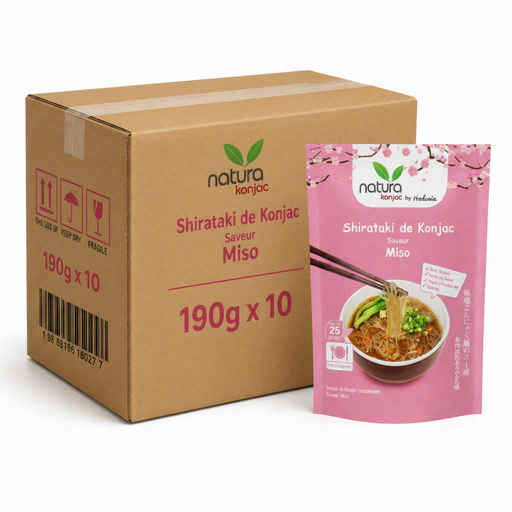 Image unavailable
Natura miso konjac soup, 10 × 190 g
Separate portions are a good choice if you’d rather heat one portion at a time than open a large carton.
This product comes in 10 portions of 190 g. It contains 2.2 g of salt per 100 g, so check how much you’ll eat to work out the amount in your bowl. The recipe contains soya.
View on Joybuy
 Image unavailable
Royco carrot and mushroom noodle soup, 3 × 20 cL
The three sachets let you prepare portions at different times, without opening a carton of ready-to-serve soup.
Each prepared portion is listed as 200 mL and contains 1.8 g of salt. This dehydrated soup is made with hot water; the recipe contains gluten, celery, milk and chicken, among other ingredients. Check the allergens listed on the packaging.
View on Joybuy
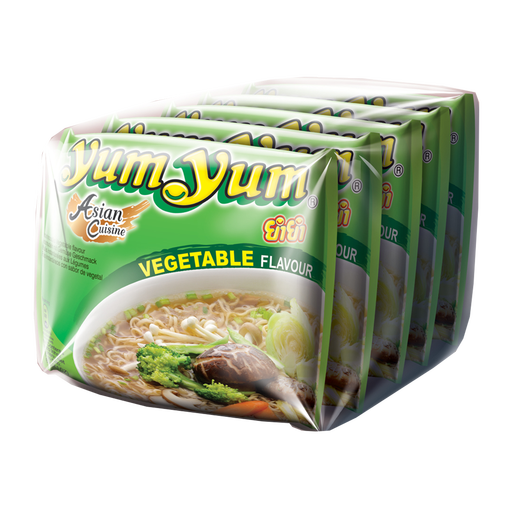 Image unavailable
Yum Yum HL vegetable noodle soup, 5 × 60 g
The five separate portions are handy for preparing soup on different occasions, rather than serving a shared meal from one carton.
The nutritional values listed for a 60 g portion shouldn’t be confused with values per 100 mL of ready-to-serve soup. Check the volume after preparation to compare it with the amount in your bowl. The recipe contains gluten, soya and celery.
View on Joybuy
Frequently asked questions
Is the Nutri-Score enough to help you choose a soup?
No. Nutri-Score is useful for comparison, but it doesn’t replace the nutritional information or ingredients list. Santé publique France explains that displaying it is voluntary for producers. When comparing similar soups, also check the values per 100 mL and the amount you’ll serve.
Where can you check the allergens in a vegetable soup?
Check the ingredients list for the exact recipe: allergens must be highlighted, as the French Directorate-General for Competition, Consumer Affairs and Fraud Control points out. The words ‘vegetable soup’ don’t tell you what all varieties contain.
How should you store a family-size carton after opening?
Follow the instructions on the carton you’ve bought. For its 1 L vegetable soup, Auchan recommends transferring the soup to an airtight container, storing it in the fridge and eating it within two days of opening.
Does ‘family size’ tell you what’s in each bowl?
No. It doesn’t specify how much you’ll serve or the nutritional values for that amount. Check the stated number of servings, look at the values per 100 mL if the soup is ready to serve, then work them out for the volume of your bowl.


