When choosing long-life soup and taking diabetes into account as you shop, first compare the carbohydrates in the amount you plan to serve, then check the salt, ingredients and allergens. A vegetable soup carton is ready to heat. A recipe labelled ‘low salt’ may help if salt is your priority, while individual sachets are easy to store and portion out – but you still need to check the ingredients.
Who are these options for?
People who count the carbohydrates in their meals
The amount of soup you actually serve matters more than nutrition information viewed without taking the size of your bowl into account. The French Federation of Diabetics recommends checking the ingredients list and nutrition information; Diabète LAB highlights the value of carbohydrate information per portion for people who take this into account when monitoring their diet.
People who also keep an eye on salt
If salt is a consideration in your food choices, compare the amounts in equivalent portions. Anses lists soups and broths among the foods that contribute to salt intake.
People who keep quick meal options in the cupboard
A carton or sachet can be useful for storing soup before opening. The number of bowls you plan to serve is still important: once a carton is open, follow the refrigeration and consumption instructions on the packaging.
What should you compare?
Carton labelled ‘low salt’
Worth considering: if limiting salt is your main priority and you want soup that is ready to heat.
Keep in mind: the label alone does not tell you how many carbohydrates are in your bowl or whether the soup contains allergens. The Liebig 12 Vegetables soup carton featured by Carrefour contains celery and milk, among other ingredients.
Vegetable soup in a single-serve or large carton
Worth considering: if you want soup that is ready to heat and can choose the quantity to suit the bowls you plan to serve.
Keep in mind: nutritional values vary by recipe; a larger carton also means you need to manage what is left after opening.
Dehydrated soup sachet
Worth considering: if storing individual portions and quick preparation are your priorities.
Keep in mind: check the ingredients and the prepared portion. The Royco 10 Vegetables and Croutons soup featured by Carrefour also contains croutons, starch and glucose syrup.
| What to compare |
What to check |
Who is this for? |
| Carbohydrates per bowl |
Total carbohydrates in the portion you serve. If the label only gives values per 100 ml, take the amount you pour into account. |
When I count the carbohydrates in my meal, I want to know how many are in the bowl I’m going to drink. Around 33% of consumers say checking per-portion information is their top concern. |
| Salt |
Salt in grams for the same amount of soup, then for the bowl you plan to serve; check whether the recipe is labelled ‘low salt’. |
If I’m keeping an eye on salt, choosing a convenient soup shouldn’t stop me comparing what each bowl contains. Limiting salt comes first for around 27% of consumers. |
| Ingredients |
The ingredients list, the proportion of vegetables if stated, and any declared fibre, protein and allergens. |
When planning my meal, I want to know what the soup actually contains rather than relying on the words ‘vegetable’ or ‘organic’ alone. Checking the ingredients is the priority for around 27% of consumers. |
| Pack size and storage |
The volume of each portion and the instructions to follow after opening or preparation. |
If I only plan to have one bowl at a time, I’d rather not open a carton I won’t finish. Around 13% of consumers prioritise pack size and managing leftovers. |
What should you watch out for?
-
Choosing based only on ‘vegetable’, ‘organic’ or Nutri-Score
These labels do not tell you how many carbohydrates are in the bowl you serve. For example, an organic Liebig sunshine vegetable soup featured by Auchan contains 12 g of carbohydrates per 250 ml. It’s the recipe and portion you choose that you need to check.
Check the total carbohydrates and salt in your portion, then read the ingredients list. Nutri-Score is no substitute for checking this information.
-
Leaving salt out of the comparison
According to Anses, soups and broths contribute to salt intake. Compare two recipes based on the same quantity rather than comparing their packs directly.
Check the salt per bowl. If you want to limit your salt intake, look for recipes with an explicit claim about salt, but don’t assume they also meet your other criteria.
-
Assuming an instant sachet is the same as a carton of vegetable soup
The Royco 10 Vegetables and Croutons dehydrated soup featured by Carrefour contains croutons, starch and glucose syrup, among other ingredients. You can’t tell what’s in it from the word ‘vegetable’ alone.
Check the ingredients, allergens, nutritional values and preparation instructions for the product you buy.
-
Buying a large carton without planning for leftovers
Once opened, a store-cupboard soup carton should be stored according to the instructions on the packaging. A one-litre carton is only convenient if you’ll use the remaining portions within the stated time.
Choose a size to suit the number of bowls you plan to serve, and check the storage instructions before opening the carton.
Leftovers that aren’t used in time may end up in the bin.
Brands to know
These examples show different formats and recipes to compare. The features of one product should not be assumed to apply to an entire brand.
Liebig
Long-life soups in cartons, including 1 L and 2 × 30 cl formats.
- Carrefour features a 1 L carton of Liebig 12 Vegetable Velouté labelled ‘Low Salt’.
- This product contains celery and milk. Another Liebig recipe, the organic sunshine vegetable soup, is listed by Auchan as containing 12 g of carbohydrates and 1.6 g of salt per 250 ml. Compare each recipe separately.
Carrefour
Carrefour and Carrefour Bio offer ambient liquid soups in a range of carton sizes.
- The ingredients list for Carrefour Organic Vegetable Soup states that it contains 46.7% vegetables; it is available in a 1 L carton.
- The word ‘organic’ alone does not tell you how many carbohydrates or how much salt is in the bowl you serve. Check the nutritional information for the recipe you choose.
Auchan
The range includes a smooth vegetable soup in a 2 × 30 cl pack.
- The two cartons are separate, which can make it easier to choose how much to open.
- Check the packaging for the ingredients, allergens and nutritional values of the recipe you choose.
Royco
Dehydrated soups in sachets, which need to be prepared rather than simply heated.
- Individual sachets let you prepare one portion at a time.
- The 10 Vegetables and Croutons recipe featured by Carrefour contains croutons, wheat, milk and celery, among other ingredients. Check the ingredients on each sachet rather than assuming all Royco recipes are the same as liquid vegetable soup.
Store-cupboard soups on Joybuy
This selection includes two portion-sized noodle soups to prepare and a vegetable soup in small cartons. Compare their labels based on the bowl you plan to serve; none is presented here as a ‘low salt’ recipe.
 Image unavailable
Royco Carrot and Mushroom Noodle Soup, 3 × 20 cl
The three individual portions may suit you if you’re making one bowl at a time.
This is a dehydrated soup: follow the preparation instructions and check the carbohydrates, salt and allergens in the portion you consume.
View on Joybuy
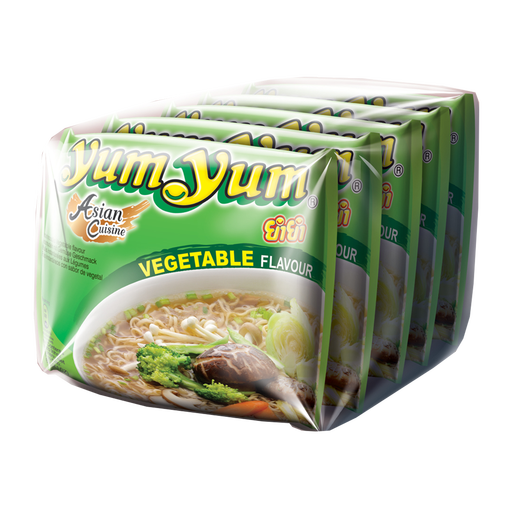 Image unavailable
Yum Yum HL Vegetable Noodle Soup, 5 × 60 g
The pack of five portions is handy for a quick meal if you want to prepare the sachets separately.
The pack size is given in grams. Check the preparation instructions on the packaging and compare the nutritional information with the amount you’ll consume.
View on Joybuy
 Image unavailable
Liebig 12 Vegetable Soup, 2 × 30 cl
The two 30 cl cartons mean you can open just one if that’s the right amount for your meal.
To compare this soup with other recipes, base the nutritional values on the amount you actually pour and follow the storage instructions after opening.
View on Joybuy
Frequently asked questions
Are ‘vegetable’ soup or its Nutri-Score enough to help you choose?
No. Neither the name nor the Nutri-Score tells you how many carbohydrates are in the portion you’ll drink. Check the nutritional information and ingredients list for the recipe, then take the amount you serve into account.
How can you compare two soups sold in different pack sizes?
Convert their values to the same quantity before comparing carbohydrates and salt, then consider how that relates to your usual bowl. As an example for a specific recipe, Auchan lists its Liebig organic sunshine vegetable soup as containing 12 g of carbohydrates and 1.6 g of salt per 250 ml.
Can you put an opened carton back in the cupboard?
No, if the packaging says to refrigerate it after opening. Also follow the consumption time stated for the carton you bought and its reheating instructions.
Do you need to check the allergens in vegetable soup?
Yes. Some of the vegetable soup recipes mentioned here contain celery or milk, while some sachets contain wheat. Check the ingredients and allergen information on the packaging of the product you buy.


