Anyone cooking for Sunday lunch
If you’re planning to make sauces, pancakes or dessert, check the storage instructions before the weekend, then choose an option that suits your recipe.


For Sunday lunch, first choose an oat drink whose label confirms it can be stored at room temperature before opening. Then compare the options based on how you plan to use them: in cooking, for their sugar content or to froth for hot drinks. Once opened, follow the storage temperature and use-by period stated for the carton you’ve bought. The word “filtered” alone doesn’t tell you how the drink should be stored or whether it’s suitable for a particular recipe.
If you’re planning to make sauces, pancakes or dessert, check the storage instructions before the weekend, then choose an option that suits your recipe.
If sugar content matters for your recipe or for serving at the table, compare the nutritional information on the cartons rather than assuming all oat drinks are alike.
For a milky coffee, tea latte or hot chocolate, check whether the product is designed for frothing. A barista blend is made for this purpose, but it’s also worth comparing its ingredients.
If you’re buying a carton ahead of the meal, start with the storage instructions. Then decide whether you’ll mainly use it as an ingredient, serve it as a drink or froth it for hot drinks.
| Criteria | What to check | Who it matters to |
|---|---|---|
| Storage | UHT labelling or storage instructions before opening; temperature and use-by period after opening. | I want to buy the carton before the weekend without then leaving an opened carton in the cupboard. Storage is the top priority for around 42% of consumers in this group. |
| Cooking or drinking | Whether the product is labelled for cooking; a barista blend if frothing matters. | For pancakes or a sauce, I’d first look for a drink intended for cooking; for coffee, texture may be the deciding factor. The result in the finished dish comes first for almost 33% of these consumers. |
| Sugar and ingredients | Sugars per 100 ml, the ingredients list and any added nutrients. | If I’m choosing a carton for a recipe or to serve on its own, I want to know how much sugar it contains and what’s in it. Ingredients are the top consideration for around 25% of consumers in this group. |
Room-temperature storage before opening doesn’t apply once the carton is open. The Auchan France and Bjorg product pages we consulted recommend refrigerating after opening and using the drink within five and four days respectively.
Choose a carton size you can use up, and follow the instructions printed on your carton rather than relying on a use-by period from another product.
An opened carton could go to waste if you can’t finish it within the stated period.
A barista blend is designed for hot drinks and may have a different composition from an oat drink intended for cooking.
If froth is essential for your coffee, consider a barista version. For a sauce or baking, compare the ingredients and stated uses for each product instead.
“Organic” and “no added sugar” don’t, by themselves, tell you about all the ingredients or whether vitamins and minerals have been added.
Check the ingredients list and nutritional values per 100 ml if these details affect your choice.
On its own, this word doesn’t tell you how to store the oat drink or which recipes it’s suitable for.
Check the product’s instructions for before and after opening, its ingredients and whether it’s intended for your recipe.
These brands offer options suited to the uses discussed here. Always check the details of the carton you’re buying rather than assuming they apply to the entire range.
The range includes Original, Organic, No Sugars and Barista drinks, each intended for different uses.
The Carrefour listing for an Alpro oat drink describes it as an ingredient for sweet and savoury recipes.
The Carrefour listing for a 1 L organic oat drink details a recipe made with water, 11% organic oats, organic sunflower oil and sea salt.
The E.Leclerc listing for a 1 L Bio Village oat drink describes it as UHT sterilised.
Auchan offers a 1 L barista oat drink, which is worth considering if hot drinks are an important part of your meal.
These Oatly options suit two different uses at Sunday lunch: making recipes with oat drink or serving barista-style drinks. For each one, check the storage instructions against when you plan to serve your meal.
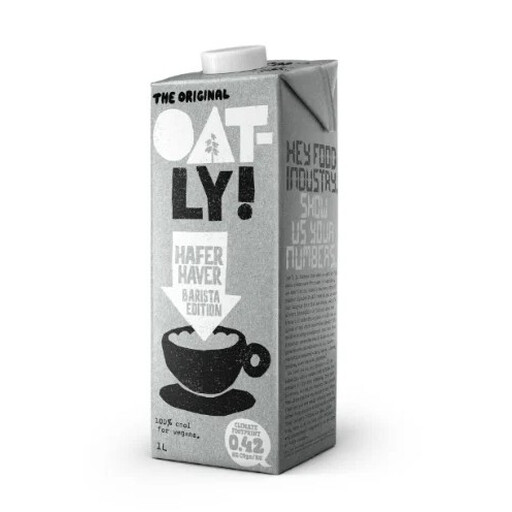 Image unavailable
Consider this Barista version if you’re planning to serve coffees or other hot drinks with your meal. 1 L carton; check the storage instructions and any gluten information on the packaging.
 Image unavailable
This pack is worth considering if you’ll be using oat drink in several recipes or want to keep unopened cartons in reserve. It contains three 1 L cartons; check the instructions for use after opening and any gluten information on each one.
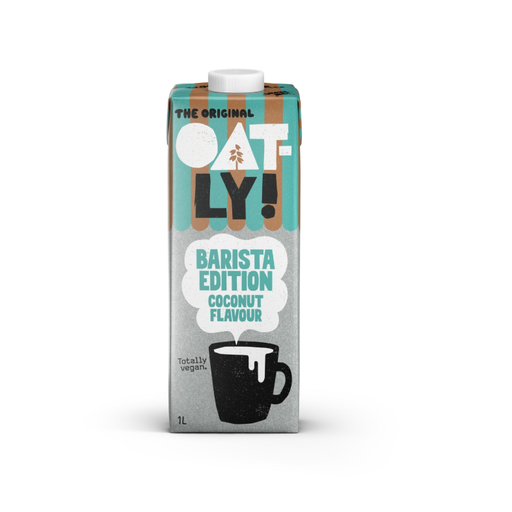 Image unavailable
This coconut-flavoured barista version is worth considering for a drink where the flavour will suit your guests, rather than for a recipe that needs a neutral taste. 1 L carton; check the storage instructions for this product.
Look for wording such as “UHT sterilised” or instructions confirming it can be stored at room temperature before opening. The fact that it comes in a carton isn’t a substitute for checking the instructions and date on the packaging.
Follow the instructions for the product you’ve bought: the Auchan France and Bjorg product pages we consulted recommend refrigeration after opening, with use-by periods of five and four days respectively. Don’t automatically apply either period to a different carton.
No. An oat drink described as suitable for recipes may work for the cooking uses stated on its product page. Consider a barista version mainly if you want to froth your drink, then compare its ingredients with those of a plain version.
No. An ordinary plant-based drink must not replace infant formula or follow-on formula for a child under one. In its 2019 opinion, Anses warned that doing so could lead to nutritional deficiencies or inadequacies.
Check the label on the carton you’ve chosen, especially the ingredients list, allergen information and nutritional information. To compare recipes, use the same basis for each, such as sugars per 100 ml, rather than inferring the full composition from a single claim on the front of the pack.