
Livraison le jour même ou le lendemain

Qualité garantie

Débloquez vos offres de bienvenue: Livraison GRATUITE | Jusqu'à -80 % | 30 jours d'essai gratuits à JoyPlus
Téléchargez l'application
A living room coffee table should fit naturally into the space, hold the things you use every day and, sometimes, offer some handy storage. However, some product listings focus mainly on looks and leave out essential details such as dimensions, stability and ease of use.
Before you place an order, watch out for these three common pitfalls:
In a medium-sized living room, an 80 cm coffee table is often a good compromise. A square design fits neatly in the centre of a corner sofa or between two seats facing each other. Rectangular tables tend to work better with longer sofas.
Take the time to measure:
Compare the manufacturer’s dimensions with the space you actually have, rather than relying on how the table looks in photos.
A wooden coffee table may be made from solid wood, engineered wood panels or a combination of materials. Each option has different properties. MDF, for example, provides a smooth, consistent finish, but its edges should be protected from prolonged exposure to moisture.
For a modern or industrial-style coffee table, also check:
A tempered glass tabletop creates a lighter look and lets more light flow through the room. However, it needs to be handled with care and cleaned with suitable products. The term ‘tempered glass’ refers to a manufacturing process, but you should still read the safety instructions supplied with the furniture.
A lift-top coffee table brings the tabletop closer to you when you’re sitting down, making it easier to work or eat. An extendable coffee table can be very handy in a multi-purpose living room, as long as you have enough space to extend it. A swivel coffee table can make it easier to reach part of the tabletop or a storage compartment.
Before choosing a table with a mechanism, ask yourself whether you’ll actually use it every day. An extra feature is only worthwhile if it’s easy to operate and suits the layout of your room.
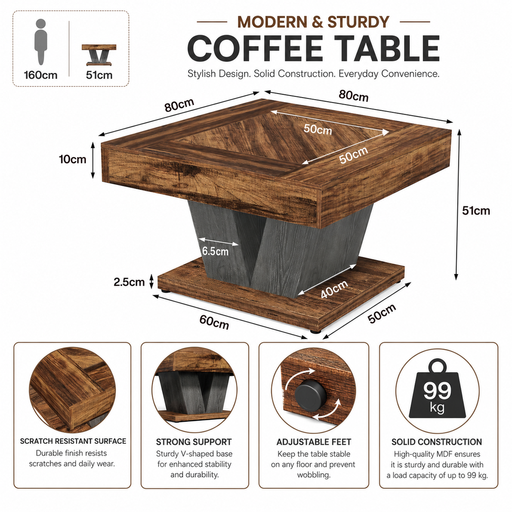
Why it suits this type of user : Its 80 cm square design is a good fit for living rooms that need a central table without taking up too much space. The rustic brown finish and dark grey frame pair easily with contemporary or industrial-style décor.
The product listing specifies a thickened MDF tabletop, adjustable feet and a stated maximum load of 100 kg. These details help you assess the table’s stability instead of relying on looks alone.
An 80 cm design, adjustable feet and the fittings needed for assembly, with instructions listed by the manufacturer.
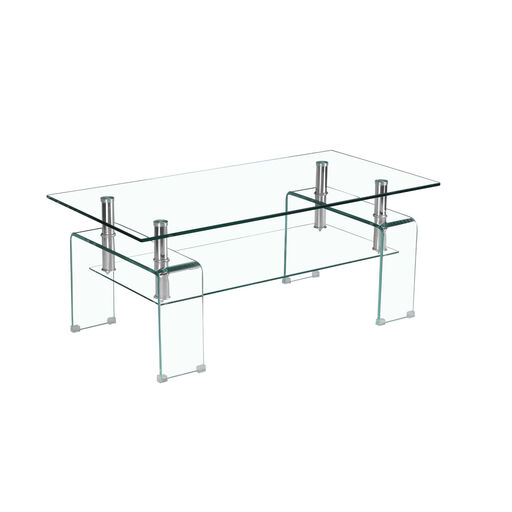
Why it suits this type of user : The two clear shelves and metal frame give the table a light, airy look, making it a good fit for a carefully styled, modern interior.
The dimensions of 100 × 55 × 45 cm are specified, along with the two-tier design. This makes it easier to plan for the space it will take up and spread your belongings across both levels.
Tempered glass as specified, two shelves and a frame combining glass and metal.
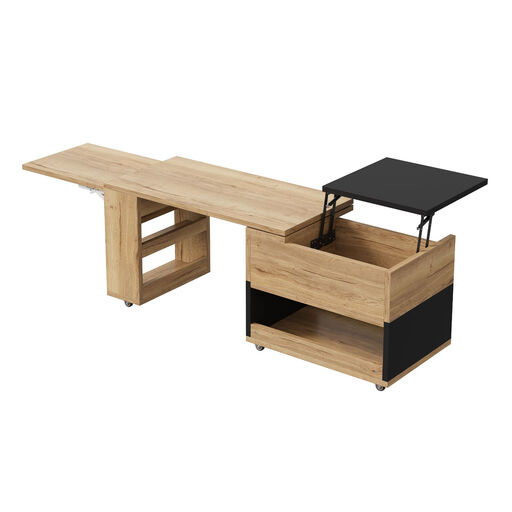
Why it suits this type of user : This design is for households that use their table for working, eating or entertaining. The lift-top and 360° swivel side section make it easy to change the layout.
The different features are clearly listed: extension, storage, 360° rotation and a lift-top. You’ll still need to check the dimensions when fully extended before deciding where to put it.
A range of features suited to the living room, working from home or mealtimes, with integrated storage listed.
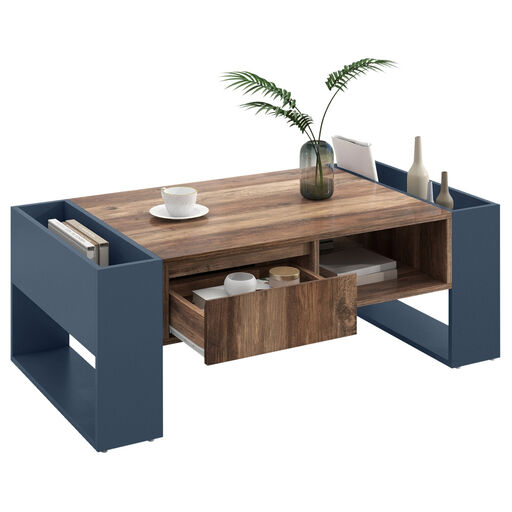
Why it suits this type of user : This table is a good choice if you want to keep your living room looking uncluttered. The drawer, compartment and storage spaces accessible from both sides let you organise everyday essentials.
The product listing describes several storage areas rather than simply presenting a decorative tabletop. If you plan to store bulky items, be sure to check the internal dimensions too.
A handleless drawer, a compartment and storage spaces accessible from both sides, according to the product description.
We’ve brought together a comprehensive, up-to-date selection of products that meet these criteria and European safety requirements.
A coffee table will only stay stable over time if it’s assembled correctly. Tighten the fixings gradually, place the table on a level floor and check the feet after using it a few times. If you’re choosing a side table for your sofa, avoid placing it in a narrow walkway or right next to a radiator.
Care depends on the material:
A gap of around 40 to 50 cm generally makes it easier to reach the tabletop and move around. The layout of your living room will also affect what works best. Make sure drawers and lift-tops can open without hitting the sofa.
Yes, as long as you measure both its depth and the space needed to open it. A storage table can help keep the room looking less cluttered, but one that’s too deep may obstruct the walkway. In a small room, a compact square coffee table or a design with two tiers is often easier to fit in.
Use a soft cloth and a non-abrasive cleaner, then dry the surface to prevent streaks. Avoid placing heavy objects down roughly, and inspect the tabletop regularly for any cracks or chips. If you spot any damage, stop using the affected area and check the manufacturer’s recommendations.