
Livraison le jour même ou le lendemain

Qualité garantie

Débloquez vos offres de bienvenue: Livraison GRATUITE | Jusqu'à -80 % | 30 jours d'essai gratuits à JoyPlus
Téléchargez l'application
A liquid soap may seem simple to choose. Yet between claims such as “natural,” “antibacterial,” “for sensitive skin” and “moisturising,” differences in formula, format and intended use are far from insignificant. A product suited to the washbasin will not necessarily be appropriate for the face, body or a baby’s skin.
To avoid disappointing purchases, it is better to examine the ingredients, volume and actual usage instructions rather than relying solely on the fragrance or packaging.
A formula stating a percentage of naturally derived ingredients may also contain fragrance, essential oils or fragrance allergens such as limonene, linalool or citral. These components will not necessarily cause problems for everyone, but they deserve particular attention if you have reactive skin.
The INCI list displayed on the packaging remains the reference point. A high percentage of naturally derived ingredients alone is not enough to guarantee better tolerance.
Antibacterial soap is primarily sought for handwashing, particularly by families with young children. It does not replace the essential steps: wetting your hands, lathering every area, rinsing and then drying them thoroughly.
It is also important to distinguish a cleansing cosmetic product from one claiming a biocidal action. For a specific claim, check the regulatory information and instructions for use on the packaging. A formula intended for the hands is not automatically designed for the face or body.
A large bottle is not always more economical if the pump dispenses too much product or if it is used by several people. Conversely, a liquid soap refill can reduce the amount of plastic used, provided it is compatible with the bottle and can be decanted hygienically.
Compare the price per litre, pump type and frequency of use. For a larger household, a 750 ml or 1-litre format can be practical. In a secondary bathroom, 250 to 300 ml is generally sufficient.
A mild soap may contain glycerine, plant oils or cleansing agents designed to minimise feelings of tightness. The sulphate-free claim may appeal to people wishing to avoid certain families of surfactants, but it is not enough to assess the formula as a whole.
A genuine liquid Marseille soap may be saponified using plant oils. As commercial descriptions are not always consistent, check which oils are used, whether fragrance is present and what the manufacturer recommends.
For a formula presented as moisturising soap, check the ingredients supporting this claim, such as glycerine or certain plant oils. This is information about the composition, not a medical guarantee.
A bottle made from recycled and recyclable plastic, a refill or a bar of solid soap can reduce the amount of packaging, depending on consumption habits. The 250 ml Le Petit Marseillais refill is advertised as using 80% less plastic than a new 300 ml pump bottle. This figure reflects the comparison communicated by the brand and should be considered alongside the volume and dispensing system.
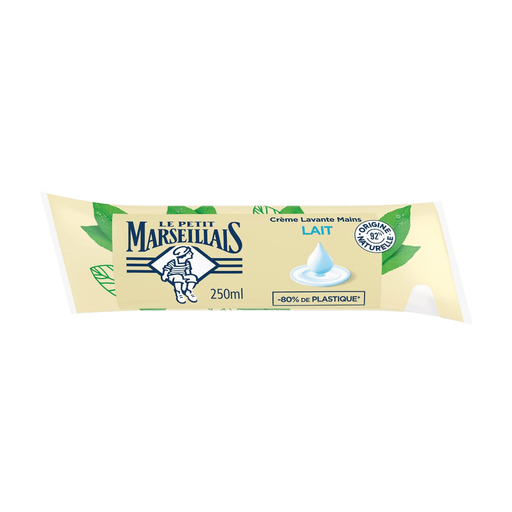
Why this product fits the bill: A practical refill format for topping up an existing pump bottle in the kitchen or bathroom.
The refill avoids having to purchase a complete bottle every time. It must, however, be decanted into a clean, compatible container.
250 ml, formula advertised as 92% naturally derived, with glycerine and a neutral pH according to the product details.
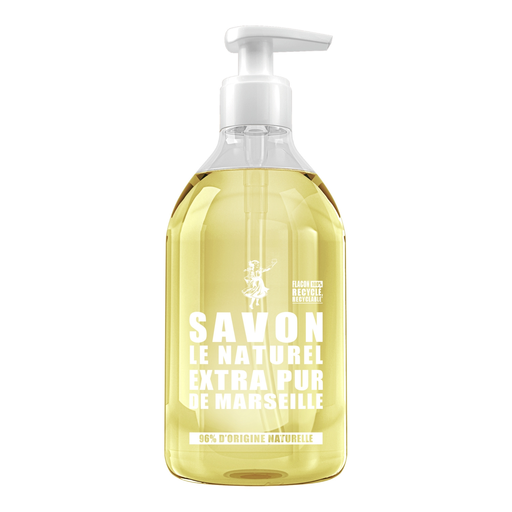
Why this product fits the bill: A 500 ml option for everyday hand or body washing, presented in a style inspired by Marseille soap.
The product details specify that it is sulphate-free and contains no artificial colouring. However, the INCI list includes fragrance and several fragrance components that should be checked.
500 ml, saponified plant oils, bottle advertised as made from 100% recycled and recyclable plastic.
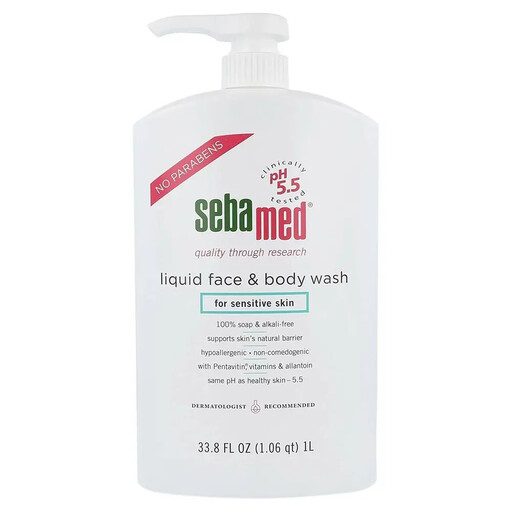
Why this product fits the bill: The 1-litre pump bottle is suitable for regular use by several household members, on both the face and body.
The product details state that the formula is soap- and alkali-free, with a pH of 5.5. However, it contains several cleansing agents and fragrance, which should be taken into account according to your preferences.
1,000 ml, suitable for the face and body, with panthenol listed in the ingredients.
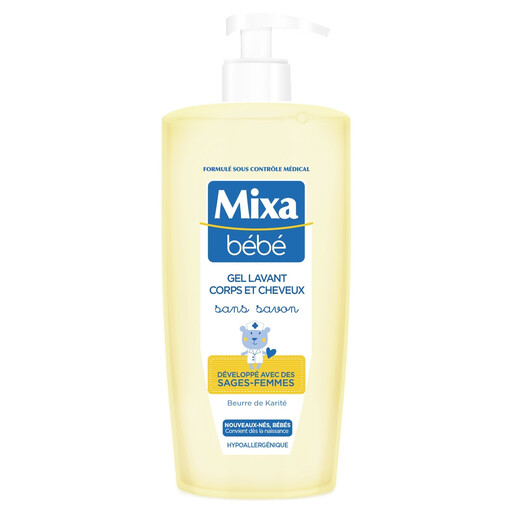
Why this product fits the bill: A product advertised for a baby’s skin and hair, in a family-sized 750 ml format.
The label states that it is suitable from birth, with a neutral pH and a soap-free formula. Always read the INCI list before use and avoid direct contact with the eyes.
750 ml, shea butter in the formula, suitable for the body and hair according to the product details.
In a kitchen or hallway, a liquid soap with an automatic pump can minimise contact with the dispenser. The Dettol No-Touch kit includes an automatic dispenser, a 250 ml refill and two AA batteries. Dettol’s 250 ml refills are designed specifically for this system and are therefore not universal.
For the face, choose a product specifically formulated for this area, such as Freeplus Mild Soap Facial Cleansing or Clinique Liquid Facial Soap Oily Skin Formula. For a liquid-free routine, a solid soap such as the Cadum bar with sweet almond oil can be a suitable alternative, provided it is allowed to dry between uses.
Finally, Briochin liquid black soap is intended for cleaning floors and surfaces. It should not be used on the skin.
We have brought together an up-to-date selection of products suited to different uses, formats and ingredient criteria for everyday hygiene.
The shelf life depends on the information shown on the packaging. Some products specify a period after opening, such as 12 months. Close the bottle securely, store it away from heat and do not dilute the formula in its original container.
Not necessarily. Compare the price per litre, actual volume and compatibility with your dispenser. A refill may reduce the amount of packaging, but a more concentrated bottle or a multipack may offer a different cost per use.
Start by checking the recommended age and area of application, then look for fragrance, essential oils and declared allergens. Testing the product on a small area can be a useful precaution. If a reaction persists, stop using the product and seek advice from a healthcare professional.