
Livraison le jour même ou le lendemain

Qualité garantie

Débloquez vos offres de bienvenue: Livraison GRATUITE | Jusqu'à -80 % | 30 jours d'essai gratuits à JoyPlus
Téléchargez l'application
With promises of long-lasting grease removal, “ sensitive skin ” claims and refill formats, choosing a washing-up liquid is less straightforward than it might seem. A heavily scented formula won’t necessarily suit everyone’s hands, while a large bottle won’t always be better value if the product isn’t very concentrated.
Here are the criteria to consider when comparing products available in France and avoiding unsuitable purchases.
A mandarin, citrus or orange blossom fragrance can make washing up more enjoyable, but it tells you nothing about the product’s ingredients or how well it suits your skin. Scented formulas may contain fragrance substances that are worth looking out for, such as limonene or linalool.
If your hands are sensitive or prone to irritation, choose a fragrance-free washing-up liquid and check the warnings on the label carefully.
A formula described as ultra-degreasing can be a good choice for frying pans, dishes with sauces and very greasy utensils. However, how well it works also depends on the amount you use, the water temperature and how long you leave items to soak.
So, a degreasing washing-up liquid doesn’t remove the need to rinse thoroughly or follow the recommended dosage.
A multipack of bottles means you can shop less often, but it takes up more space and may be impractical in a small kitchen. Concentrated refills reduce the volume you need to carry and store, but they require a reusable bottle and careful dilution.
Before choosing a format marketed as economical, always compare the price per litre, the number of containers and how the product is used.
Washing-up liquids generally contain anionic, non-ionic or amphoteric surfactants. These help lift grease and food residue. Depending on your preferences and skin sensitivity, also check for fragrance, colourants and preservatives.
Even a formula described as gentle can cause irritation for some people. If you have sensitive skin, wear gloves when needed, avoid contact with your eyes and rinse dishes thoroughly.
The term hypoallergenic means the formula is designed to reduce the risk of an allergic reaction. It doesn’t guarantee that no one will react to it. To choose a washing-up liquid for sensitive skin, look for a fragrance-free, colourant-free formula with detailed information on the packaging.
For baby bottles, teats, dummies and breastfeeding accessories, choose a product explicitly intended for these items. Thorough rinsing with drinking water is still essential.
A concentrated washing-up liquid can reduce the amount needed for each wash, provided you follow the stated dosage. For a refill, follow the manufacturer’s proportions carefully: incorrect dilution can affect the product’s texture, shelf life or ease of use.
Environmental labels and recyclable packaging provide useful information, but they don’t replace checking the ingredients or reading the safety instructions.
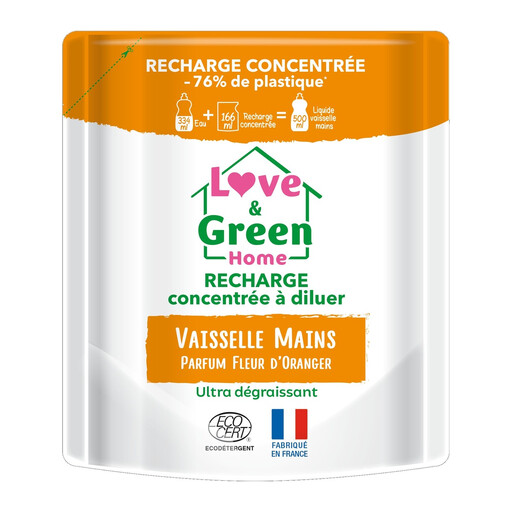
Why this is a good fit for this profile : Each of the two 166 ml refills is diluted with 334 ml of water to make 500 ml of product. This format suits households looking to reduce the amount of bottle storage they need.
The refill volume is clearly stated, along with the dilution instructions. This lets you compare the final volume rather than relying solely on the amount in the pouch.
Concentrated formula, 99% ingredients of natural origin according to the product listing, Ecocert Ecodetergent certification and a pouch described as recyclable.
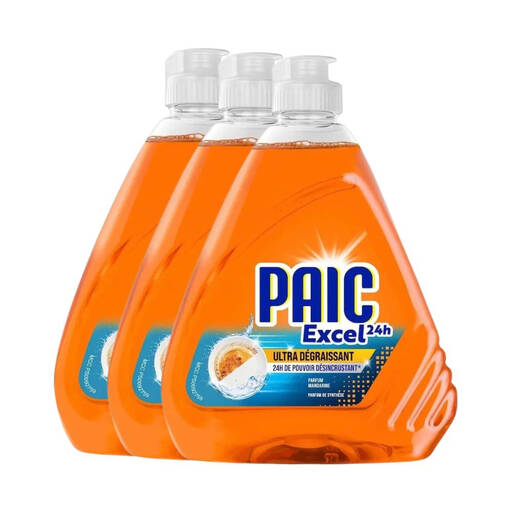
Why this is a good fit for this profile : This 1.5-litre multipack is for anyone looking for a mandarin-scented degreasing formula for everyday pots, pans and utensils.
The product listing specifies the total volume, surfactant type and warnings. It also states that the formula contains fragrance and fragrance allergens.
Three 500 ml bottles, a formula described as ultra-degreasing and suitable for dishes, frying pans, saucepans and utensils.
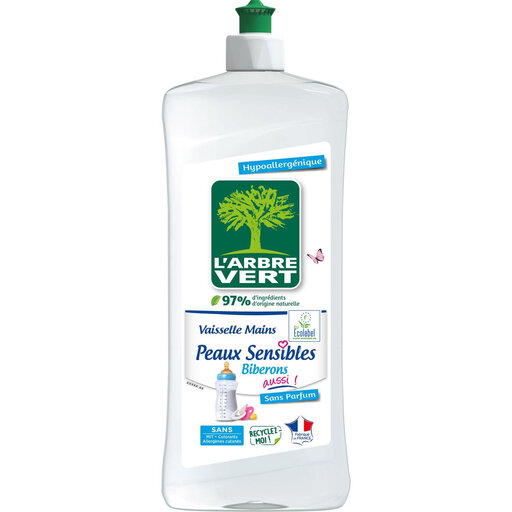
Why this is a good fit for this profile : This option is for households looking for a washing-up liquid suitable for baby bottles, baby accessories and family dishes, with a fragrance-free formula.
Its suitability for baby bottles, teats and breastfeeding accessories is clearly stated. The formula is described as fragrance-free, colourant-free and free from MIT.
750 ml size, EU Ecolabel shown on the product listing and refillable, recyclable packaging described as containing at least 87% recycled materials.
We’ve put together a comprehensive, real-time updated selection of products that meet these demanding criteria and European safety rules.
In a small kitchen, storage also affects how comfortable it is to do the washing up. A sink sponge holder or an extendable sink organiser can raise your sponge, brush and bottle to help water drain away.
Before buying, measure the available width and check for non-slip pads. A telescopic model should sit securely on the worktop without getting in the way of the tap. You can view the different finishes of the grey extendable sink organiser to suit your kitchen layout.
Choose a fragrance-free, colourant-free formula with a clearly explained hypoallergenic claim. This means the product is designed to reduce the risk of a reaction, but it can’t guarantee that no individual will react. Wearing gloves can provide extra protection.
It’s best to choose a product whose listing explicitly states that it’s suitable for baby bottles, teats and baby accessories. In all cases, wash the different parts separately if needed, rinse them thoroughly with drinking water and follow the instructions on the packaging.
It can reduce packaging volume and the cost per wash, but you should compare the volume after dilution, the total price and the amount used for each wash. Also check that you have a clean bottle that’s compatible with the refill.