
Livraison le jour même ou le lendemain

Qualité garantie

Débloquez vos offres de bienvenue: Livraison GRATUITE | Jusqu'à -80 % | 30 jours d'essai gratuits à JoyPlus
Téléchargez l'application
Linen home textiles have an undeniable appeal: timeless elegance, an unmistakable natural feel, and exceptional thermoregulating properties. Perfect for farmhouse-style, bohemian, or minimalist decor, linen has become a staple. But be warned, its success has also attracted a wave of deceptive marketing and disappointing products. To ensure you don't regret your investment, it's essential to read between the lines on labels and recognise the true marks of quality.
Here are the 3 mistakes to avoid:
Forget the advertising slogans. To make the right choice, only a few technical criteria really count.
Natural linen fabric is the star for its unmatched durability and absorbency. But some well-designed blends can also have their advantages.
Expressed in grams per square meter (g/m? or GSM), fabric weight is the number one criterion for judging a fabric's thickness, opacity, and drape.
For a piece as important as a bed, the fabric isn't everything. An upholstered linen bed must, above all, have a solid frame. Take a look at the frame (metal, solid wood?) and the bed base. For a tufted headboard, insist on high-density foam that won't sag after six months. Finally, don't underestimate the finishes: neat stitching or a well-designed curtain hanging system (grommets, gathering tape) are true indicators of durability.
To put theory into practice, here are a few products that perfectly illustrate how to apply these criteria to your needs.
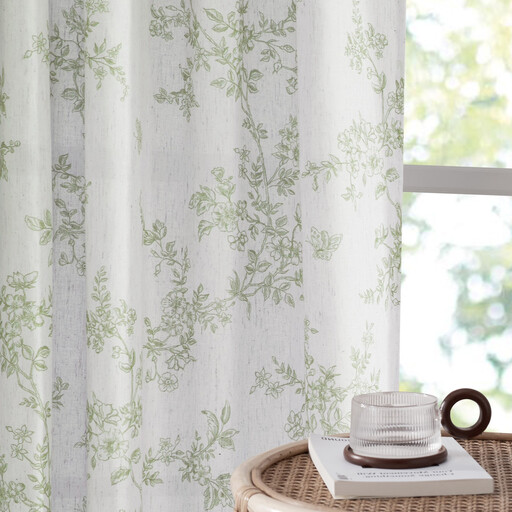
Why we love it: Perfect for infusing your interior with a soft, botanical atmosphere. The floral pattern and blended linen texture add a touch of freshness and understated elegance, ideal for a living room or a bohemian-style bedroom.
Transparency. The product is advertised as "semi-sheer," which prevents any unpleasant surprises about its opacity. It doesn't promise a complete blackout, but a beautiful light-filtering effect.
The botanical pattern adds real personality to the decor without darkening the room, which remains bright and airy.
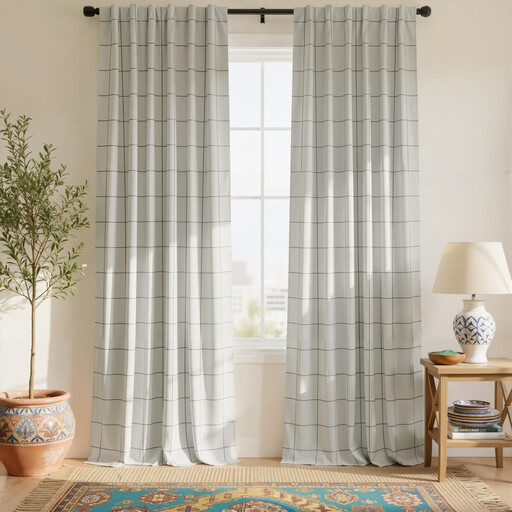
Why we love it: This is the solution for those who demand total darkness in a bedroom or home cinema room. This model successfully combines the raw look of linen with formidable efficiency.
It solves problem #2 (opacity) thanks to its integrated liner that ensures 100% blackout. This is a true **blackout linen curtain**, not just a thick fabric claiming to be opaque.
The best of both worlds: the warm aesthetic of linen and perfect blackout performance. Bonus: it also improves thermal and sound insulation.
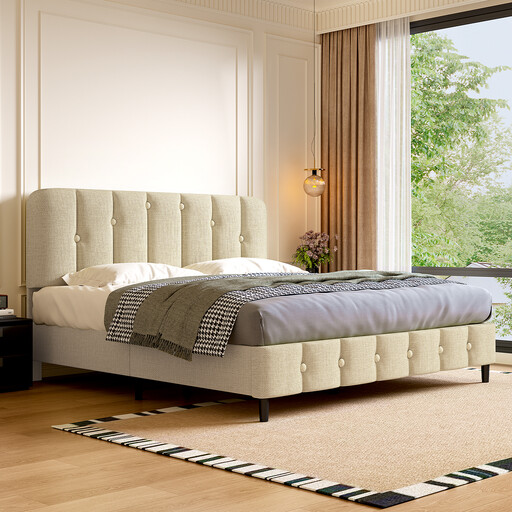
Why we love it: This is the smart investment for the centrepiece of your bedroom. This **upholstered linen bed** combines a clean aesthetic, a design focused on comfort (thanks to the **tufted headboard**!), and breathable upholstery.
It's not just about looks. The technical specifications emphasise the sturdiness of the structure (metal frame, solid wood slats), guaranteeing a bed that won't start squeaking after three months.
The winning trio: a comfortable headboard for reading, a breathable linen fabric for a good night's sleep, and a structure built to last.
Discover our full selection of products that meet our quality criteria and current standards.
Most linen items (pure or blended) can be machine washed at a low temperature (30 or 40°C) with a mild detergent. Avoid high-heat tumble drying, which can cause shrinkage. The anti-wrinkle trick? Take your laundry out as soon as the cycle is finished and hang it to dry immediately. For ironing, tackle it while the fabric is still slightly damp, on the reverse side—it's much easier.
A curtain made of natural linen fabric alone, even a very thick one, will be light-filtering at best, but never 100% blackout. To achieve total darkness, you must choose a blackout linen curtain model with a technical liner (often coated polyester). It's this liner that does all the work.
Pure linen is more textured, ultra-absorbent, and has that raw, slightly irregular look we love. The flip side is that it wrinkles more easily. The linen-cotton blend, typical of a linen and cotton tea towel, is an excellent compromise: it combines the strength and absorbency of linen with the softness and flexibility of cotton. It is also generally easier to care for and more affordable.