
Livraison le jour même ou le lendemain

Qualité garantie

Débloquez vos offres de bienvenue: Livraison GRATUITE | Jusqu'à -80 % | 30 jours d'essai gratuits à JoyPlus
Téléchargez l'application
A lined hardcover notebook can be just as useful for lessons and meetings as it is for creative projects or personal journalling. But an attractive cover alone does not guarantee a successful purchase. Paper that is too thin, an impractical binding or an unsuitable size can quickly turn an appealing notebook into an accessory that ends up forgotten in a drawer.
Before ordering, take the time to check three points that are often hidden behind the design.
The A5 notebook, which generally measures 148 × 210 mm, offers a good balance between writing space and portability. It is suitable for students, professionals, journalling and detailed lists. It fits into a rucksack or briefcase, while taking up more room than a pocket notebook.
The A6 notebook, measuring approximately 105 × 148 mm, is even easier to carry. It is ideal for quickly jotting down an idea, making a short list or keeping a few essential details to hand. However, the space available on each page is more limited.
For school, the 17 × 22 cm format with Seyès ruling is better suited to French conventions and handwriting exercises. Larger formats, such as 24 × 32 cm, are particularly suitable for lessons, documents to annotate and work requiring more writing space.
Paper weight refers to the weight of the paper per square metre. 100 g/m² paper is generally thicker than standard 70 or 80 g/m² paper. It feels more pleasant when used with a ballpoint pen, rollerball or light felt-tip pen, while reducing the visibility of ink on the reverse. This does not mean it will withstand every marker pen or very runny ink.
The colour of the paper is also important. A cream or ivory sheet slightly reduces contrast and gives a softer look to a lined journal. For school notes, some people will instead prefer white paper with clearly visible ruling.
Also check the number of sheets, rather than relying solely on the number of pages. 96 sheets generally correspond to 192 pages printed on both sides, but the information may vary from one product listing to another.
A notebook with an elastic closure prevents it from opening accidentally in your bag and can hold a few loose sheets in place. However, take care not to overstretch the elastic. A notebook with a bookmark makes it easy to find the right page quickly, which is particularly useful for a daily journal or professional notebook.
A glued or sewn binding often creates a more classic look. A spiral notebook, on the other hand, opens easily flat and is well suited to one-handed writing. However, it is more vulnerable to distortion when compressed in a bag. If you plan to keep your notes for a long time, examine the quality of the binding and the protection around the edges carefully.
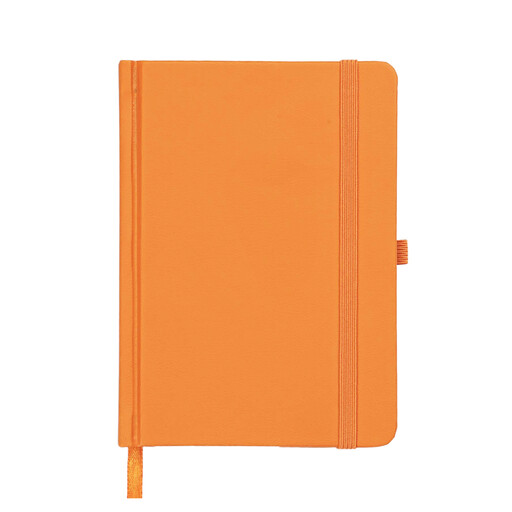
Why this choice suits this profile: its A6 size is ideal for short notes, lists and ideas to keep in your pocket or a small bag.
The listing clearly states that it contains 80 sheets of 100 g/m² offset paper, with a hard cover and elastic closure.
100 g/m² lined paper, a bookmark, pen loop and several colours available.
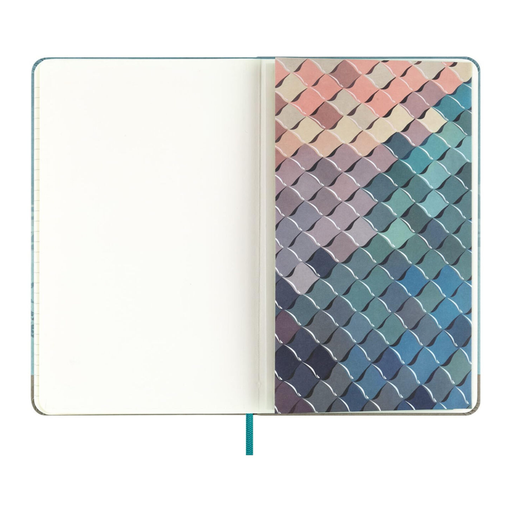
Why this choice suits this profile: its Casa Batlló-inspired fabric cover and carefully considered finishes make it suitable for personal use or as a gift.
The specifications state that it features 100 g/m² paper, acid-free ivory paper and a binding that allows it to open flat.
Two bookmarks, an expandable inner pocket and an elastic closure.
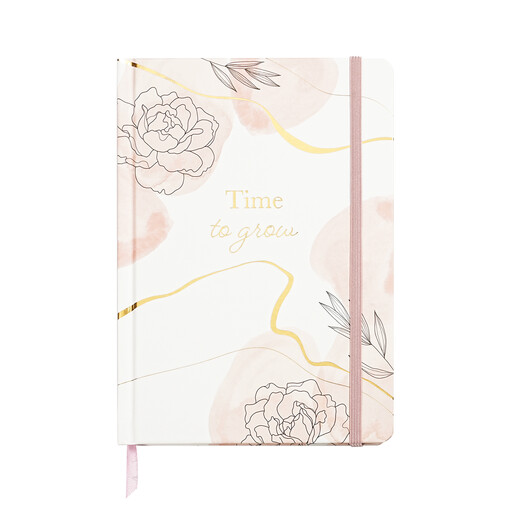
Why this choice suits this profile: its A5 size provides enough room for meetings, studying, personal writing and long-term projects.
The hard cover, elastic closure and bookmark meet the needs of users who carry and refer to their notebook frequently.
96 sheets of 100 g/m² cream offset paper and several cover finishes, depending on the version.
For a journalling notebook, choose a cover that feels pleasant to the touch, a reliable closure and a comfortable opening. An A5 notebook is well suited to longer entries, while an A6 notebook is more discreet when you are out and about.
At work, a professional notebook should be easy to read and quick to consult. Regular ruling, a durable cover and an inner pocket can prove more useful than a decorative pattern.
When buying a gift, look for the right balance between style and practicality. Jubiluu’s floral designs, the Casa Batlló or an illustrated edition such as the Moleskine Patty notebook may appeal to stationery enthusiasts, provided you check the size and type of pages.
A school exercise book with Seyès ruling is better suited to the handwriting exercises practised in France. Adhesive note pads, such as Deli memo pads, can complement a main notebook for temporary reminders, but they are not a substitute when it comes to archiving information.
We have put together a complete, real-time updated selection of products that meet these demanding criteria as well as European safety regulations.
It depends on how you plan to use it. A5 offers more room for lessons, meeting notes and journalling. A6 is easier to carry and is suitable for lists and quick notes. For mixed use at home and in the office, A5 is generally the most versatile size.
100 g/m² paper provides a more substantial surface than lightweight paper, but it may not be suitable for very wet markers or heavily applied inks. If possible, test it on a page at the back of the notebook before using an instrument that would normally bleed through the paper.
Keep it away from moisture and avoid overfilling the inner pocket. Clean the cover with a soft, dry cloth, then close the elastic without stretching it to its limit. These simple precautions help prevent the cover, pages and binding from becoming distorted.