
Livraison le jour même ou le lendemain

Qualité garantie

Débloquez vos offres de bienvenue: Livraison GRATUITE | Jusqu'à -80 % | 30 jours d'essai gratuits à JoyPlus
Téléchargez l'application
A lined A5 notebook can be just as useful for taking notes in class as it is for preparing a meeting, organising a bullet journal or writing daily. Yet two models in the same format can offer a very different experience. A pretty cover won't make up for a flimsy binding, paper that's too thin or an impractical closure.
Before you place an order, it's worth knowing the most common pitfalls and the criteria to examine so you can compare models without making a mistake.
Some manufacturers list the number of pages, others the number of sheets. A notebook advertised as having 96 sheets typically offers 192 pages to fill, whereas a model with 96 pages only has 48 sheets. This difference has a direct impact on the notebook's actual capacity and its cost per page.
Expressed in g/m², the paper weight gives you an initial indication, but it isn't enough to judge the writing comfort. The texture, shade and manufacturing quality of the paper matter just as much. 70 g/m² paper works perfectly well with pencil or ballpoint pen, while 100 g/m² paper is generally more comfortable with liquid ink pens.
Also remember to check the type of ruling indicated on the product page. A squared A5 notebook won't meet the same needs as a lined notebook intended for classes or the office.
A stitched binding often allows the notebook to stay open without you having to hold it open by hand. A spiral binding, on the other hand, makes it easy to turn pages over and is practical for quick note-taking. However, it takes up more space on the side and can snag in a bag if the finish is poor.
A hard cover protects the pages better when you're on the move, whereas a soft cover keeps the whole thing lighter. The right choice therefore depends above all on how you'll use it, not just on how the notebook looks.
The A5 format measures approximately 148 × 210 mm. It offers enough space to write up notes, draw diagrams or keep a journal, while still being easy to slip into a backpack or messenger bag. If you mainly jot down ideas on the go, a pocket-sized A6 notebook will be more discreet, but its writing surface will naturally be smaller.
For general use, lined paper of 80 to 100 g/m² is a good compromise. 100 g/m² models generally offer greater everyday comfort with different types of pen, although the result also depends on the ink you use. If you're looking for an A5 sketchbook, however, make sure the paper is suitable for the technique you have in mind. Lined paper designed for writing won't replace paper intended for watercolour or felt-tip pens.
An A5 notebook with an elastic closure reduces the risk of pages getting dog-eared in a bag. A bookmark ribbon lets you quickly find the right section, while a pen loop saves you from hunting for your pen at the bottom of a pencil case. These are particularly handy details for an A5 diary, a bullet journal or a notebook used every day at the office.
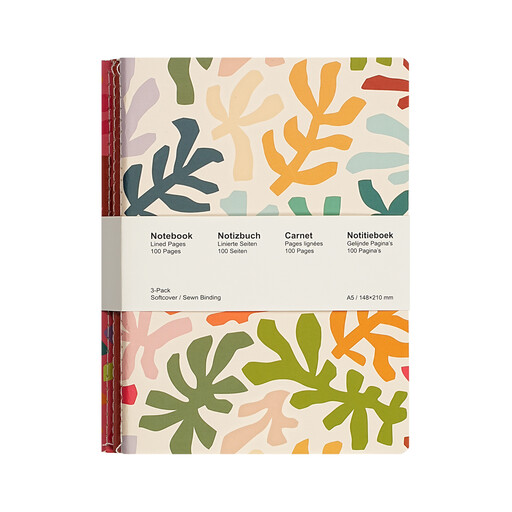
Why this choice suits this profile: this pack of three A5 notebooks is ideal for students, journaling beginners and anyone who likes to keep their classes, lists and personal notes separate.
The stitched binding is designed to allow a lay-flat opening, while the soft cover keeps the weight down in your bag. With 50 sheets per notebook, the capacity is clearly identifiable.
Three notebooks, 80 g/m² cream lined paper and a printed soft cover, with several styles to choose from, including floral patterns.
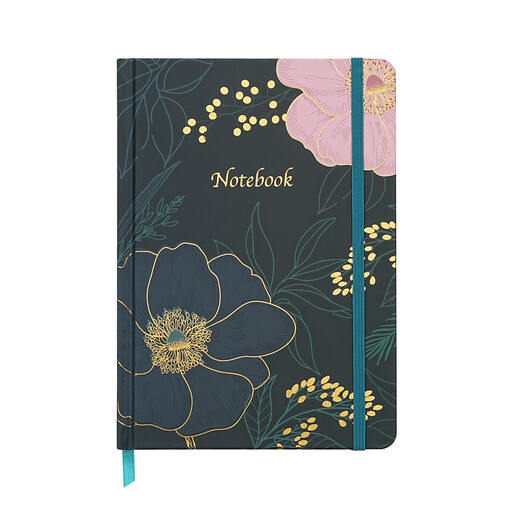
Why this choice suits this profile: its hard, decorated cover is aimed at those who want to combine note-taking, personal writing and a polished appearance.
The hard cover protects the contents better during travel than a soft cover model. The bookmark ribbon and elastic closure add two practical features that are often missing from notebooks that are primarily decorative.
96 sheets of 100 g/m² cream lined paper, hard cover with botanical pattern, ribbon bookmark and elastic band.

Why this choice suits this profile: this A5 spiral notebook is ideal for those who frequently turn pages, take notes in meetings or switch between writing and consulting documents.
The double-ring binding makes it easy to turn pages over, while the hard cover prevents warping. The elastic closure keeps the notebook securely shut in your bag.
148 × 210 mm format, 96 sheets of 100 g/m² cream offset paper and a hard cover with a textured finish.
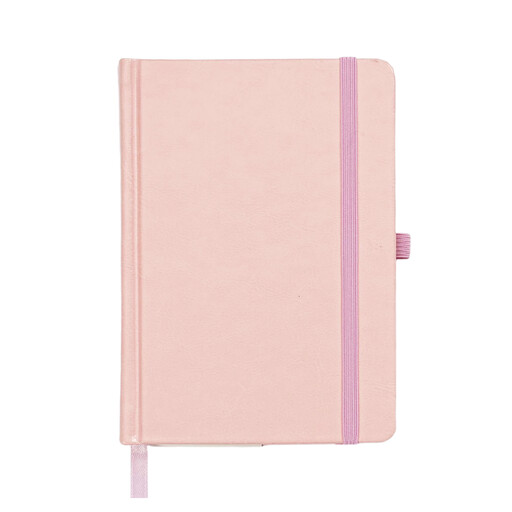
Why this choice suits this profile: its compact size slips easily into your everyday belongings for jotting down a list, an idea or a reminder, without claiming to offer the surface area of an A5.
The A6 size is clearly stated, which avoids choosing a notebook that's too bulky for on-the-go use. The elastic closure protects the pages during travel.
80 sheets of 100 g/m² lined paper, faux leather cover, ribbon bookmark, pen loop and elastic closure.
We've put together a comprehensive, real-time updated selection of products that meet these exacting criteria, while also complying with European safety regulations.
For writing with a ballpoint pen, pencil or rollerball, paper of 70 to 80 g/m² can be perfectly adequate. For more general use, particularly with certain felt-tip pens or liquid ink pens, 100 g/m² offers a welcome margin of comfort. Bear in mind, however, that the result also depends on the type of ink you use.
It all depends on how often you use it, how much you carry it around and the quality of the binding. A hard cover, stitched binding or robust spiral will generally withstand heavy use better than a very thin soft cover. To extend its lifespan, keep the notebook away from moisture and avoid overloading it with thick documents.
Yes, a notebook can be a great idea for a student, a colleague or anyone who enjoys writing. For a more elegant gift, a floral hardcover model with a bookmark ribbon and elastic closure will make a good impression. If you're looking for something more versatile, a pack of notebooks allows you to split your uses between classes, the office and your personal journal.