
Livraison le jour même ou le lendemain

Qualité garantie

Débloquez vos offres de bienvenue: Livraison GRATUITE | Jusqu'à -80 % | 30 jours d'essai gratuits à JoyPlus
Téléchargez l'application
A lined A5 notebook is just as suited to lectures and meetings as it is to a personal diary or creative ideas. At 14.8 × 21 cm, it offers a comfortable writing surface while remaining easy to slip into a bag.
But certain features highlighted in product descriptions aren't always enough to guarantee a pleasant experience. Here are the criteria to examine before you buy, along with a selection tailored to different uses.
A notebook advertised as having 192 pages typically contains 96 sheets, printed on both sides. This distinction allows you to compare references correctly. A model presented as having 50 sheets may seem generous, but its capacity is still lower than that of a 96-sheet notebook.
So always check both pieces of information, and don't forget to see whether the notebook contains blank, lined or printed pages.
Expressed in g/m², the weight gives an indication of the paper's thickness, but it isn't enough to determine writing comfort. The texture, shade and manufacturing also influence how the ink behaves.
A 100 g ivory paper can offer a very pleasant surface with a ballpoint pen, rollerball or fine-liner. For a fountain pen or marker, however, it's best to consult the manufacturer's information and avoid very liquid inks in the absence of a detailed test.
A hard cover protects the pages better in a bag, but it's generally less flexible than a soft cover. A sewn binding often makes it easier to lay flat, while an A5 spiral notebook allows you to turn pages quickly and fold the cover back on itself.
The elastic closure and bookmark are very handy, but these small items should be kept out of reach of children under 3 years old. They don't, however, turn a notebook into a diary: if you need dates, boxes or a planner, it's better to choose a dedicated organiser.
The A5 format is perfect for a notebook for school and the office: it leaves enough room for taking notes while remaining easy to carry. For jotting down an idea on the go or making a shopping list, an A6 pocket notebook at 10.5 × 14.8 cm will be more discreet.
For keeping a daily journal, look at the total capacity. A 192-page model will suit regular use, while a pack of several 50-sheet notebooks can be used to separate subjects, projects or themes.
An ivory or off-white offset paper of 80 to 100 g/m² suits most common pens. The lines structure your notes, but check their spacing if you write large or regularly add diagrams.
A notebook with an elastic closure and bookmark lets you quickly find your page and keeps the notebook closed during transport. On some A6 formats, a pen loop also saves you from having to search for a separate writing instrument.
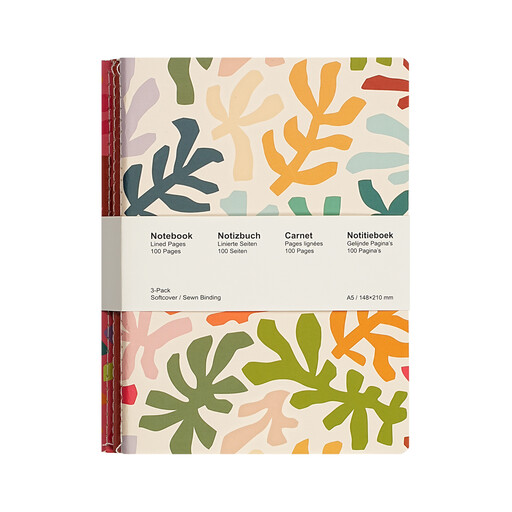
Why this choice suits this profile: This pack of three A5 notebooks is ideal for students, beginners in journaling, and those who want to separate lessons, work and personal notes.
The pack lets you spread out your uses without buying several models separately. The sewn binding is said to allow it to lie flat.
Three notebooks of 50 sheets each, 80 g lined ivory paper and a printed soft cover.
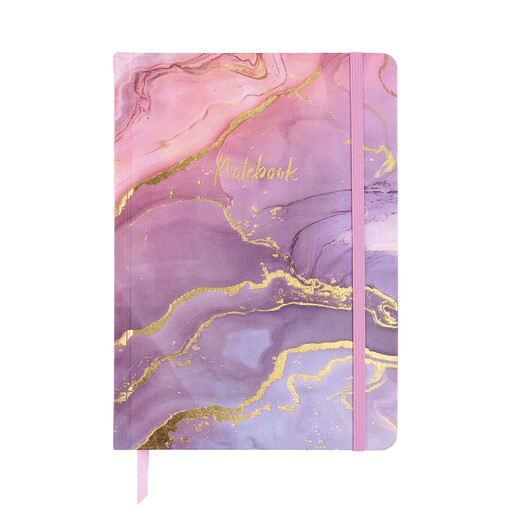
Why this choice suits this profile: Its hard fabric cover and decorative finishes appeal to those looking for an elegant notebook to use daily, to give as a gift, or to keep for a long time.
The product page clearly states 96 sheets, i.e. 192 pages, rather than just highlighting a more flattering page count.
100 g wood-free ivory paper, hard fabric cover, ribbon bookmark and elastic band.
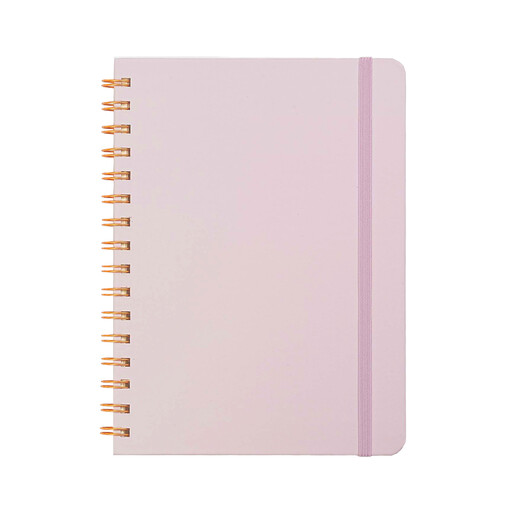
Why this choice suits this profile: The spiral binding is ideal for frequent note-taking, diagrams and users who want to turn pages quickly.
The spiral makes it easy to open and reduces the strain on the binding over repeated writing sessions.
A5 format, hard cover, 96 sheets of 100 g cream offset paper and elastic band.
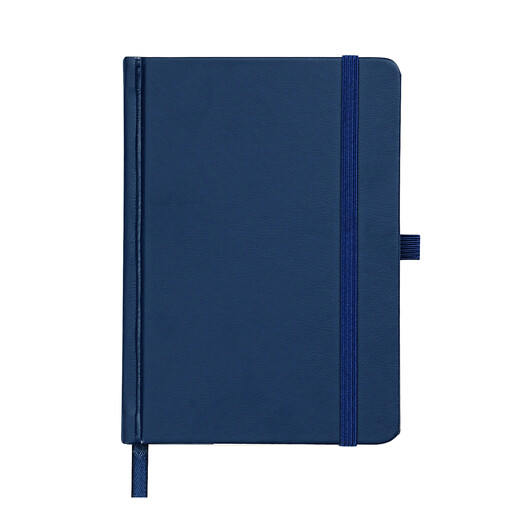
Why this choice suits this profile: The A6 format slips easily into a messenger bag or small handbag for jotting down an address, an idea or a list while you're out and about.
Its stated dimensions, 10.5 × 14.8 cm, prevent you from mistaking a compact notebook for a true A5 size.
80 lined sheets of 100 g paper, elastic closure, ribbon bookmark and pen loop.
We've put together a comprehensive, real-time updated selection of products that meet these exacting criteria and European safety regulations.
The A5 format measures approximately 14.8 × 21 cm and is suitable for lectures, meetings and a personal diary. The A6 format, which measures approximately 10.5 × 14.8 cm, takes up less space and is more suited to quick notes and lists.
For everyday use, 80 g/m² paper is sufficient with a ballpoint pen or pencil. 100 g/m² generally offers more body and can reduce show-through between pages, without, however, guaranteeing a complete absence of bleed-through with all inks.
Store it in a dry place, avoid exposing it to high humidity and clean its cover with a soft cloth. Don't force a model to lie flat if it isn't designed to do so. With a spiral notebook, avoid twisting the rings and store it without putting excessive pressure on the cover.