
Livraison le jour même ou le lendemain

Qualité garantie

Débloquez vos offres de bienvenue: Livraison GRATUITE | Jusqu'à -80 % | 30 jours d'essai gratuits à JoyPlus
Téléchargez l'application
A lined A5 notebook can be used for taking notes in class, preparing for a meeting, keeping a diary or organising a creative project. However, not every model is equally suitable for every purpose. An attractive cover, the promise of smooth paper or a high page count are not enough to guarantee the right choice.
Here are the criteria to consider before buying, the pitfalls to avoid and a selection of notebooks suited to different needs.
A decorative cover immediately catches the eye, but it can become damaged quickly if the board lacks rigidity or the finish does not stand up well to rubbing. For everyday use in a bag, a hardback notebook generally offers better protection than a softcover notebook.
Remember to check the care instructions, too. Printed, textured, gilded or embossed covers should be protected from moisture and cleaned with a soft cloth. A decorative finish is not necessarily designed to withstand water or intensive handling.
The number of sheets does not tell the whole story. A notebook with 96 sheets does indeed provide 192 pages to use, but the quality of the binding, the paper weight and the layout all have a direct impact on comfort and ease of use.
For an A5 diary or notebook, check that the pages are genuinely lined, whether they are numbered and whether the binding allows the notebook to open sufficiently flat. A model that is too rigid or poorly assembled can quickly become uncomfortable when writing close to the inner margin.
A ribbon bookmark helps you quickly find the right page, while an elastic closure stops the notebook from opening in your bag. These details are particularly useful for a diary, work notebook or lined A5 notebook used every day.
Conversely, an undated diary or an 18-month planner is not a substitute for a classic notebook. It offers monthly and weekly pages designed to organise your schedule. The right choice therefore depends mainly on how you plan to write.
100 gsm paper is a useful point of comparison between different notebooks. Thicker than very lightweight school paper, it generally provides a smoother, more consistent writing experience. However, you should consult the product listing to check the exact type of paper and its compatibility with your pens.
For a lined A5 notebook, consider the writing instruments you usually use:
The descriptions of the products featured indicate that they are designed to reduce ink visibility on the reverse side. This is a characteristic stated by the manufacturer, not a guarantee that there will be no show-through with every type of pen.
The A5 format measures approximately 148 × 210 mm. It offers a comfortable writing surface while remaining easy to carry in a bag or pouch. For very short notes, an A6 model will be more discreet and easier to take with you, but it will leave less room for lessons, meeting notes or journalling.
Also compare:
A hardback cover provides better protection against bent pages, but it also adds a little weight. Models fitted with a ribbon or elastic contain small parts, so they are not suitable for children under 3 years of age because of the risk of choking. Keep notebooks away from water, high temperatures and flames, too.
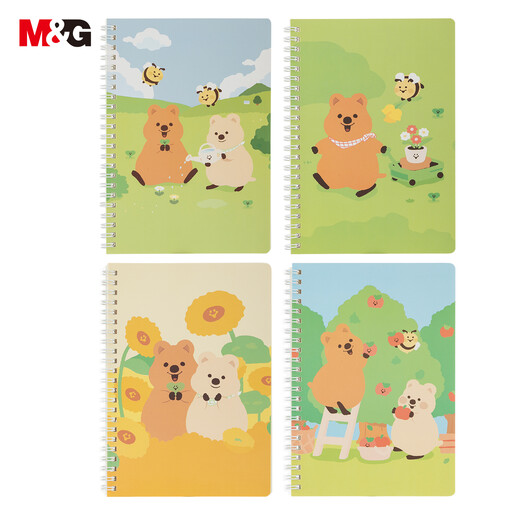
Why this choice suits this profile : This pack of four A5 notebooks lets you separate subjects, projects and personal notes without having to buy several different products. The spiral binding makes them easy to browse at school, in the office or at home.
You are not buying a single decorative notebook without a clear purpose: the four lined A5 notebooks can be assigned to different needs.
Pack of 4, A5 format, lined paper and an illustrated quokka-themed cover.
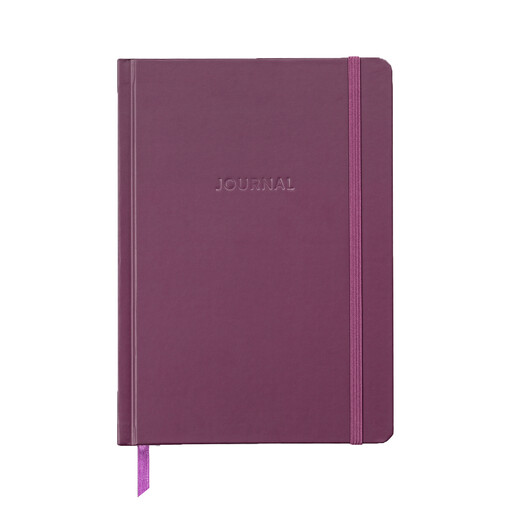
Why this choice suits this profile : Its hardback cover and decorative finishes are ideal for anyone looking for a beautiful object for writing at their desk, keeping a diary or giving as a thoughtful gift.
The product listing specifies the A5 format, 96 sheets and 100 gsm cream paper, rather than relying solely on the appearance of the cover.
100 gsm lined offset paper, ribbon bookmark and elastic closure.
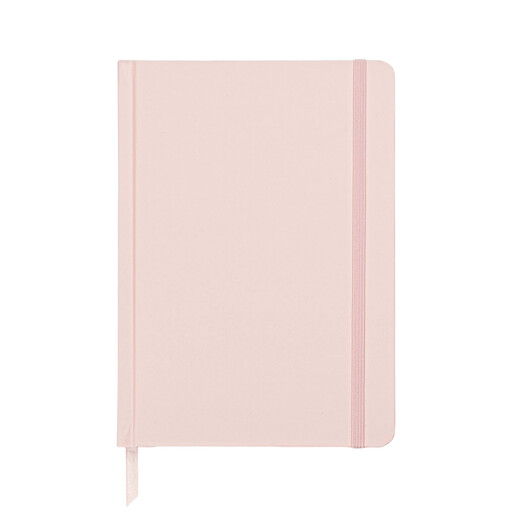
Why this choice suits this profile : This undated A5 planner is ideal for flexible organisation, including tracking goals, planning projects, studying or managing professional activities.
The undated format prevents pages from being wasted if you put your organisation on hold for several weeks.
112 sheets of 100 gsm offset paper, undated monthly and weekly spreads, notes pages and several colours to choose from.
A notebook becomes even more practical when paired with suitable pens and school stationery. For revision, pastel highlighters with a chisel tip make it easy to distinguish headings, definitions and important information. Deli four-colour models, as well as Zebra Mildliners with dual tips, are also suitable for journalling and decorative page layouts.
For creative activities with children, always check the recommended age, whether any small parts are included and the instructions for use. For example, Jar Melo washable markers are described as using water-based, alcohol-free and odourless ink. This information does not replace the safety precautions stated on the packaging.
If portability is your priority, an A6 notebook with a pen loop, ribbon and elastic can complement a lined A5 notebook. It slips easily into a small pouch for jotting down an idea, list or address, while the A5 format remains better suited to lessons and detailed planning pages.
We have selected a complete, real-time-updated list of products that meet these demanding criteria, as well as European safety regulations.
For occasional use, 60 sheets may be enough. A notebook with 96 sheets is more suitable for keeping a diary, taking professional notes or regular use. For planning over a longer period, a 112-sheet planner with monthly and weekly pages provides additional structure.
100 gsm paper is generally more pleasant to use than very thin paper with pens and water-based highlighters. However, show-through depends on the amount of ink applied, the pressure used and the drying time. Replace the caps on felt-tip pens after use and allow the pages to dry before placing them on top of one another.
A lined A5 notebook offers blank pages for writing, making lists or keeping a diary. An undated diary provides spaces organised by month and week, without pre-printed dates. The former is suitable for versatile note-taking; the latter makes it easier to track goals and plan flexibly.