
Livraison le jour même ou le lendemain

Qualité garantie

Débloquez vos offres de bienvenue: Livraison GRATUITE | Jusqu'à -80 % | 30 jours d'essai gratuits à JoyPlus
Téléchargez l'application
Who hasn't felt the joy of finding the perfect lined A5 notebook? Whether you use it to organise your day, take class notes, or start journaling, this everyday companion is an essential. However, the search can quickly lead to disappointment: paper that bleeds ink, a binding that falls apart after a few weeks, or a cover that loses its lustre. To help you make a clear choice, we've broken down the pitfalls to avoid and the key criteria for a successful purchase.
Marketing often highlights attractive designs, but true quality lies in the details. Here are the most common flaws that turn a promising purchase into a disappointment.
To avoid these pitfalls, focus on three technical features that make all the difference.
Paper weight, expressed in grams per square metre (gsm), defines the paper's thickness and opacity.
The way the pages are held together determines the durability and user-friendliness of your A5 notebook.
The cover is more than just a design element. A hardcover notebook offers robust protection against impacts and serves as a stable surface for writing comfortably, even without a desk. Materials like fabric or textured finishes add a pleasant tactile dimension while also being durable. Details like a notebook with an elastic closure and one or more ribbon bookmarks are the small extras that make all the difference in daily use for protecting your notes and easily finding your place.
There's a perfect notebook for every need. Here are our recommendations, chosen to meet specific requirements while avoiding the pitfalls we've just discussed.

Why it's for you: For those who see their notebook as a precious personal item, blending creative expression with beautiful aesthetics. The fabric cover and floral design make it a perfect stationery gift idea.
Its premium 100gsm ivory paper prevents ink from feathering, while the fabric-wrapped hardcover provides lasting protection for the pages.
Elegant fabric cover with refined details (gold foil, debossing). Integrated bookmark and elastic closure.
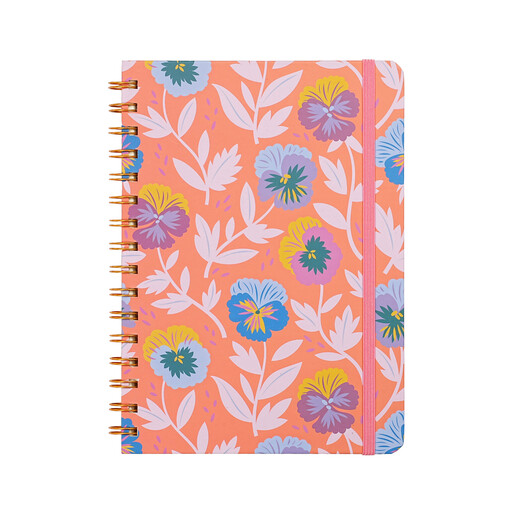
Why it's for you: Perfect for heavy use in class or at the library. The practical spiral binding and sturdy cover are key assets for carrying it daily in a backpack.
The metal twin-wire binding is designed to withstand frequent handling and allows for a 360-degree opening, preventing the breakage common in low-end bindings.
Lays perfectly flat for comfortable writing. The 100gsm paper and laminated hardcover ensure quality and durability.
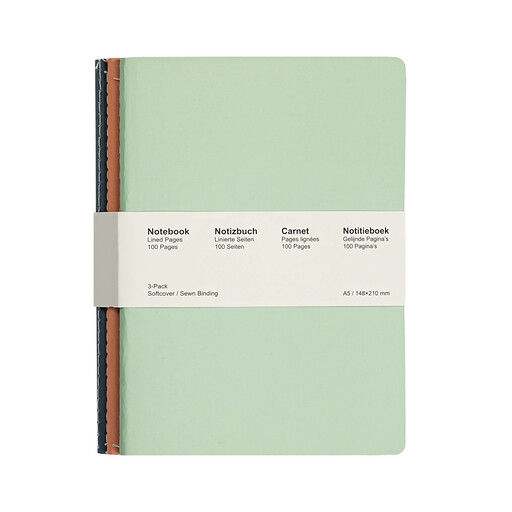
Why it's for you: Perfect for those juggling multiple projects or subjects without sacrificing quality. The flexible and lightweight format is easy to slip into any bag.
The stitched binding allows the notebook to lay flat and provides much better durability than a simple glued binding, even on a softcover model.
Sold in a pack of three for excellent value. The 80gsm paper is well-made, and the lightweight design makes it highly portable.
Explore our full collection of notebooks, all carefully selected for their quality and design.
The difference is noticeable both to the touch and in use. A 100gsm paper is visibly thicker and more opaque. If you use a fountain pen, a fine-liner, or even a highlighter, 100gsm paper will prevent the ink from bleeding or ghosting. For simple note-taking with a ballpoint pen, a good quality 80gsm paper may suffice, but 100gsm offers significantly superior writing comfort and versatility.
It all depends on your use case. The A5 spiral notebook is unbeatable for its ability to open 360 degrees, which is ideal for writing while standing or on a small surface. However, the spiral can sometimes get in the way of writing (especially for left-handers) and can snag in a bag. A sewn-bound notebook allows you to write across the entire two-page spread without obstruction and often has a more understated, professional look.
A fabric cover is more delicate than a laminated one. To maintain it, avoid contact with liquids and prolonged exposure to sunlight, which could fade the patterns. For a small stain, gently dab it with a soft, dry cloth. Handle it with care to preserve the appearance of finishes like gold foil or debossing.