
Livraison le jour même ou le lendemain

Qualité garantie

Débloquez vos offres de bienvenue: Livraison GRATUITE | Jusqu'à -80 % | 30 jours d'essai gratuits à JoyPlus
Téléchargez l'application
A lined A5 hardcover notebook can be used for classes, meetings, daily to-do lists or keeping a personal journal. But a well-presented product page doesn't always guarantee a pleasant experience. The wrong size, paper that's too thin or an awkward closure can turn an appealing purchase into a notebook that ends up forgotten at the back of a drawer.
Before choosing a notebook, it's worth checking three points that are often overlooked.
A notebook advertised as having 192 pages usually contains 96 sheets, printed on both sides. This distinction matters when you're comparing different options. The A5 models featured here have 96 sheets, i.e. 192 pages, while some compact A6 notebooks are limited to 80 sheets.
A floral, textured or gold-accented cover makes a notebook look decorative, but it says nothing about its durability. For everyday use in a bag, a hardcover protects the pages better and provides a more stable writing surface. Also remember to check the care instructions: printed or fabric covers should be kept away from moisture and cleaned with a dry or slightly damp cloth, depending on the model.
Paper that's too thin can let ink show through, especially with a fountain pen, felt-tip pen or certain gel pens. A weight of 100 gsm, like the notebooks we've selected, is a good benchmark for a thicker, more pleasant surface. That doesn't mean all inks will be completely invisible on the reverse side, though – the result also depends on the ink formulation and the pressure you apply.
The A5 size, roughly 14.8 × 21 cm, suits students, professionals and anyone who wants a page wide enough for taking notes, writing a lined journal or organising lists. It slips easily into a backpack or briefcase, but obviously takes up more space than an A6 pocket notebook.
The A6 size, measuring about 10.5 × 14.8 cm, is better suited for quick ideas, shopping lists and notes taken on the go. However, it won't necessarily replace an A5 notebook for classes or detailed meeting minutes.
Cream or ivory paper generally softens the visual contrast compared to a very bright white. The A5 options featured here use 100 gsm lined ivory or cream paper. The lines help keep your writing neat, but the spacing needs to match how you write: fine handwriting, quick note-taking or more spacious drafting.
For a personal diary, slightly ivory paper can create a warmer feel. For meetings and study, focus on the usable page width and how easily you can find a particular note.
A notebook with an elastic closure stays securely shut in a bag and stops the pages from opening. The ribbon bookmark lets you quickly find a section, which is handy for a lined journal or a tracking notebook. On A6 models, a pen loop can also be a very practical feature.
These accessories don't replace the need to check the quality of the binding. Also read the safety warnings: ribbons, elastics and other small parts are not suitable for children under 3 years old.
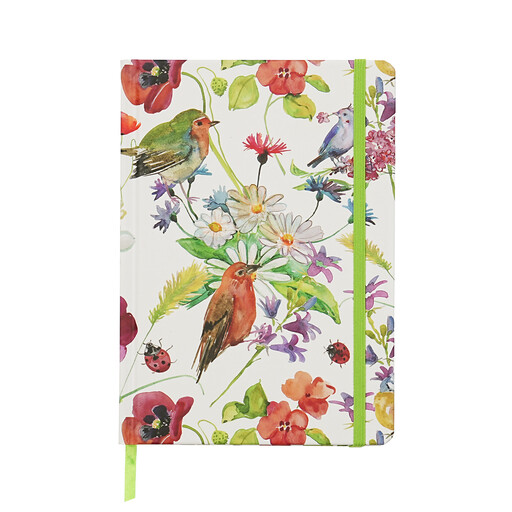
Why this choice suits this profile: Its A5 size works well for lecture notes, lists and journaling, while the botanical design adds a decorative touch without getting in the way of everyday use.
The listing clearly states 96 sheets, 192 pages and 100 gsm ivory offset paper – the essential information is clearly distinguished.
Hardcover, cream lines, ribbon bookmark and elastic closure.
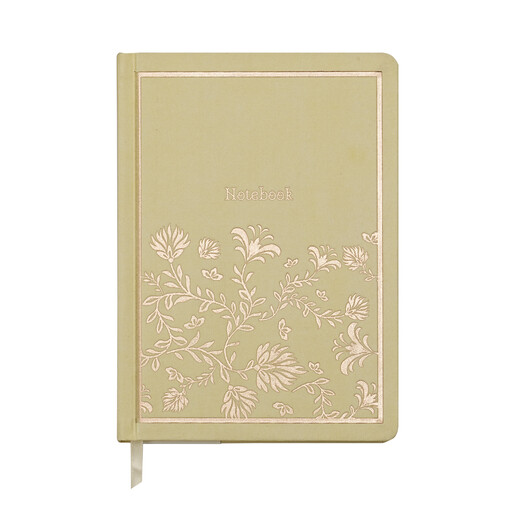
Why this choice suits this profile: Its floral fabric cover and careful finishing appeal to those who want to combine the pleasure of writing with a beautiful object.
The description specifies the cover material, 100 gsm ivory paper and finishing techniques, rather than just making an aesthetic promise.
96 sheets, 192 pages, fabric cover and integrated accessories: ribbon and elastic.
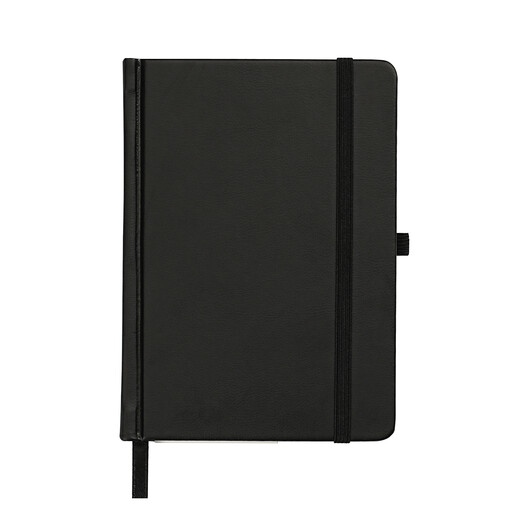
Why this choice suits this profile: This pocket-sized format slips easily into a bag and goes with you on your travels, workdays or note-taking sessions, without taking up the space of an A5 notebook.
The size, number of sheets and accessories are clearly stated – you know it's an A6 notebook, not an A5.
80 sheets of 100 gsm lined paper, elastic, ribbon bookmark and pen loop.
We've put together a comprehensive, real-time selection of products that meet these exacting criteria as well as European safety regulations.
Yes, the A5 size offers a surface that works well for classes, meeting notes, lists and simple diagrams. A hardcover protects the pages better in a bag than a soft cover, but it does add a little extra weight.
No. At 100 gsm, the paper is thicker than many school exercise books and can reduce show-through, but the result varies depending on the pen you use. With a very fluid ink, it's best to check the reverse side before filling several pages.
Choose A6 for brief notes, lists and ideas to jot down on the move. Go for A5 if you need to write several paragraphs, track a project, keep a journal or store well-organised lecture notes.