
Livraison le jour même ou le lendemain

Qualité garantie

Débloquez vos offres de bienvenue: Livraison GRATUITE | Jusqu'à -80 % | 30 jours d'essai gratuits à JoyPlus
Téléchargez l'application
A lined A5 hardcover notebook can be used for taking notes in class, preparing for a meeting, keeping a diary or organising your projects. But a pretty cover alone doesn’t make a good notebook. It can hide paper that’s too thin, a fragile binding or accessories that aren’t practical for everyday use.
Before you choose your A5 notebook, check three criteria that are often overlooked:
The A5 format measures approximately 14.8 × 21 cm. It offers enough space to write comfortably, while still being easy to slip into a school bag or work satchel. For regular use, look at the number of sheets rather than just the number of pages: 96 sheets usually equals 192 pages, while 80 sheets gives you 160 pages.
A very thick notebook can quickly become bulky. On the other hand, a model that’s too thin may fill up fast if you’re using it for writing, keeping a lined journal or planning your days.
100 g/m² paper is a good benchmark for ballpoint pens, rollerballs, fine-tipped felt pens and fountain pens used with a light touch. It can reduce ink show-through, but no listing can guarantee zero bleed-through or ghosting: it all depends on the nib, the pressure you apply and the drying time.
To compare different models, check the following details:
Ivory paper is pleasant for long writing sessions and adds a warmer feel to a diary. For drawing or using markers, however, a lined notebook isn’t always the best choice.
An elastic closure keeps the pages and any loose notes in place during transport. A ribbon bookmark lets you easily pick up a list, a page of notes or a journal entry without having to dog-ear the paper. A pen loop can also be very handy if you use your notebook on the go.
Clean the cover with a soft, dry or very slightly damp cloth, depending on the material. Avoid large amounts of water, abrasive products and storing it near a heat source. Ribbons and elastics are small parts: they are not suitable for children under 3 years old, due to the risk of choking or entanglement.
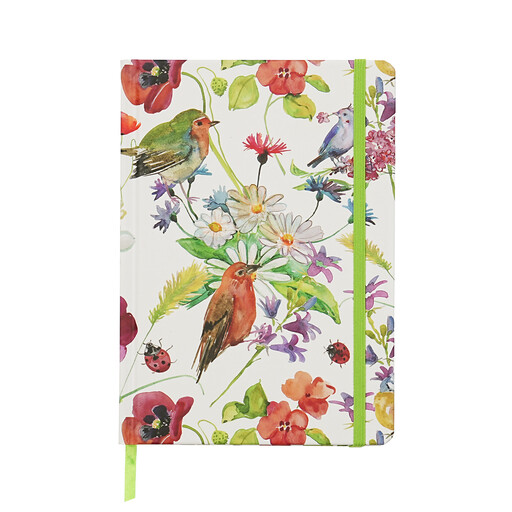
Why it suits this profile: Its A5 format works well for students and journaling beginners alike. With 96 sheets and a hardcover, it’s easy to carry around every day.
The listing specifies the A5 format, 100 g offset paper and 96 sheets. That makes it easier to compare against less detailed descriptions.
100 g ivory lined paper, hardcover, ribbon bookmark and elastic closure.
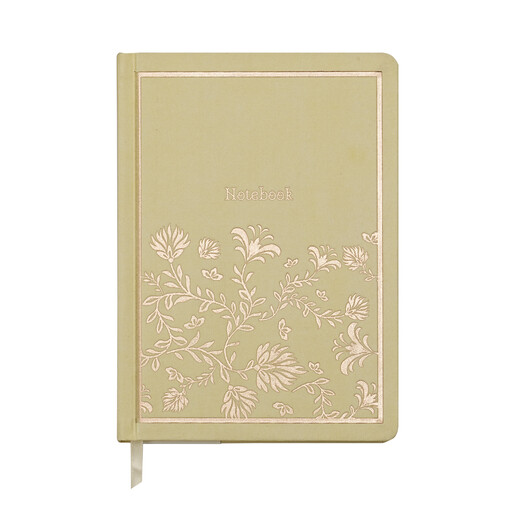
Why it suits this profile: Its floral fabric cover and decorative finishes will appeal to anyone looking for an elegant notebook to keep or give as a gift.
The description distinguishes the cover material, the finishes and the interior content, rather than reducing the choice to appearance alone.
Fabric hardcover, 96 sheets of 100 g ivory lined paper, bookmark and elastic closure.
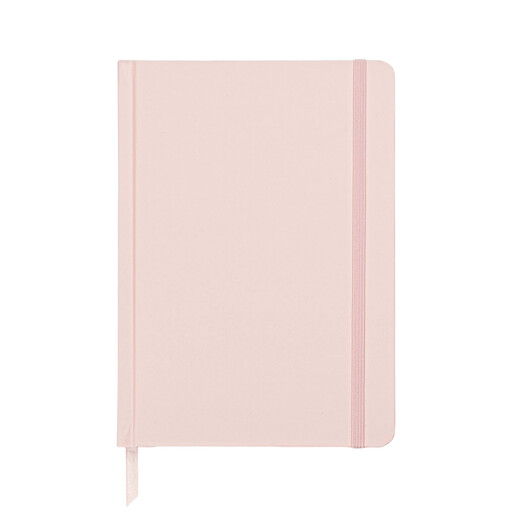
Why it suits this profile: Its undated monthly and weekly pages meet the needs of professional organisation, goal tracking and flexible planning.
Its undated format means you won’t waste pages when some weeks go unused, unlike a pre-filled annual diary.
112 sheets, 100 g lined offset paper, hardcover and monthly/weekly organisation.
We’ve put together a full selection, updated in real time, of products that meet these exacting criteria as well as European safety standards.
Yes. At 14.8 × 21 cm, it offers enough space for lectures, meetings and to-do lists. Check the number of sheets and opt for a hardcover if you’ll be carrying the notebook around regularly.
It can work with a moderate ink flow and nib, but the result varies depending on the pen and the pressure you apply. To avoid unpleasant surprises, check the paper specifications and test it on one page before using it extensively.
It depends on how often you open it, the weight of any documents tucked between the pages and the storage conditions. To extend its lifespan, avoid overloading the binding, don’t yank the elastic and keep the notebook away from moisture.