
Livraison le jour même ou le lendemain

Qualité garantie

Débloquez vos offres de bienvenue: Livraison GRATUITE | Jusqu'à -80 % | 30 jours d'essai gratuits à JoyPlus
Téléchargez l'application
Limescale builds up on shower screens, taps, toilets and the heating elements of household appliances. In areas of France where the water is particularly hard, a quick wipe is not always enough. But choosing a limescale remover at random can quickly push up your household costs and may even damage certain surfaces.
A shower limescale spray is generally designed for recent marks and water spots. It will not necessarily replace a gel formulated for thick deposits, particularly under the rim of the toilet or around a tap that has been neglected for a long time.
Conversely, a highly acidic gel used every day may be too harsh for certain sensitive surfaces. It is therefore important to distinguish between:
Claims such as ‘express action’, ‘long-lasting protection’ or certain advertised percentages need to be considered in context. Effectiveness depends on water hardness, how old the deposit is, contact time and following the instructions correctly.
The label ‘limescale remover’ therefore does not guarantee that the product is suitable for every surface or that it will remove limescale permanently.
Marble, natural stone, certain untreated metals, fragile grout and painted surfaces may react with acidic formulas. Before each use, read the label and test the product on an inconspicuous area. Never mix a descaler with bleach or another cleaning product.
For a shower enclosure, a limescale cleaner in spray form may be perfectly suitable for cleaning after every use. If there is an older layer of build-up, a bathroom descaler in gel form will be easier to apply to a vertical surface and leave to work.
For toilets, choose a formula with a precise nozzle and good adhesion. A toilet limescale gel can remain under the rim for several minutes, making it easier to treat hard-to-reach areas.
Do not compare bottle size alone: also consider how often the product needs to be applied.
For washing machines, a washing machine limescale remover may come as a tablet, gel or monthly treatment. Always check whether the product should be placed in the drum, the detergent drawer or used during an empty cycle.
Products in this category may contain acids, surfactants, fragrances or agents that help prevent limescale from building up again. Wear gloves if recommended on the label, ventilate the room and keep bottles out of children’s reach.
For dishwashers, distinguish between a dishwasher descaler, used during a maintenance cycle, and anti-limescale rinse aid, poured into the designated compartment. The former works inside the machine; the latter is used during regular cycles and may help reduce marks on crockery, in accordance with the manufacturer’s instructions.
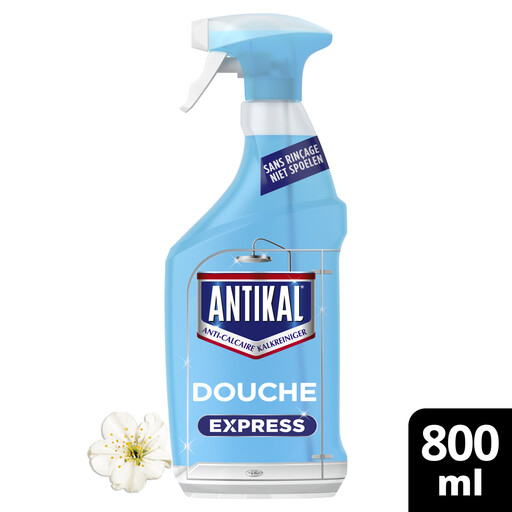
Why this choice suits this profile : Its spray format and two-step application — spray, then wipe — fit easily into an after-shower routine, with no installation or complicated measuring required.
It is intended for shower maintenance, not for treating very old deposits. This useful distinction prevents you from expecting the performance of an intensive descaler from a daily spray.
An 800 ml bottle, no-rinse use as indicated and suitability for application to several bathroom surfaces, according to the product information.
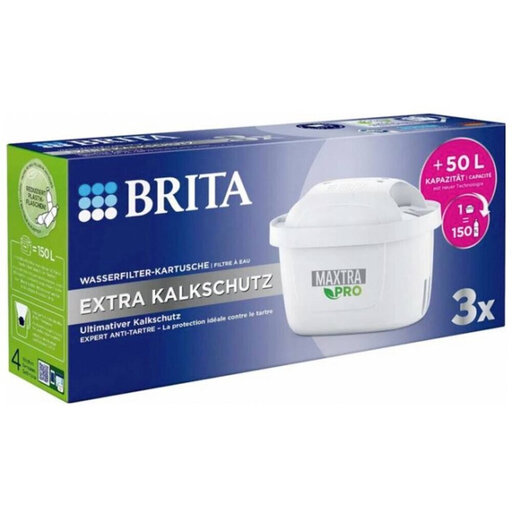
Why this choice suits this profile : This filter cartridge is aimed at households that want to improve their drinking water while reducing their everyday use of bottled water.
The usage period is based on two clear guidelines: up to 4 weeks or 150 litres per cartridge. Replacement should therefore be adjusted to your actual consumption.
A pack of three cartridges, stated compatibility with current BRITA jugs and multi-stage filtration, according to the manufacturer’s product information.
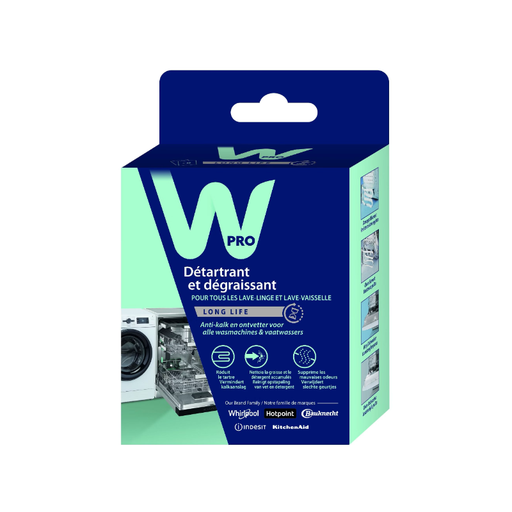
Why this choice suits this profile : Households maintaining several appliances will appreciate the single-dose format, designed for use in both washing machines and dishwashers.
Each sachet is intended for one treatment, reducing the risk of incorrect dosing. The cycle must nevertheless be run empty, without detergent or any other product.
Six 50 g sachets, stated action against limescale, residue and odours, with a 60 °C cycle recommended for treatment.
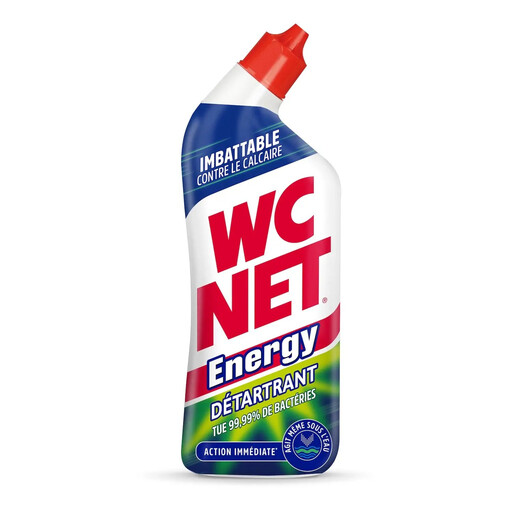
Why this choice suits this profile : Its nozzle reaches underneath the rim, while its adhesive texture is suitable for toilet bowls that require targeted descaling.
This is a toilet gel, not an all-purpose cleaner. Its specialised formula reduces the risk of using it on an incompatible surface.
A 750 ml bottle, an adhesive formula and instructions specifying a contact time before brushing and rinsing.
We have put together a complete, regularly updated list of products that fully meet these strict selection criteria and European safety regulations.
For recent marks, a shower limescale spray applied after every use makes cleaning easier. If the deposits are thick, choose a gel, follow the recommended contact time and check that it is compatible with glass, grout, metals and stone.
It depends on the hardness of the water, the number of cycles and the manufacturer’s recommendations. Some products are intended for monthly treatment, while a dishwasher cleaner may be used every two months. Always consult the appliance instructions and the product label.
No. A filter cartridge in a jug only treats the water poured into it. It does not replace a limescale filter installed on the water inlet or a solution designed for a washing machine, shower or dishwasher. Each use requires a solution suited to the volume of water and the equipment concerned.