
Livraison le jour même ou le lendemain

Qualité garantie

Débloquez vos offres de bienvenue: Livraison GRATUITE | Jusqu'à -80 % | 30 jours d'essai gratuits à JoyPlus
Téléchargez l'application
In a bathroom, a toilet or an appliance, limescale isn't dealt with in the same way. A white mark on a shower screen, a deposit under the rim of the loo or a furred-up heating element in a washing machine all require products with different formats and compositions.
Choosing a limescale remover shouldn't just come down to a promise on the label. Certain pitfalls can make you waste money or, worse, damage a surface.
A limescale spray is handy for removing water and soap marks on bathroom surfaces. However, it isn't necessarily designed to dissolve a thick, old layer of scale. Conversely, an acidic gel intended for the toilet can prove too harsh for a tap, natural stone or a delicate surface.
Start by assessing the level of soiling and the area to treat: regular maintenance, ingrained deposits or internal descaling of an appliance.
Claims like "100% of limescale" or "99.9% of bacteria" need to be taken in context. They may depend on a specific protocol, a certain dwell time or a particular surface type. They are not universal guarantees that apply to all stains and all materials.
Instead, check the instructions for use, the action time, whether rinsing is needed and the list of surfaces that are explicitly compatible.
A limescale remover often contains acids or cleaning agents. Never mix a descaler with bleach or another cleaner: dangerous fumes can form. Hazard pictograms, recommended protective equipment and usage restrictions should be taken seriously.
Before applying, test on an inconspicuous area. Caution is especially important with marble, natural stone, certain metals, fragile grout and treated surfaces.
For a shower, sink or bath, choose a limescale cleaner whose label clearly states the compatible surfaces. A ready-to-use spray is suitable for quick cleaning, while an adhesive gel stays on vertical surfaces for longer.
For the toilet, a toilet limescale remover or toilet descaling gel usually has a nozzle that lets you reach under the rim. For a washing machine or dishwasher, only pick a formula designed for that specific appliance.
Spray is ideal for quick application followed by wiping. Gel is more useful when the product needs to stay in contact with the deposit. Single-dose sachets prevent dosing errors and are practical for periodic descaling of an appliance.
Also check whether the product needs rinsing. A no-rinse formula can save time, but it isn't suitable for all surfaces or all uses.
The price of the bottle alone isn't enough to compare products. For a coffee machine, a 500 ml bottle may provide several treatments, depending on the dosage recommended by the manufacturer. For a heavily used appliance, individual sachets or a concentrated product can also be easier to plan for.
Always follow the frequency stated on the packaging and in the appliance manual. Descaling too often or with the wrong dosage doesn't necessarily improve the result.
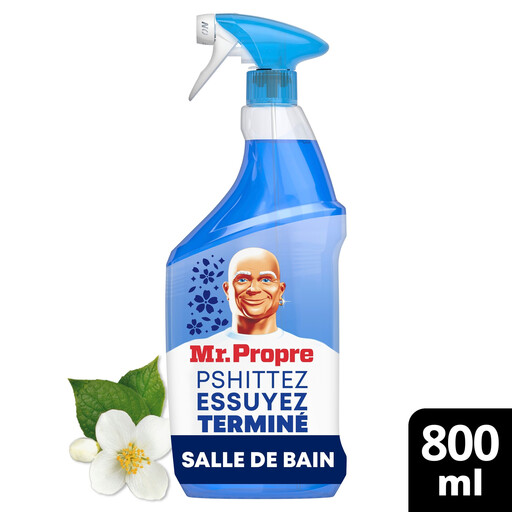
Why this choice suits this profile: With its 800 ml spray format, this product is applied directly to bathroom surfaces before wiping with a cloth or sponge. It's ideal for households looking for a simple routine to tackle soap residue and limescale marks.
The product details state spray-on application followed by wiping, with no complicated steps. However, do check compatibility with your surface and never mix this product with other cleaners.
An 800 ml bottle, a ready-to-use formula and a white flowers fragrance mentioned in the description.
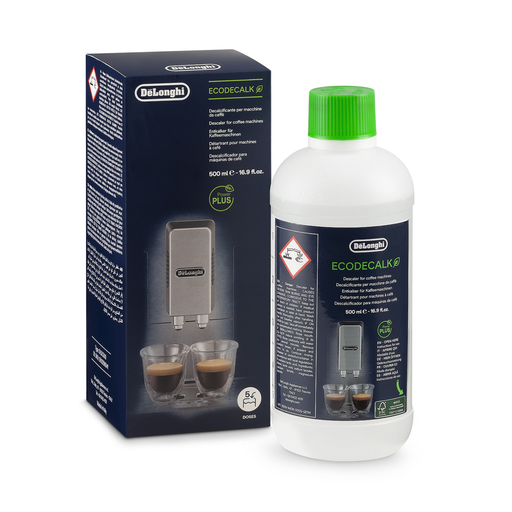
Why this choice suits this profile: Owners of a De'Longhi coffee machine can opt for a solution designed for this range of appliances, with the dosage stated on the product page and a descaling programme to follow.
This isn't a universal cleaner: the product page specifies it is intended for coffee machines and recommends consulting the appliance manual before dilution.
A 500 ml bottle, plant-based lactic acid and up to five treatments depending on the dosage stated.
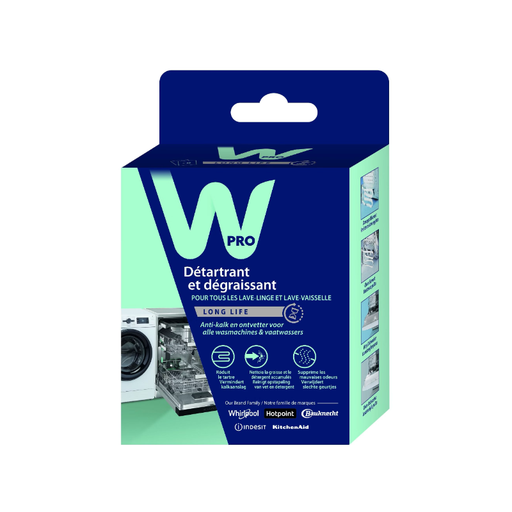
Why this choice suits this profile: This format is aimed at households that regularly maintain a washing machine or dishwasher. Each sachet corresponds to one stated dose for a single treatment.
The single-dose format avoids approximate measurements. The instructions do state, however, that you need to run an empty cycle at 60 °C and not add anything else during the treatment.
Six sachets of 50 g, a claimed action against limescale, residue and odours, plus possible use with two types of appliance.
We've put together a comprehensive list, updated in real time, of products that meet these strict selection criteria and European safety regulations.
A descaling gel can stay on a vertical surface for longer and prove effective on ingrained deposits. For everyday cleaning, a limescale spray or a ready-to-use bathroom cleaner is often more convenient. Always check the compatible materials.
No. A toilet limescale remover is formulated for the bowl and may contain components that are corrosive to certain parts of an appliance. Use a descaler specifically designed for washing machines and follow the recommended programme.
The frequency depends on the hardness of your water, the number of coffees you make and the manufacturer's recommendations. An indicator light or message on the machine may also signal that descaling is needed. Use a descaler compatible with your coffee machine, then carefully carry out the rinses specified.