
Livraison le jour même ou le lendemain

Qualité garantie

Débloquez vos offres de bienvenue: Livraison GRATUITE | Jusqu'à -80 % | 30 jours d'essai gratuits à JoyPlus
Téléchargez l'application
Limescale is the nemesis of our homes. It leaves chalky residue on taps, dulls shower screens, and even worse, silently attacks the internal components of our appliances. Faced with aisles packed with promising products, choosing an effective limescale remover can feel like an obstacle course. Our mission? To help you make sense of it all, decipher the labels, and make a choice that truly fits your needs, cutting through the marketing noise.
Before grabbing the first bottle you see, it's crucial to understand why some purchases end in disappointment. Here are the most common pitfalls.
The 'all-in-one' product myth: A single solution for the bathroom, washing machine, and toilet? It's a tempting promise, but often an unrealistic one. A bathroom cleaner is formulated to be gentle on chrome and enamel, while a washing machine descaler must work on hidden heating elements at high temperatures. Using the wrong product can be ineffective or even damage your equipment.
Ignoring the format and concentration: A spray that's too thin will run straight down a vertical surface without having time to act. A gel that's too fluid won't cling to the toilet bowl rim. The concentration of active ingredients is also a key factor. A budget-friendly but highly diluted product will force you to use more and scrub harder for subpar results.
Overlooking material compatibility: This is arguably the most costly mistake. Using an overly aggressive descaler on a sensitive surface like marble, natural stone, aluminium, or certain enamel coatings can cause irreversible damage. Some acids, perfect for removing stubborn limescale in a toilet bowl, should be avoided elsewhere.
To avoid making the wrong choice, focus on these three parameters before you buy.
Each product is designed for a specific purpose. The key is to match the formula to the problem.
More than just a detail, the format determines the product's effectiveness.
Make it a habit to read the label before every use. Check the list of materials the product should not be applied to. When in doubt, always test on a small, inconspicuous area first. Wear gloves and ventilate the room, especially when using the most powerful formulas.
To guide you, here are a few options that meet specific needs, taking into account the criteria we've just discussed.
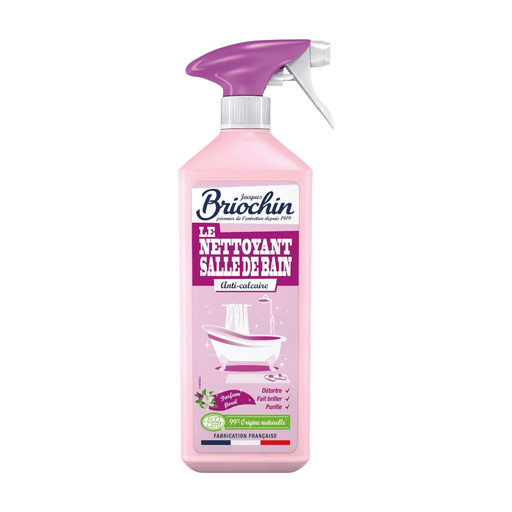
Who is it for? The perfect solution for weekly maintenance of sinks, showers, and tiles. Its spray format makes application easy and prevents the build-up of limescale and soap scum.
This isn't a miracle "all-in-one" product, but a specialised bathroom cleaner. Its formula is designed for the surfaces in this room, eliminating any risk of damaging sensitive materials with an unsuitable product.
Its formula, with 99% ingredients of natural origin, will appeal to those looking for an effective and more eco-friendly alternative.
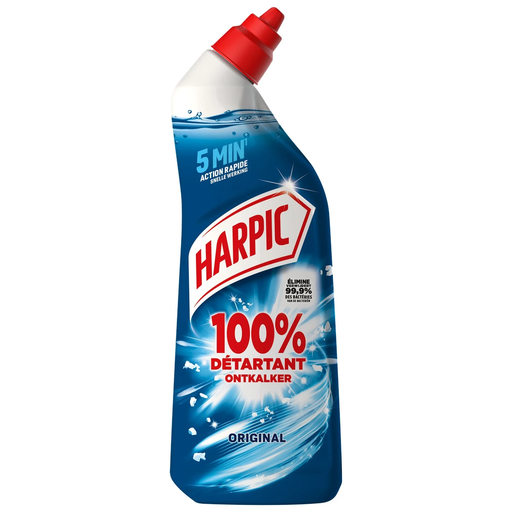
Who is it for? Essential for tackling stubborn scale deposits at the bottom of the toilet bowl, where standard cleaners fail. This type of problem requires targeted, powerful action.
It avoids the pitfall of the wrong format. Its thick toilet gel texture clings to the bowl's sides, even underwater, giving the active ingredients time to dissolve limescale without being instantly diluted.
Its heavy-duty formula, based on hydrochloric acid, is designed for radical descaling action. Harpic promises to remove stains in 5 minutes and kill 99.9% of bacteria.
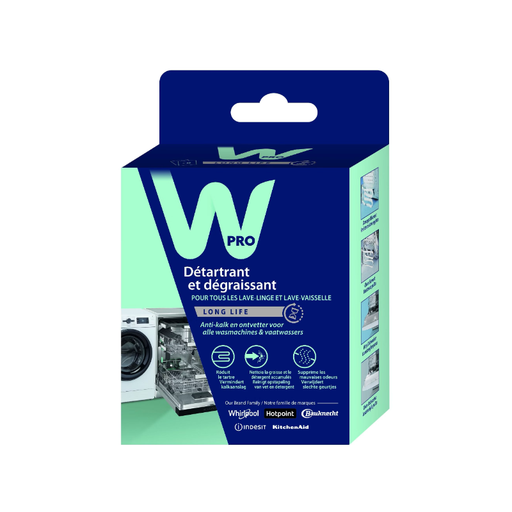
Who is it for? The perfect ally for anyone wanting to maintain performance and extend the lifespan of their washing machine and dishwasher. A monthly treatment can save you from costly repairs.
This product bypasses the compatibility trap. Its formula is specifically designed for the internal components of appliances (seals, hoses, heating elements), where a generic descaler would be either too aggressive or ineffective.
The single-dose sachet format is incredibly practical: the dosage is perfect and hassle-free. Its 3-in-1 action descales, degreases, and eliminates bad odours in a single cycle.
Explore our full range of products that meet our selection criteria and current safety standards.
It all depends on your water hardness and the surface being treated. For preventative maintenance in the bathroom, once or twice a week is sufficient. For a washing machine or dishwasher descaler, a monthly cleaning cycle is recommended in hard water areas. For toilets, act as soon as scale reappears.
Yes, if you choose the wrong one. Highly acidic formulas can attack chrome, enamel, or seals. Always read the warnings on the packaging and, if in doubt, choose a product labelled for "bathrooms" or "taps". Testing on a hidden area is always the best precaution.
White vinegar is an excellent budget-friendly and eco-friendly solution for light, regular descaling. However, for heavily encrusted limescale or for specific uses (disinfecting toilets, cleaning machine circuits), commercial products have the edge. Their formulas (gels, foaming agents, etc.) are optimised for better adhesion, faster action, and targeted effectiveness.