
Livraison le jour même ou le lendemain

Qualité garantie

Débloquez vos offres de bienvenue: Livraison GRATUITE | Jusqu'à -80 % | 30 jours d'essai gratuits à JoyPlus
Téléchargez l'application
In areas of France where the water is hard, white marks quickly appear on shower screens, taps, tiles and grout. Soap scum can also leave a dull film that’s sometimes tricky to shift. A limescale remover for the bathroom can make cleaning much easier, but not all solutions target the same problem.
A no-rinse anti-limescale spray is ideal after every shower, but it won’t necessarily shift a thick layer of built-up scale. On the other hand, a limescale gel – thicker in consistency – clings better to vertical surfaces and works more effectively on stubborn deposits. The right texture therefore depends on the actual condition of your bathroom.
Claims like “no rinse”, “fast action” or “protective barrier” describe a use or feature claimed by the manufacturer. They don’t guarantee the product is suitable for all surfaces. Marble, natural stone, certain untreated metals and delicate materials can be damaged by an acidic formula.
A cheap bottle can empty quickly if you’re cleaning several showers each week. To compare solutions, look at the volume, the method of application, the recommended frequency of use and whether rinsing is required. For an anti-limescale shower filter, also consider the price of replacement cartridges and how often they need changing.
Before first use, always test the product on a small, inconspicuous area. Follow the instructions on the label and never mix a shower descaler with bleach or any other cleaner. Acidic formulas can irritate eyes and skin: ventilate the room, wear gloves if the label recommends it, and keep the bottle out of reach of children.
For a device fitted between the hose and the shower head, check for a G1/2 inch thread, which is very common on shower fittings. Also check the seals supplied, the method for replacing the cartridge and the space available. Claims about chlorine, metals or bacteria should be treated as performance figures stated by the manufacturer, not as a general guarantee of water quality.
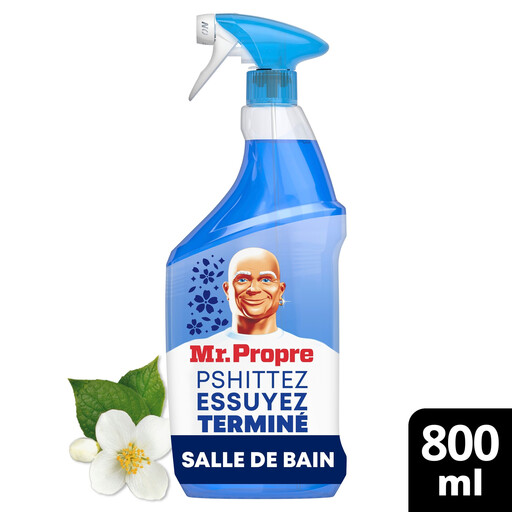
Why this choice suits this profile: Its spray format – simply spray and wipe – is perfect for a first cleaning routine on common bathroom surfaces.
It avoids investing in equipment that needs installing when the need is mainly for water marks and soap scum.
800 ml bottle, spray-and-wipe application, claimed use against limescale and soap residue.
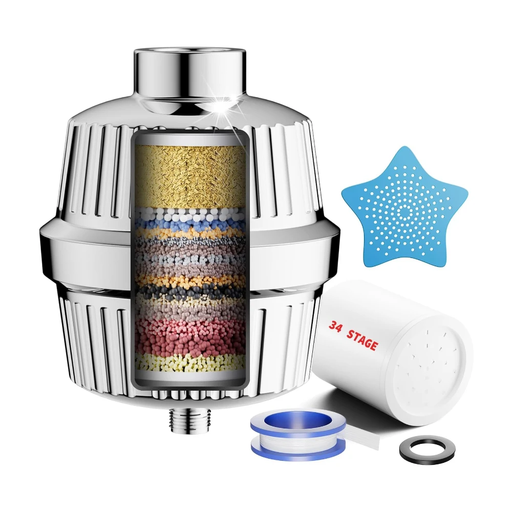
Why this choice suits this profile: This model is aimed at households that want to tackle the shower water directly and are prepared to carry out regular cartridge maintenance.
The filter media are detailed and a replacement cartridge is included, so you can plan the required maintenance more clearly.
Claimed 34-stage system, G1/2 inch connection, two cartridges included and tool-free installation according to the product sheet.
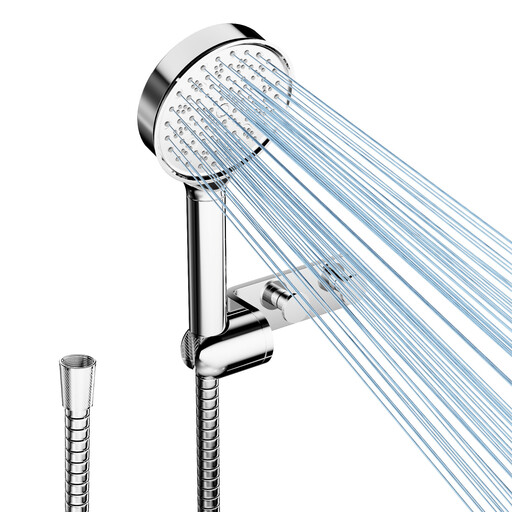
Why this choice suits this profile: This set combines the hose, holder and shower head. It could therefore suit a shower renovation or a complete installation replacement.
By grouping several components in one set, it reduces the risk of incompatibility. However, check the connection before ordering.
Claimed 20-layer filtration, six spray modes and hose with holder included according to the product sheet.
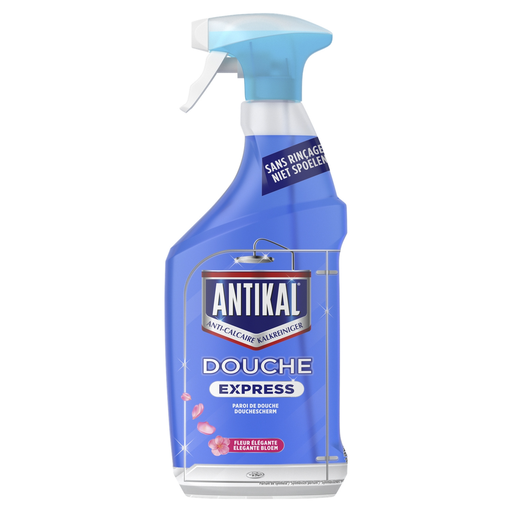
Why this choice suits this profile: Its use – simply spray and wipe – fits easily into a post-shower routine, especially on glass, chrome, walls and tiles.
It helps prevent marks without adding a rinsing step, as long as you stick to the materials listed on the label.
800 ml format, claimed no-rinse formula and anti-drip and anti-mist technology according to the product sheet.
We’ve put together a comprehensive list, updated in real time, of products that meet these strict selection criteria and European safety regulations.
Start with an anti-limescale gel, which clings better to glass and vertical surfaces. For everyday maintenance, an anti-limescale spray followed by immediate wiping can help limit the build-up of water marks. Always test the formula on an inconspicuous area.
No. A filter fitted to the shower and a bathroom cleaner have different roles. Depending on its design, the filter acts on certain components of the water, while the spray or gel is used to remove limescale, soap scum and marks already present on surfaces.
In an area with very hard water, a quick squeegee after every shower and a more thorough clean once a week can help limit deposits. The frequency also depends on the number of users, the ventilation and the hardness of the water in your area. Check the product instructions to know when to reapply or replace the cartridge.