
Livraison le jour même ou le lendemain

Qualité garantie

Débloquez vos offres de bienvenue: Livraison GRATUITE | Jusqu'à -80 % | 30 jours d'essai gratuits à JoyPlus
Téléchargez l'application
In esports, every millisecond and every gram counts. Choosing a lightweight wireless gaming mouse isn't a luxury—it's a necessity for anyone aiming for peak performance. A lighter mouse allows for swifter movements and reduces fatigue during long gaming sessions, while a stable wireless connection eliminates the headache of cable drag. But the market is flooded with models boasting complex spec sheets. How do you navigate it all??
This guide is here to break down the essential criteria and present a selection of wireless esports mice that stand out from the crowd in 2026. Our mission: to give you everything you need to make the right choice—the one that truly matches your playstyle.
Before diving into our top picks, let's review the key factors that should guide your decision.
For FPS players, weight isn't a minor detail—it's a crucial factor. An ultra-lightweight gaming mouse, often weighing under 60?grams, is the ideal weapon for quick, precise movements (like flicks) while minimizing wrist strain. But weight isn't everything. The mouse's shape must perfectly fit your grip style (palm, claw, or fingertip) for optimal comfort and control. Even an ultra-light mouse will feel much more stable if it's well-balanced.
The heart of a gaming mouse is its sensor. Your precision depends on its precision. The specs to watch for are DPI (sensitivity), IPS (maximum tracking speed), and acceleration (G). For a pro gaming mouse, a latest-generation sensor is simply non-negotiable.
On the wireless front, technology has taken a giant leap forward. Today's 2.4?GHz connections deliver latency so low that their performance is indistinguishable from a wired model. The arrival of 8K Hz gaming mice (with a polling rate of 8000?Hz) is also a game-changer for owners of high-refresh-rate monitors (240?Hz and above), offering stunningly smooth tracking.
A good high-performance wireless mouse must have serious stamina. Check the advertised battery life, especially in 2.4?GHz mode, which is the most power-hungry but also the best for gaming. Fast charging or the ability to play in wired mode while charging are real bonuses to ensure you're never caught off guard. Finally, don't overlook the details that make a difference: programmable buttons, the quality of the mouse feet (ideally PTFE for a perfect glide), and the customization software.
It's time for our top picks! Here are three models that check all the boxes for demanding gamers, each with its own unique strengths.
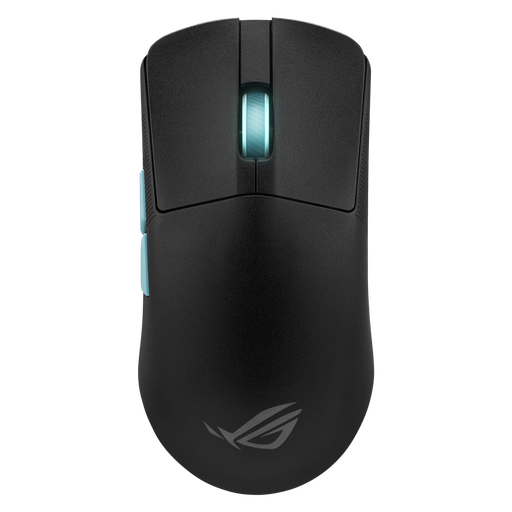
Why it stands out: Born from a collaboration with Aim Lab (the famous aim training software), this mouse is distinguished by its settings optimizer. It analyzes your gameplay to suggest the perfect DPI and sensitivity settings for you.
Pros:
Who is it for? For FPS gamers who love to analyze their performance and want a software-assisted boost to find the perfect settings.
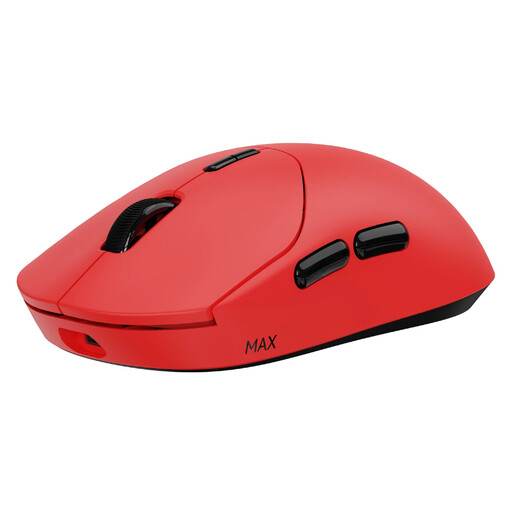
Why it stands out: The RAPOO VT2 MAX makes a strong impression on two fronts: a native 8000?Hz wireless polling rate and a record-breaking advertised battery life of up to 750 hours in eco mode.
Pros:
Who is it for? For gamers who want top-tier responsiveness without sacrificing battery life, and who hate spending time recharging their peripherals.
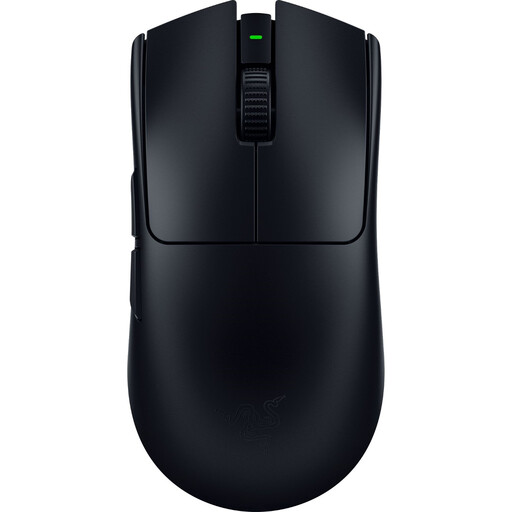
Why it stands out: Designed with and for esports pros, the Viper V3 Pro is a performance powerhouse: 54?grams, a proven ambidextrous shape, and Razer's HyperPolling technology for an 8000?Hz polling rate.
Pros:
Who is it for? For both right- and left-handed gamers who want a mouse with a pro-scene-proven design and demand cutting-edge responsiveness.
Our selection focuses on featherlight models, which often means a reduced number of buttons. If you're more of an MMO or MOBA player and need more macros, or if you're simply looking for different shapes, other models will be a better fit.
? Explore our full range of lightweight gaming mice with side buttons to find the perfect model for you.
An 8000?Hz polling rate means the mouse reports its position to your PC 8,000 times per second, compared to 1,000 times for a standard model. This reduces latency to just 0.125?ms. The benefit is most noticeable on very-high-refresh-rate monitors (240?Hz, 360?Hz, and beyond), where the cursor appears to glide with perfect smoothness. For gamers looking to optimize every last detail of their setup, it's a real advantage.
There's no single ideal weight; it's a matter of personal preference. That said, the trend in the competitive FPS scene is clearly toward featherlight models (under 60g). A lighter mouse allows for quicker acceleration and sharper changes in direction, which is a decisive advantage in tight duels.
Absolutely. Today's 2.4?GHz wireless technologies (like those in our selection) are so high-performance and reliable that their latency is indistinguishable from a wired model's. There's a reason why the majority of pro players have adopted the wireless esports mouse: the freedom of movement it provides is an undeniable advantage.