
Livraison le jour même ou le lendemain

Qualité garantie

Débloquez vos offres de bienvenue: Livraison GRATUITE | Jusqu'à -80 % | 30 jours d'essai gratuits à JoyPlus
Téléchargez l'application
For a competitive gamer, every gram and every millisecond is a weapon. In the heat of battle in an FPS or MOBA, victory often comes down to a lightning-fast reflex, a surgical click. A lightweight wireless gaming mouse is no longer just an accessory; it's an extension of your arm and an essential tool for anyone aiming for the top.
But here's the problem: faced with a jungle of complex spec sheets and marketing promises, it's hard to know where to start. This no-nonsense guide is here to cut through the noise and help you choose the pro gamer mouse tailored to your ambitions.
Before unveiling our top picks, let's break down the criteria that separate a good mouse from a true competitive weapon in 2026.
The trend is undeniable: lightness has become the name of the game. An ultralight mouse, typically weighing less than 60 grams, allows for quicker movements and reduces wrist fatigue. For FPS players who rely on wide, rapid sweeps (flicks), a feather-light weight translates to massively boosted responsiveness and increased endurance during long gaming sessions. The design, whether a solid or perforated shell, and the materials (engineered plastics, magnesium alloy) are key factors in this race for lightness.
The polling rate, measured in Hertz (Hz), defines how often the mouse reports its position to your PC. While 1000 Hz (or 1 ms of latency) was the standard for a long time, the game has changed. Today, the 8KHz gaming mouse is establishing itself on the esports scene.
With an 8000 Hz rate, the mouse communicates 8 times more frequently, dropping latency to just 0.125 ms. The result: stunningly smooth cursor tracking and a low-latency wireless mouse that not only matches but often surpasses its wired counterparts. This is a decisive advantage for gamers with very high-refresh-rate monitors (240 Hz and above).
The sensor is the heart of the mouse. The latest-generation optical models, like the renowned PAW 3950, provide formidable precision with zero hardware acceleration or unwanted smoothing. While marketing often highlights astronomical numbers (over 30,000 DPI), the in-game reality is quite different: most pros play with much lower sensitivities, typically between 400 and 1600 DPI. What's essential is having a flawless sensor that perfectly translates your movements (1:1 tracking), regardless of the sensitivity you choose.
Keeping these criteria in mind, here is our selection of competitive mice that check all the boxes.
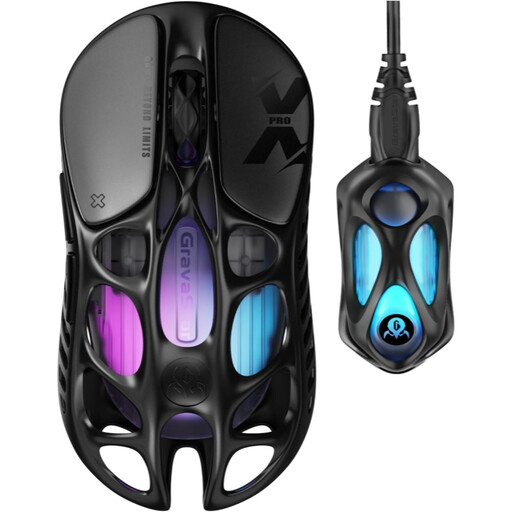
Why it stands out: The Mercury X Pro pushes the boundaries of lightness, tipping the scales at just 49 grams. Its perforated magnesium alloy shell provides exemplary rigidity despite its feather-light weight, a luxury usually reserved for the most elite models.
Advantages:
Who is it for? The competitive gamer on a quest for absolute lightness without any compromise on robustness. Its bold design and raw performance make it the weapon of choice for those who want a decisive speed advantage.
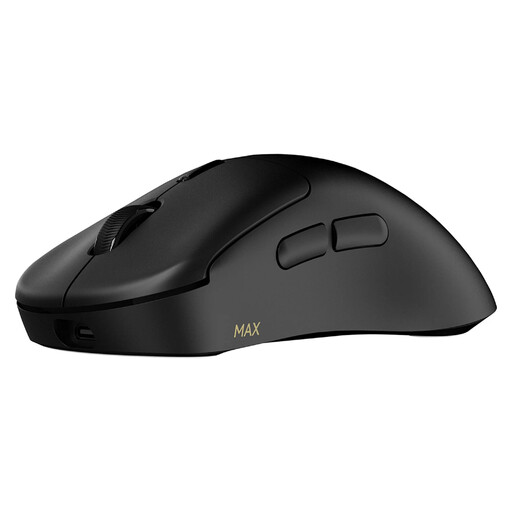
Why it stands out: The RAPOO VT3 MAX tackles the Achilles' heel of wireless peripherals: battery life. Thanks to an ultra-low-power Nordic nRF54L15 microcontroller, it promises up to 750 hours of use at 1000 Hz, a figure that shatters records and puts an end to battery anxiety.
Advantages:
Who is it for? The gaming marathoner who refuses to compromise on battery life. Perfect for very long sessions, it's a reliable, lightweight, and versatile mouse whose numerous buttons will adapt to any playstyle.
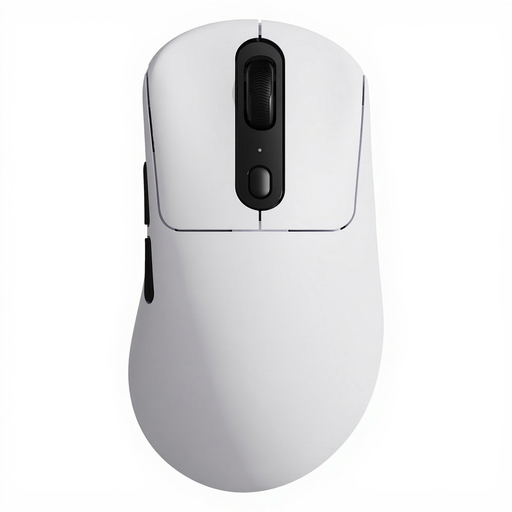
Why it stands out: The VT3PRO MAX embodies a near-perfect balance of weight, performance, and battery life. It features the PAW 3950 Ultimate sensor, a supercharged version of the benchmark sensor, while maintaining a controlled weight of 59 grams and a very comfortable 200-hour battery life.
Advantages:
Who is it for? The versatile gamer looking for the ultimate FPS mouse with no weak points. It checks all the boxes: top-of-the-line sensor, feather-light weight, solid battery life, and pro features, all in an ergonomic shell built for comfort and performance.
Our selection highlights models with cutting-edge performance. If you're looking for different ergonomics or another button layout, the market is full of alternatives.
? Explore our full collection of Lightweight Mice with Three Side Buttons to find other models suited to your playstyle.
A lighter mouse requires less effort to start and stop a movement. The result: faster and more precise aiming, especially during flick shots. It also reduces wrist and arm fatigue, allowing you to stay at the top of your game, even after hours of play.
An 8000 Hz polling rate means the mouse reports its position to the computer 8000 times per second (every 0.125 ms). Compared to the 1000 Hz (1 ms) standard, latency is drastically reduced, and cursor movement becomes noticeably smoother. The advantage is particularly evident for gamers with very high-refresh-rate monitors (240 Hz and up), where even the slightest stutter is unacceptable.
Absolutely. Thanks to cutting-edge 2.4 GHz wireless technologies and innovations like the 8KHz polling rate, the latency of high-end wireless gaming mice is now imperceptible and equals, or even surpasses, that of wired models. It's no coincidence that many professional esports mouse players have made the switch: they enjoy complete freedom of movement with zero sacrifice in performance.
Article by the Joybuy product recommendation team. Our mission: to decipher spec sheets for you, helping you make the best choice with complete objectivity.