
Livraison le jour même ou le lendemain

Qualité garantie

Débloquez vos offres de bienvenue: Livraison GRATUITE | Jusqu'à -80 % | 30 jours d'essai gratuits à JoyPlus
Téléchargez l'application
Finding the right lightweight backpack can be a game-changer for your daily commute, travels, or hikes. The problem? The market is flooded with marketing promises that rarely deliver. A pack sold as "ultra-light" tears after three uses, and that stylish model gives you crippling back pain because of its disastrous weight distribution.
To avoid falling for these traps, let's review the most common pitfalls.
To cut through the noise, let's break down the features that separate a good backpack from a useless gadget.
The choice of material is a classic trade-off between lightness and strength. A good ultra-light backpack stands out with technical fabrics that strike the perfect balance.
A pack's capacity, measured in litres (L), must be tailored to your primary need. Not too big, not too small.
A backpack, even a light one, must above all be comfortable when loaded. Ergonomics are therefore not optional. Always check for these features:
To put theory into practice, here are a few models that meet specific needs and avoid the pitfalls we've discussed.
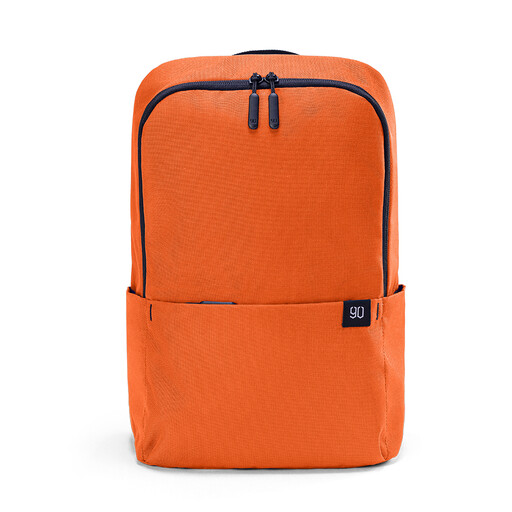
Who is it for? Perfect for those who navigate the city with just the essentials: a tablet, notebook, wallet, and water bottle. At 194g, you'll forget you're even wearing it when it's empty.
It doesn't pretend to be something it's not. Its lightness is consistent with its small volume, which eliminates the risk of overloading it and having the fabric fail.
Its feather-light weight (194g) and minimalist design for a hassle-free daily routine.
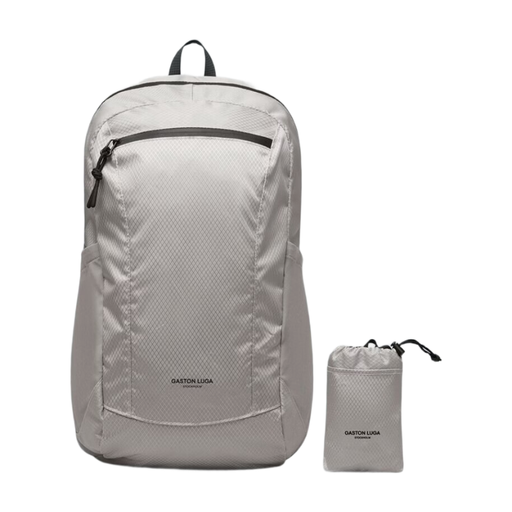
Who is it for? The perfect ally for travellers looking for a secondary bag for day trips or for bringing back a few souvenirs. Folded into its pouch, it takes up no space in your luggage.
It embraces its role as a secondary bag. The luggage strap (trolley sleeve) and breathable shoulder straps make it a well-designed travel companion, not just a cheap extra.
Its packable design and trolley sleeve for attaching to a suitcase.
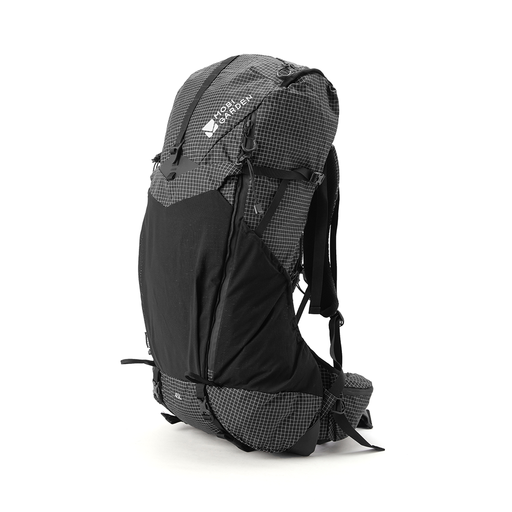
Who is it for? Designed for trekkers who count every gram. Its 45L volume is perfect for 2-3 day trips, and the Dyneema fabric is a guarantee of rock-solid durability.
It checks all the boxes: the Dyneema fabric combines extreme strength with minimal weight, while the 3D carrying system with a hip belt ensures optimal comfort, even when heavily loaded.
The combination of ultra-strong, lightweight Dyneema fabric and a carrying system designed for heavy loads.
We've curated a complete range of backpacks that meet our standards for quality and durability.
A water-resistant (or water-repellent) bag has a coating that causes water to bead up and roll off in a light rain. But in a downpour or during prolonged exposure, water will eventually seep through, especially at the seams and zippers. In contrast, a waterproof bag uses materials and construction techniques (like welded seams and sealed zips) that block water, even in a heavy storm. For hiking, aim for a waterproof model or plan to use a rain cover.
It all depends on your activity. For daily city life (work, class), a 15 to 20-litre laptop backpack is more than enough. For a day hike, a 20-35 litre pack will allow you to carry water, a packed lunch, a jacket, and a small first-aid kit. Finally, for a travel backpack or a multi-day trek, you'll need to look at 40 to 60 litres to fit all your gear.
Absolutely, but on one condition: its ergonomics must be impeccable. The empty weight of the pack matters little compared to how it distributes the load once it's full. A 1.5 kg pack with an excellent carrying system (padded straps, a rigid and ventilated back panel, an effective hip belt) will be infinitely more comfortable than a 500g pack with no structure at all if you put 10 kg in both. True comfort doesn't come from the empty weight, but from the smart design of the carrying system.