
Livraison le jour même ou le lendemain

Qualité garantie

Débloquez vos offres de bienvenue: Livraison GRATUITE | Jusqu'à -80 % | 30 jours d'essai gratuits à JoyPlus
Téléchargez l'application
A Lightning cable that refuses to charge, the infamous "Accessory Not Supported" message, a sheath that frays after just a few months... Who hasn't cursed their iPhone charger? Replacing your iPhone charger cable might seem like a simple task, but the market is a jungle of options where the best and worst coexist. To avoid disappointment, let's break down the common pitfalls together.
The 3 biggest mistakes to avoid when buying:
fast charging on an iPhone requires a power couple: a USB-C to Lightning cable and a Power Delivery (PD) compatible wall adapter. A classic USB-A cable is simply not capable of this.To make the right choice, here are the essential points to scrutinize to ensure performance and safety.
The MFi-certified (Made for iPhone/iPad/iPod) designation is a label created by Apple. For a manufacturer to display it, their product must include an authentication chip that ensures perfectly stable and secure communication with your device. Choosing an MFi cable guarantees that it will:
The type of connector on the other end of your Lightning cable directly determines its charging speed and compatibility with modern chargers.
USB-C to Lightning: This is the new standard for enjoying fast charging. Paired with a 20W or higher USB-C Power Delivery (PD) wall adapter, it can charge a recent iPhone from 0 to 50% in about 30 minutes. It's the go-to choice for owners of iPhone 8 and newer models.A cable's robustness primarily comes down to its construction. A braided cable made of nylon, for example, offers significantly better resistance to wear and bending than a basic plastic sheath. Reinforcements at the junction between the cable and the connectors are also an excellent indicator of quality.
Length, on the other hand, is a matter of convenience. A 1-meter cable is perfect for the desk, while a 2m cable or 3m model will be much more practical for charging your phone from the sofa or bed.
Here are a few options that meet specific needs, taking into account our criteria for safety and performance.
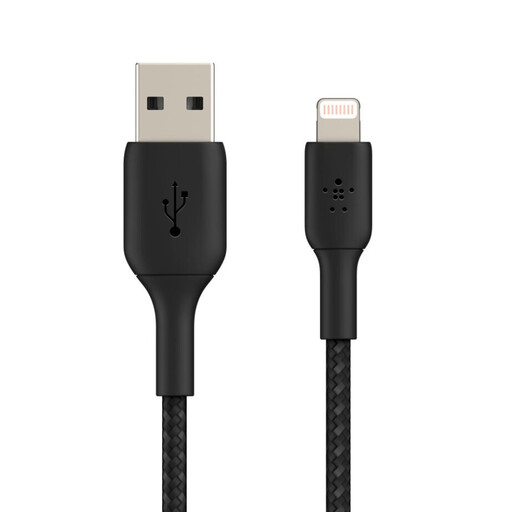
Why we chose it: For those who want a durable and practical cable that's compatible with their existing USB-A chargers. Its generous 2-meter length is perfect for the living room or bedroom.
Its braided nylon sheath is tested to withstand over 10,000 bends, preventing the premature fraying that plagues standard cables.
MFi certification for flawless compatibility and a convenient 2m length.
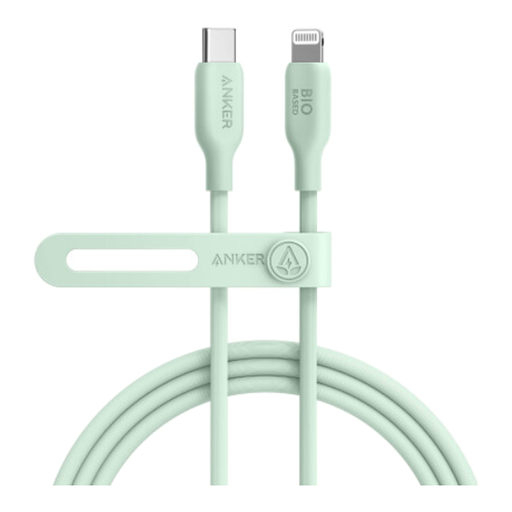
Why we chose it: The perfect ally for recent iPhone owners who want to get the most out of fast charging. This USB-C to Lightning cable is built for performance.
MFi certified, it supports up to 30W of power. Paired with a PD charger, it delivers genuine fast charging, a far cry from unfulfilled marketing promises.
Ultra-fast charging and an eco-friendly design with bio-based materials.
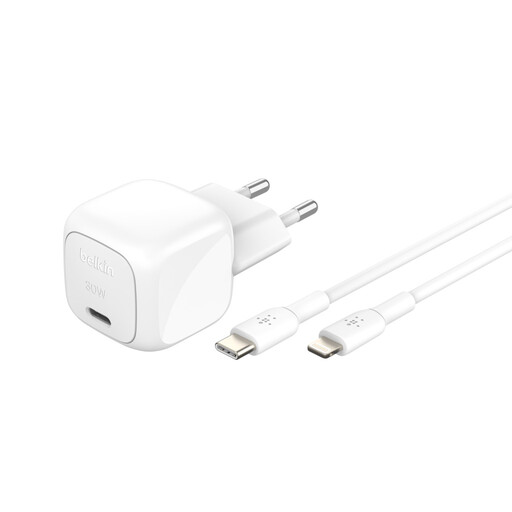
Why we chose it: For those who want a complete, hassle-free solution. This bundle includes a 30W USB-C PD wall charger and its certified USB-C to Lightning cable. It's the guarantee of perfect compatibility and optimal performance.
No more compatibility headaches between the cable and the charger. This set is designed to work in perfect synergy, offering fast and safe charging right out of the box.
An all-in-one bundle certified for USB-C PD 3.1 and MFi, ensuring fast and secure charging for both iPhone and iPad.
Discover our full selection of products that meet our quality criteria and the strictest safety standards.
The main difference lies in charging speed and charger compatibility. The USB-C to Lightning cable is the only one that enables fast charging (up to 50% in 30 minutes) with a USB-C Power Delivery (PD) charger. The USB-A to Lightning cable, on the other hand, offers slower, standard charging and connects to older generation chargers and USB ports.
Absolutely. A non-certified cable lacks the voltage and current regulation chip required by Apple. This can cause overheating, damage the Lightning port, and, most importantly, prematurely wear out the battery. Even worse, it can become useless overnight after a simple iOS update.
It all depends on its design and how you use it. A basic cable often shows signs of weakness in less than a year. Conversely, a quality braided cable with reinforced connectors and MFi certification, like those offered by reputable brands such as Belkin cable or Anker cable, is designed to last for several years, even with heavy use.